# 24.10.29 earth science: soils-physical aspects
## Soils provide minerals, hold moisture, allow air to pass, create a space for living creatures and bacteria, and physically hold plants to the ground. Without soil, agriculture as a whole would fail (there are small exceptions, like hydroponics)
Module 25: [https://elab.hpa.edu/apes/texts/fr3e/modules/mod25-soils.pdf](https://elab.hpa.edu/apes/texts/fr3e/modules/mod25-soils.pdf)
We'll cover two aspects of soil: physical and chemical
## physical aspects:
All soil comes from three parent materials (rocks):
- Igneous rocks (fire)
- Sedimentary rocks (layers)
- Metamorphic rocks (Kafka rocks, just kidding: changed by heat and pressure)
**Unavailable Apple Wiki media:** the exported data did not include file 41b6f30b-0dde-4a45-809e-f213bd087874.
Igneous Rocks:
- Comes directly from magma, and can be either basalt (low melting point, like our island or oceanic plates) or granite (lighter, what continents are made of)
- Granite breaks down into light-colored sand, makes for fertile soil.
- Basalt (like Hawaii) can make sand too, but less fertile (e.g. black sand beach).
- Fun fact: you can melt any rock on our island (not coral)
Sedimentary Rocks:
- just like it sounds, from mud, sand, or dust, usually in layers.
- you may have seen these in rock formations or cliffs
- often formed from layers of decaying stuff (plankton, diatoms)
Metamorphic Rocks
- changed by heat and/or pressure (slate, marble, or coal)
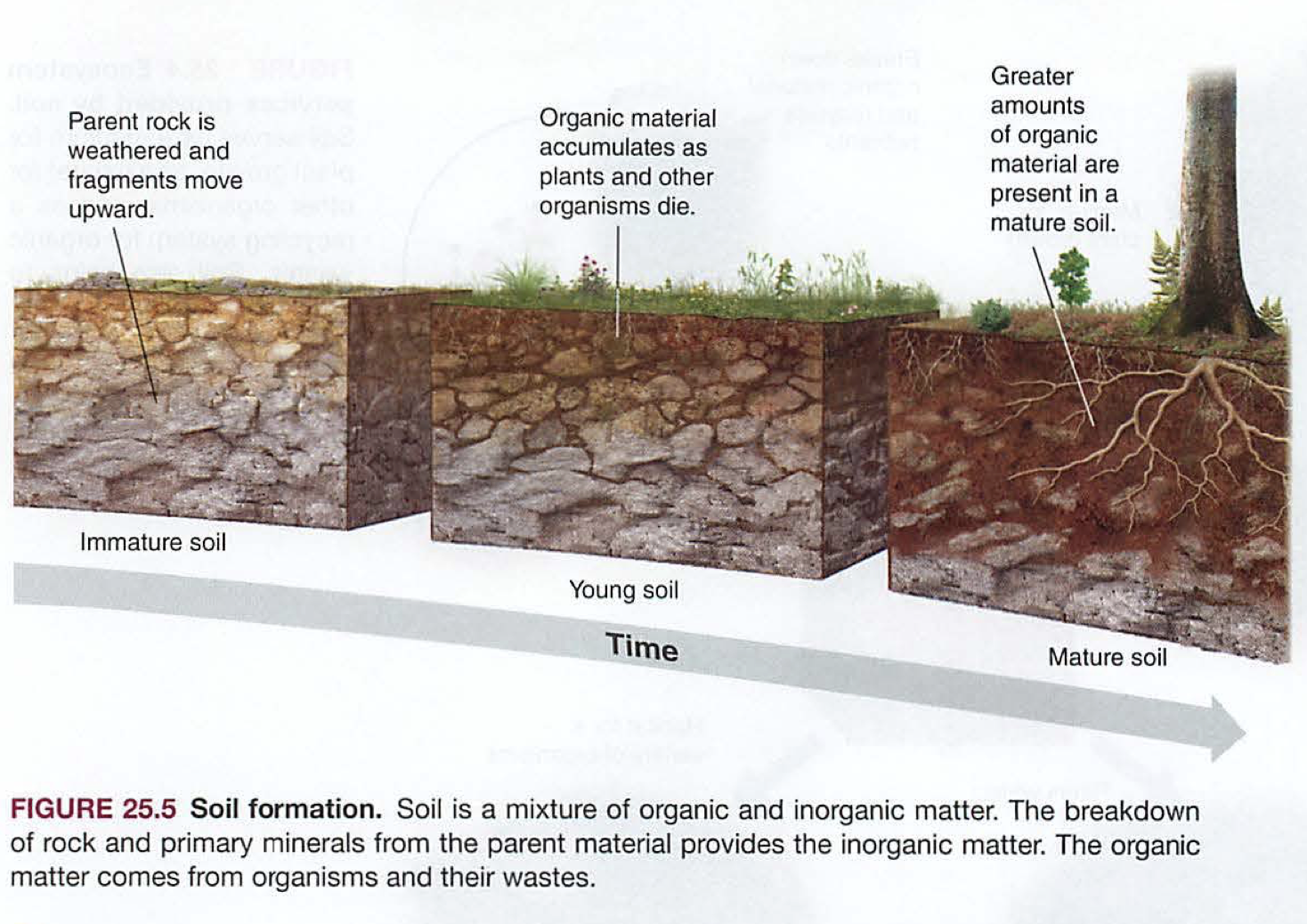
- Soil-formed by weathering (chemical or physical) of parent rock
- Erosion can be by water or air (wind)
Erosion:
The breakdown of parent rocks into minerals is erosion
Can be wind, chemical (eg. acid rain), water, or physical (glaciers)
Soil is the connection between geology and(e.g. rocks) and biology (e.g. living things)
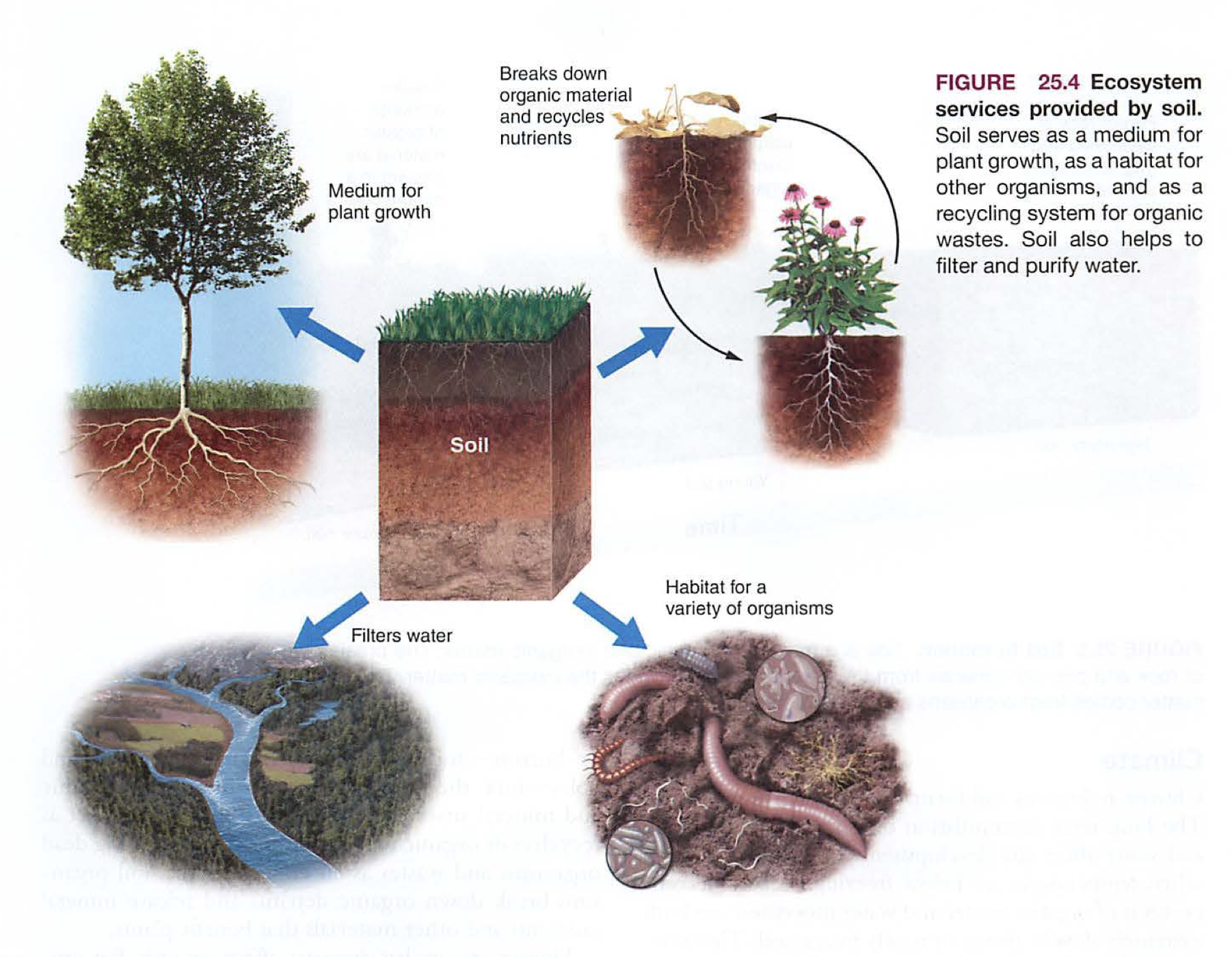
Ecosystem services is a term to describe how soil is critical to these systems:
Screenshot 2024-10-25 at 5.25.44 AM.png
Parent Material is a term to describe the rock the soil comes from
Influenced by:
- wind
- water
- climate
- topography
Screenshot 2024-10-25 at 5.26.54 AM.png
Soil degradation is the process of degrading the soil's ability to support plant growth:
- soil erosion
- dust bowl: wind erosion removed topsoil
- floods: water erosion removes topsoil
- desertification: overuse of mineral-rich well water makes the soils too salty to support plants
- over tilling: removes organic matter that protects the topsoil
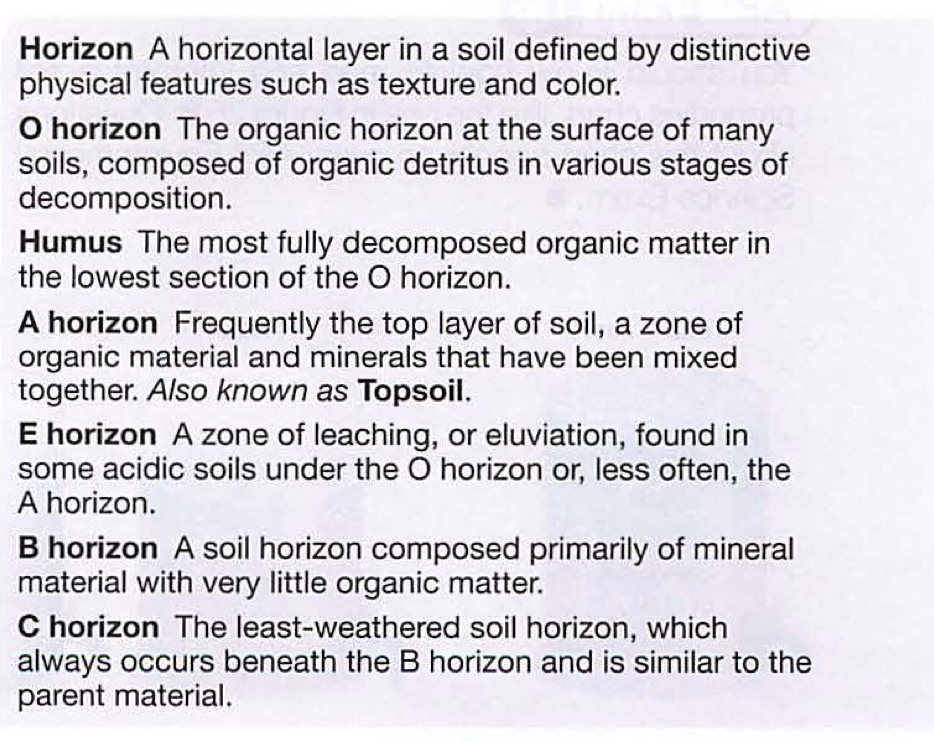
Soil Horizons:
Screenshot 2024-10-25 at 5.31.36 AM.png
**Unavailable Apple Wiki media:** the exported data did not include file 979f5eda-4cd6-4df1-be74-587d67c6ba5b.
Soil is made up of three general sized particles and organized into a soil triangle:
**Unavailable Apple Wiki media:** the exported data did not include file 30621d69-b784-418a-910e-eeb8faff7e33.
How to read this:
1. always read clockwise
2. make sure to read each type (3)
Our Soil Sieve has 4 filters, with 5 layers:
- mesh 5 = 4 mm
- mesh 10 = 2 mm
- mesh 60 = .25 mm
- mesh 230 = 0.063 mm
Basically, most of what you find is silt and clay...
Go online and find your favorite soil triangle game!
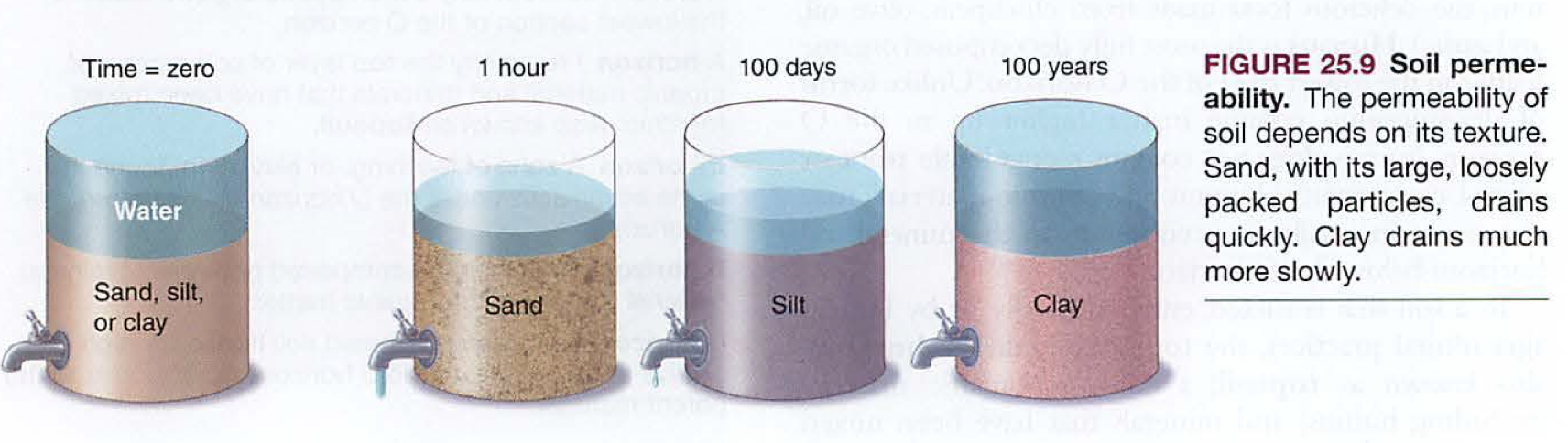
- These physical aspects impact the ability for soil to hold water and allow air between the spaces
- Smaller particles hold water better (capillary action, remember?) but don't allow air to pass
- Larger particles drain faster, enabling air passage, but have lower nutrient values (because they are washed so much) and hold water less (think of water on the beach)
- Organic particles (decaying plant matter) hold water like a sponge, making a perfect combination
- We measure these as:
> > 1. Water holding capacity: the amount of water held in the soil (organic matter does this)
> > 2. Permeability: the ability for water to transit through the soil (depends on soil particle sizes)
Screenshot 2024-10-25 at 5.34.35 AM.png
Lots of cool things live in the soil, changing the physical and chemical properties of the soil:
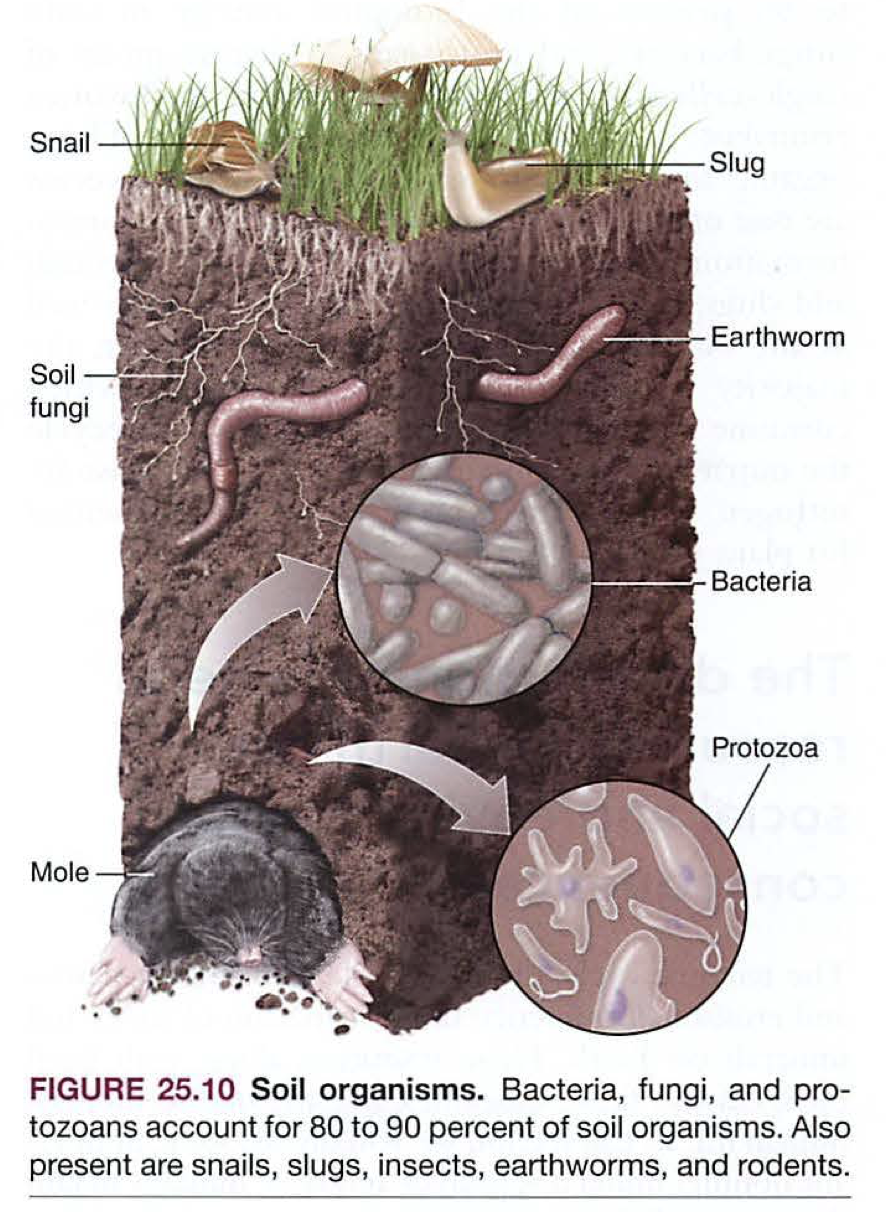Screenshot 2024-10-25 at 5.36.19 AM.pngImportant safety tip: when discussing soils with soil folks, never call it "dirt". Soil folks get angry when you confuse these...
---
Migrated from Apple Server Wiki. Original page ID: \_4L5Z0p8