# 24.10.30 earth science: soils-chemical aspects, watersheds
## Chemical aspects:
Cation exchange:
- Clay soils have a negative charge, so they attract positive ions (cations)
- These cations can be released for use by the plants as nutrients
- We measure this as CEC or cation exchange capacity
- Clay has a high CEC which is good for plants, but...
- Too much clay (>20%) makes the soil waterlogged (no air) so the roots die
pH:
- neutral pH is 7.0
- Ca, Mg, Na and K are all soil bases, as they can counteract Al and H+
- soil acids stop growth, soil bases promote health (think of acid rain impact)
- the amount of bases in a soil is called Base Saturation and can be measured with pH
- High base saturation and high CEC will be productive, releasing nutrients
N, P, K: Critical elements for plant growth
Nitrogen:
- critical for plant growth
- can be added by fertilizers (NH4NO3, ammonium nitrate)
- petrochemical fertilizers use natural gas (CH4) with N2 from the air to form these
- nitrates (NO3) are very water soluble, impacting watersheds
Phosphorus:
- fruits and roots
- needed for root crops to develop
- limiting nutrient, in excess can cause eutrophication in water bodies
- very high in animal manures, esp. fed with high protein feedstocks
Potassium (K):
- critical in plant immunity from disease and pests
- not a limiting nutrient per se, but critical to health of the plant
- regulates carbohydrate and nutrient flows
Fertilizers will have notation such as 10-20-15, meaning:
10% N
20% P
15% K
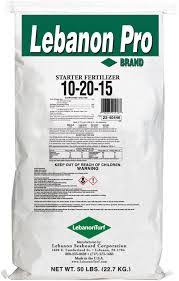fertilizer.jpg
Organic fertilizers provide these and other trace elements (Ca, Mg, Na) slowly, as done in nature
Petrochemical fertilizers, usually derived from natural gas are much stronger, and impact the plants much quicker, also creating much more runoff in to the watersheds (more on this below)
Nitrogen and Phosphorus are growth limiting nutrients, very important when we discuss watersheds.
Some terms and concepts we need to understand first:
[https://en.wikipedia.org/wiki/Three\_Sisters\_(agriculture)](https://en.wikipedia.org/wiki/Three_Sisters_(agriculture))
In some traditional cuisines there is a balance of 70% [whole grains](https://en.wikipedia.org/wiki/Whole_grain "Whole grain") to 30% [legumes](https://en.wikipedia.org/wiki/Legume "Legume"), which may vary to 80% grains with 20% legumes. This tradition can be seen expressed in three regions:[\[5\]](https://en.wikipedia.org/wiki/Diet_for_a_Small_Planet?wprov=srpw1_1#cite_note-5)
- Latin America: [beans](https://en.wikipedia.org/wiki/Bean "Bean") with [tortillas](https://en.wikipedia.org/wiki/Tortilla "Tortilla") or [rice](https://en.wikipedia.org/wiki/Rice "Rice"),
- Middle East: [bulgur wheat](https://en.wikipedia.org/wiki/Bulgur_wheat "Bulgur wheat") with [chickpeas](https://en.wikipedia.org/wiki/Chickpea "Chickpea"), or [pita](https://en.wikipedia.org/wiki/Pita "Pita") [falafel](https://en.wikipedia.org/wiki/Falafel "Falafel") with [hummus](https://en.wikipedia.org/wiki/Hummus "Hummus"),
- Asia: [soy](https://en.wikipedia.org/wiki/Soy "Soy") with rice (southern China, northern [Japan](https://en.wikipedia.org/wiki/Japanese_cuisine "Japanese cuisine"), [Indonesia](https://en.wikipedia.org/wiki/Indonesian_cuisine "Indonesian cuisine")), soy with [wheat](https://en.wikipedia.org/wiki/Wheat "Wheat") or [millet](https://en.wikipedia.org/wiki/Millet "Millet") ([northern China](https://en.wikipedia.org/wiki/Northern_China "Northern China")), or soy with [barley](https://en.wikipedia.org/wiki/Barley "Barley") ([Korea](https://en.wikipedia.org/wiki/Korean_cuisine "Korean cuisine") and [southern China](https://en.wikipedia.org/wiki/Southern_China "Southern China")).
- Other recent authors mention that traditional cuisine in Africa combines [sorghum](https://en.wikipedia.org/wiki/Sorghum "Sorghum") or millet with [ground nuts](https://en.wikipedia.org/wiki/Vigna_subterranea "Vigna subterranea")
Important connections:
- Corn is a grass, and is very nitrogen dependent
- Corn runoff impacts all watersheds (Mississippi in particular) creating dead zones
- High N fertilizers are created from fossil fuels (oil and natural gas)
- Corn is then used in our country to feed pigs and to ferment into ethanol
- One reason the corn lobby is so powerful is today: the election: the primaries in Iowa (a corn state) are first
- The carbon footprint of corn ethanol in your gas tank is higher than oil alone, but is driven by politics, not science
Water impacts of fertilizers:
Dissolved Oxygen:
- gases can hold more water (liquids into gases) when hotter
- liquids can hold more gas (gases into liquids) when cooler
- DO means dissolved oxygen, the measure of the oxygen dissolved in water
- High DO is good for fish
- Hot water lowers DO (thermal pollution from power plants)
- photosynthesis from plants raises DO
- cooler water or agitated (aerated) water raises DO
Eutrophication:
Trophos means "food", so eutrophication means "too much food".
Process:
1. fertilizers (N and P) cause algae in a body of water to grow very quickly
2. this algal bloom then dies, falling to the bottom of the water body
3. as it decays, it consumes all of the dissolved oxygen in the water, killing fish (aerobic bacteria do this)
Watersheds
Any area of land draining into a body of water
**Unavailable Apple Wiki media:** the exported data did not include file 27880f6d-bff3-4b90-bce0-5397fb38cce1.
What comes along with this drainage?
- sediments (makes water murky)
- nitrogen fertilizer (farm runoff)
- phosphorus fertilizer (farm runoff)
- animal waste: N and P in chicken manure, pig manure
- thermal pollution (power plants)
- pathogens (human and animal waste)
- drugs, chemicals (from city water treatment plants)
- minerals (acid mine drainage)
Best Example: Chesapeake bay (Virginia and Delaware)
How do each of these impact the water body?
- sediments: block sunlight from getting to plants in the water, lower dissolved oxygen
- nitrogen: causes algae blooms, then eutrophication
- phosphorus: major cause of eutrophication, growth limiting nutrient
- thermal pollution: lowers dissolved oxygen content in water
- pathogens: kill animals downstream
- drugs and chemicals: mutate creatures in the water body
Check this out:
**Unavailable Apple Wiki media:** the exported data did not include file d18ffafe-083a-4528-9617-3a8265ec3d07.
>
Danica DiDonato writes:
>
> The Chesapeake Bay is a perfect example of eutrophication because the Chesapeake Bay watershed includes over 100,000 streams/rivers, covers 64,000 square miles, and has a population of over 18 million people, making it very vulnerable to nutrient runoff and pollution that travel downstream. The three most prevalent sources of nutrient runoff come from wastewater treatment plants, urban development, and air pollution. When excessive nutrients enter the bay, an overgrowth of algae occurs. These algae blooms not only block sunlight from reaching underwater plants, but also sink to the bottom of the ocean when they die (where they are decomposed by bacteria). This process depletes the amount of dissolved oxygen in the bay, harming marine life.
>
>
Any runoff from any city, farm or animal feed plant goes into the Chesapeake bay, the "perfect storm" of watershed damage:
- shallow (very warm)
- murky (little photosynthesis)
- algae covers the surface, so less photosynthesis below
- phosphates (algal blooms)
- nitrogen (algal blooms)
- city water treatment (hormones, drugs)
- calm (no aeration)
- slow flow (no water changes)
- thermal pollution (power plants)