# 24.11.30: population ecology

[cengage chapter 5:](https://elab.hpa.edu/apes/texts/parts/cengage5-population-ecology.pdf) population ecology

<span style="font-weight: bold;">Five main types of species interactions:</span>

1. interspecific competition
2. predation
3. parasitism
4. mutualism
5. commensalism

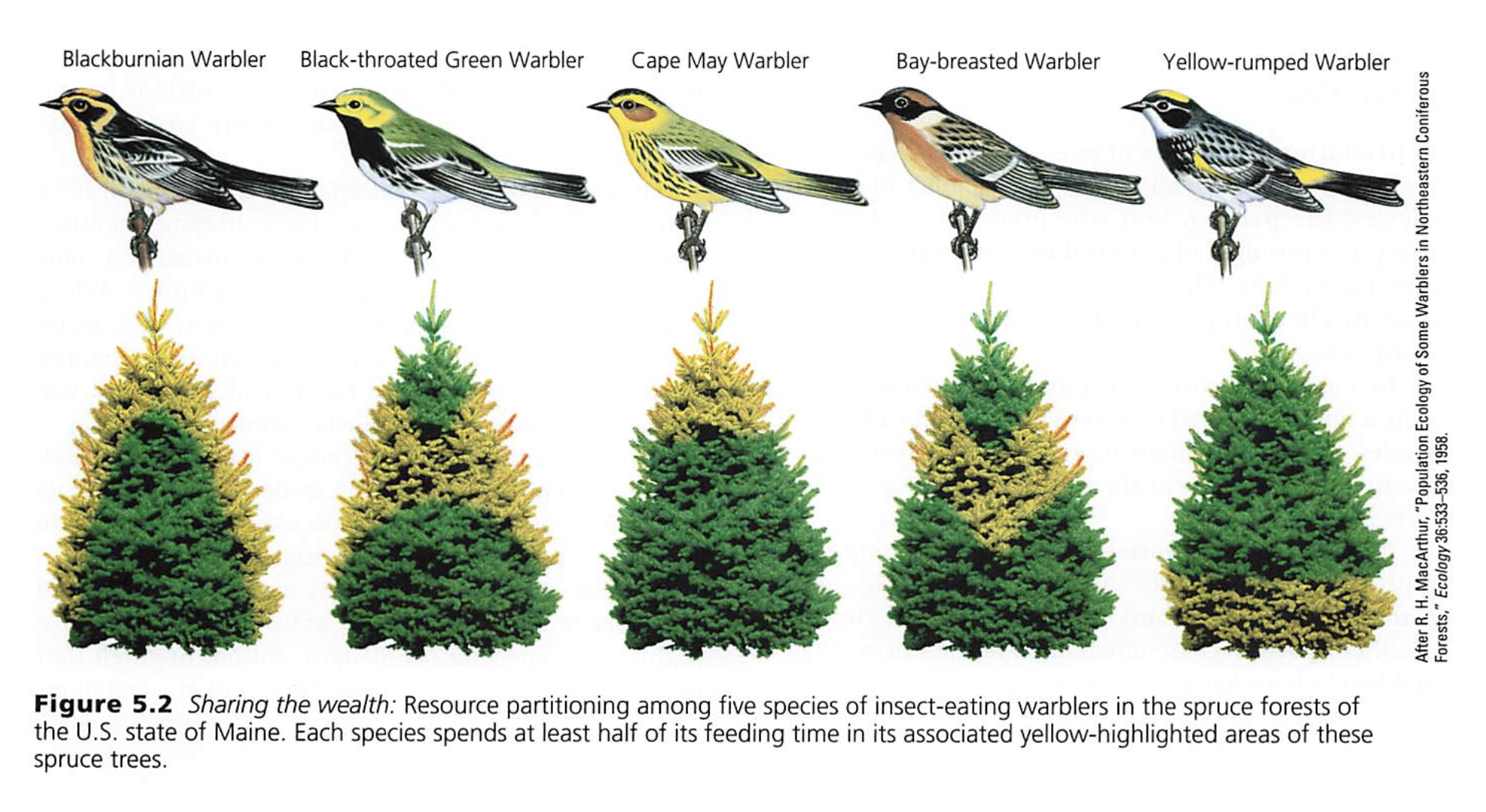
<div id="bkmrk-interspecific-compet-1"><span style="font-weight: bold;">Interspecific competition:</span> two species, niches overlap, compete for resources (e.g. humans and many animals)</div><div id="bkmrk-resource-partitionin">Resource partitioning: one resource is shared by species, but in different ways:</div><div id="bkmrk--2"></div><div class="sandbox" id="bkmrk--4"><div id="bkmrk--5"><div id="bkmrk--6"><div><div class="container"><div class="frontside"><div class="iframe">![](https://bookstack.kamuela.org/uploads/images/gallery/2026-09/HNdgIHaNoBwidlFG-screenshot-2024-11-17-at-6-29-45-am-p7kkqw3b.png)</div></div></div></div></div></div></div>  
Predation: predator-prey (one always dies, the other survives)<div id="bkmrk-see-also-predator-pr">See also predator prey growth cycles</div><div id="bkmrk-predator-strategies%3A"><span style="font-weight: bold;">Predator strategies: </span></div><div id="bkmrk-speed-%28e.g.-cheetah%29">speed (e.g. cheetah)  
teamwork (e.g. lions)  
camouflage (e.g. praying mantis)  
chemical warfare (e.g. spiders)  
  
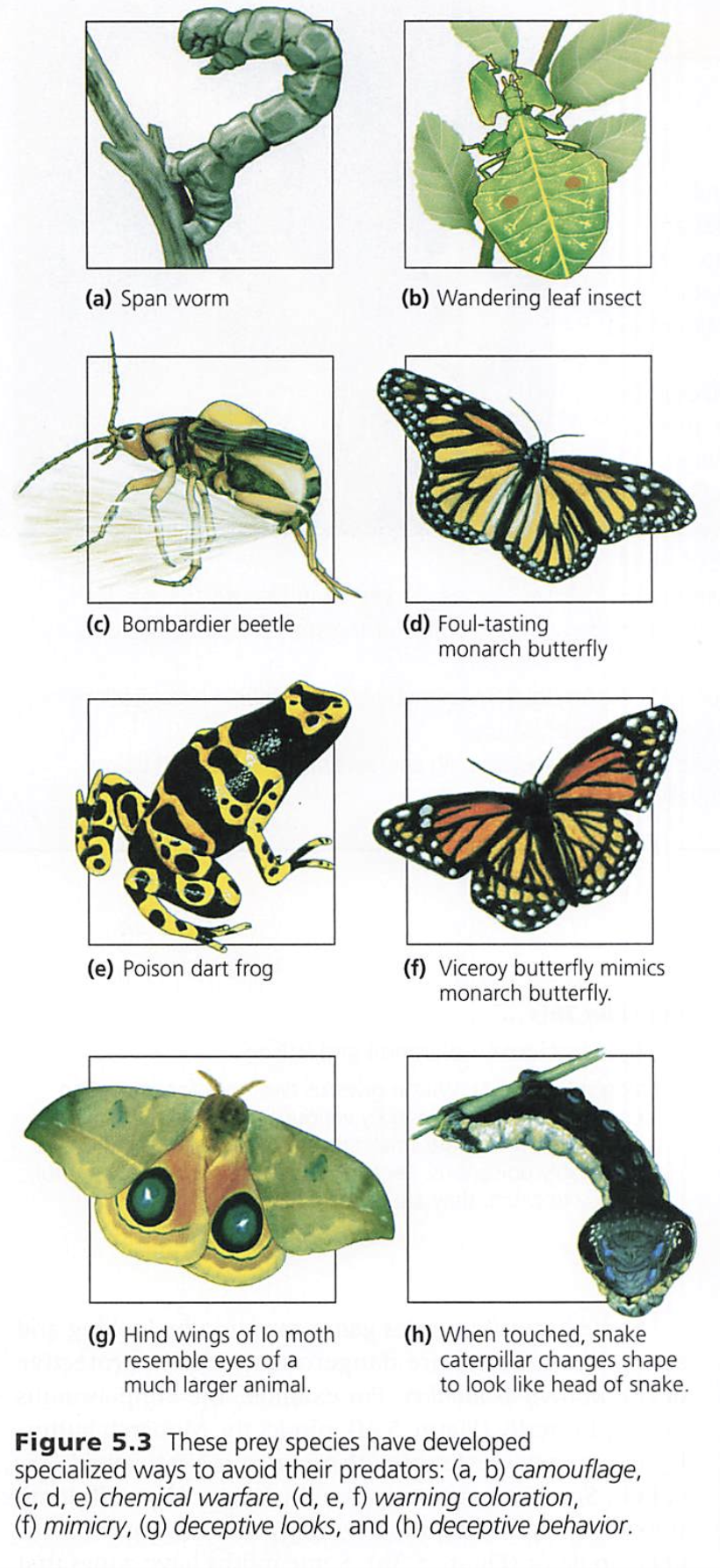
</div><div id="bkmrk-prey-survival-strate"><span style="font-weight: bold;">Prey survival strategies:</span></div><div id="bkmrk-speed-%28gazelle%29sense">speed (gazelle)  
senses (sight, sound, smell)  
physical (shells, spines, thorns)  
camouflage (arctic hare)  
chemical warfare (octopus)  
mimicry (looking like something else)  
  
</div><div class="sandbox" id="bkmrk--8"><div id="bkmrk--9"><div id="bkmrk--10"><div><div class="container"><div class="frontside"><div class="iframe">![](https://bookstack.kamuela.org/uploads/images/gallery/2026-09/QNHFWj3HyVOFMVVW-screenshot-2024-11-17-at-6-35-19-am-w6t4qkoz.png)</div></div></div></div></div></div></div>  
<span id="bkmrk-coevolution" style="font-weight: bold;">Coevolution</span>: predator gets better, prey gets better, predator gets better...<div id="bkmrk-bats-use-sound-to-fi">

1. bats use sound to find moths (echolocation)
2. moths evolve to hear the sounds, evade
3. bats change the frequency
4. moths evolve to create their own sounds, blocking the bats
5. bats evolve to listen for the moth sounds

<div>Parasitism: One lives off of energy and nutrients from the host "it is bad manners for the parasite to kill the host" </div></div><div id="bkmrk-mutualism%3A-both-bene">Mutualism: both benefit (birds eating bugs on cattle)  
Commensalism: one benefits, the other does not care (orchids in trees)  
  
  
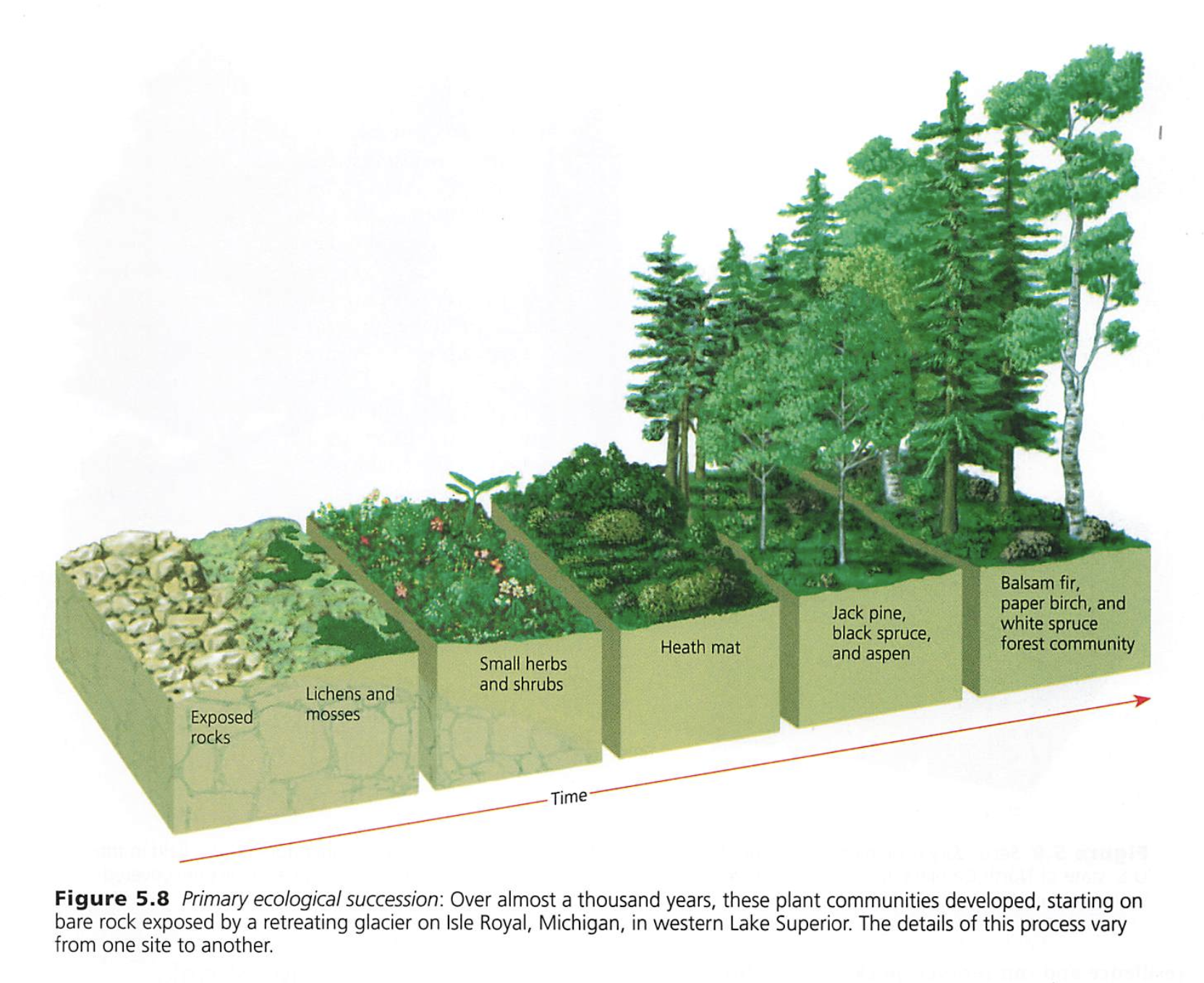
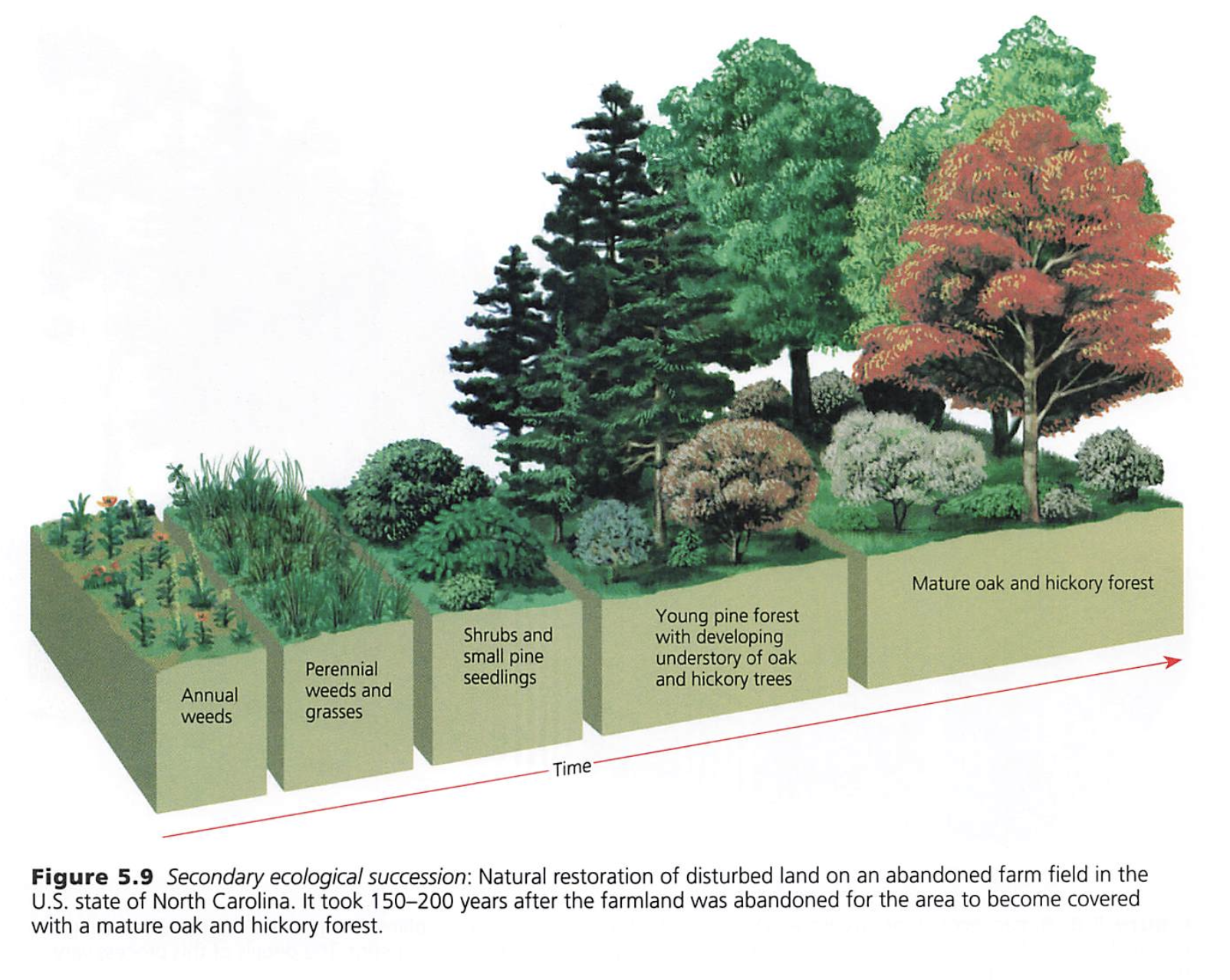
Ecological succession:  
Primary succession: from bare rock, no organic materials  
Secondary succession: building blocks for live are there, have been removed (e.g. forest fire)</div><div class="sandbox" id="bkmrk--12"><div id="bkmrk--13"><div id="bkmrk--14"><div><div class="container"><div class="frontside"><div class="iframe">![](https://bookstack.kamuela.org/uploads/images/gallery/2026-09/DFa7fnA43r2blN3K-screenshot-2024-11-17-at-6-41-49-am-0uwx66ku.png)</div></div></div></div></div></div></div><div class="sandbox" id="bkmrk--15"><div id="bkmrk--16"><div id="bkmrk--17"><div><div class="container"><div class="frontside"><div class="iframe">![](https://bookstack.kamuela.org/uploads/images/gallery/2026-09/E60qUXiHzLNkd2oQ-screenshot-2024-11-17-at-6-45-09-am-654yyrd6.png)</div></div></div></div></div></div></div>Different take on resistance and resilience:<div id="bkmrk-resistance%3A-%22ecologi">Resistance: "ecological intertia or persistence"  
Resilience: ability to recover  
  
  
Ecosystems have one or the other, not both:  
Tropical rain forest: high diversity, high resistance, but when cleared cannot recover  
Grasslands: low diversity, low resistance, but high resilience, organics are in the roots in a fire  
  
</div>  
---

<small>Migrated from Apple Server Wiki. Original page ID: F909Z1c4h</small>