# Lab 07: Earth, moon, sun and stars
Everything rotates
- When you look at a sunrise, is this to the east or west?
- Sunset? east or west?
It turns out that everything in our galaxy rotates in the same direction. If you use North on our globe as "up" and you look down on our planet, it rotates counter-clockwise, every 24 hours.
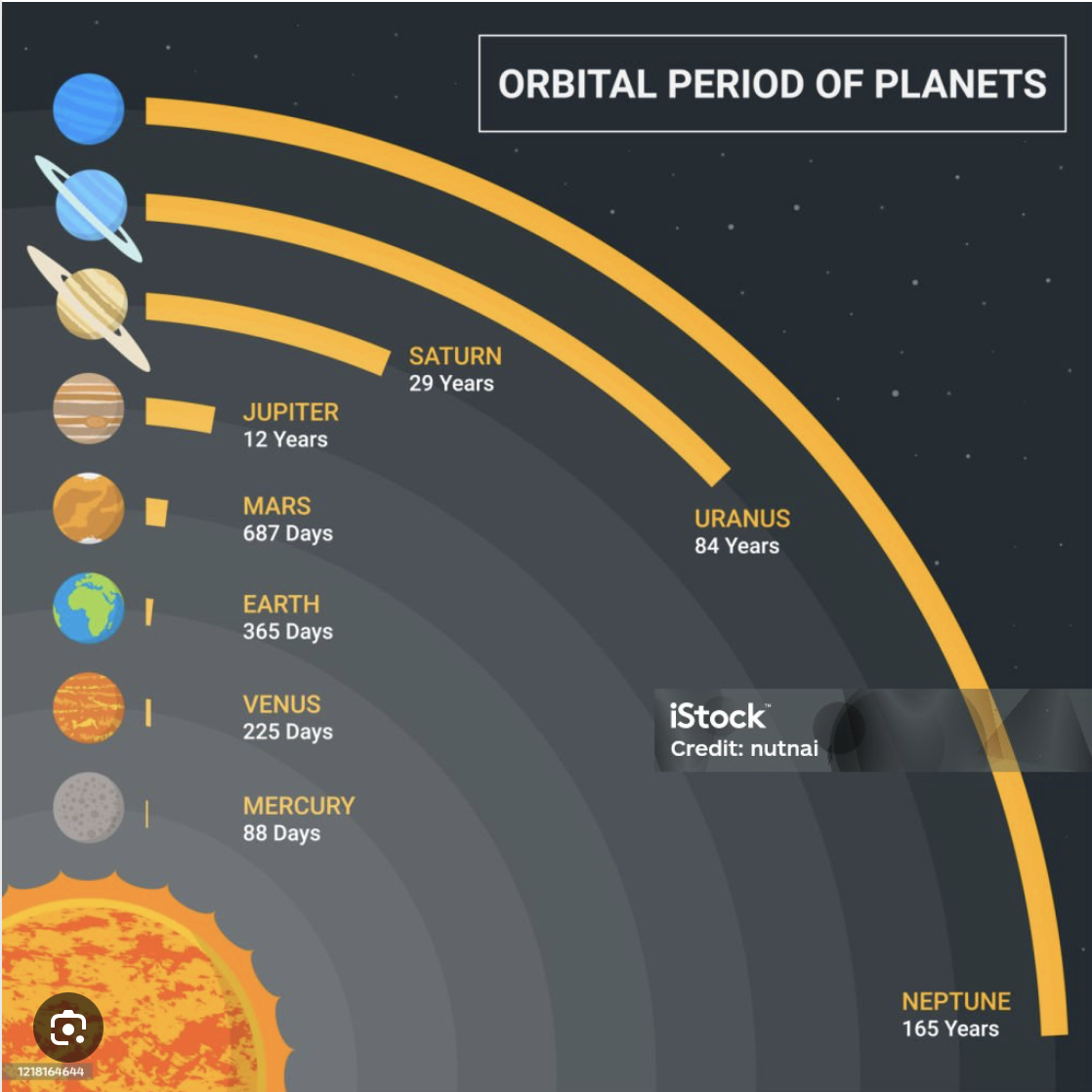
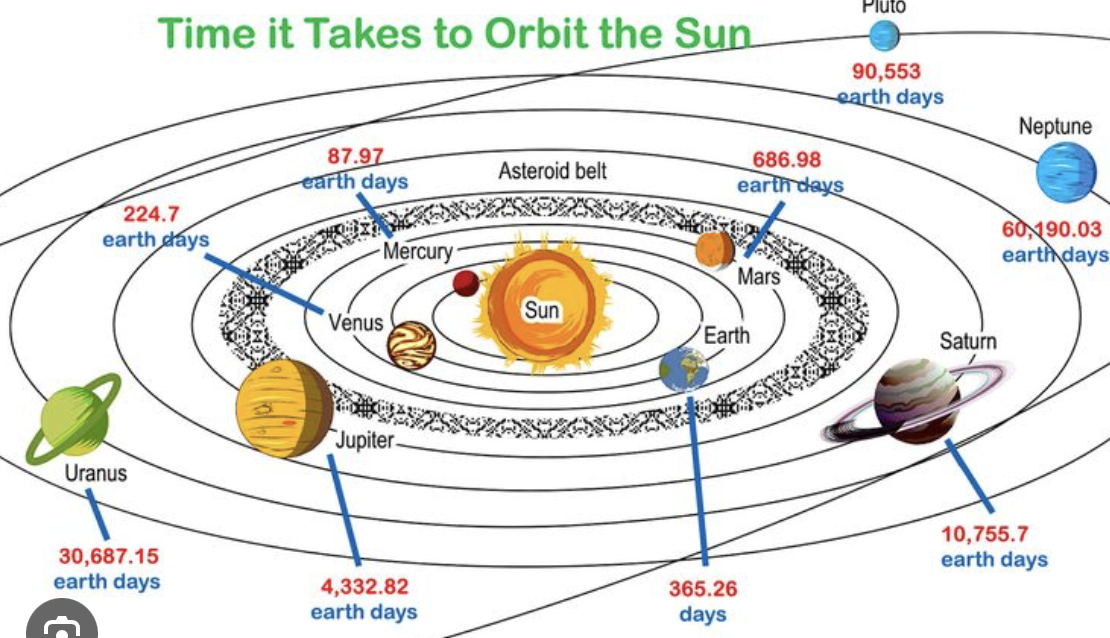
- We rotate in the same direction around the sun every 365 days.
- The moon rotates around earth about every 28 days.
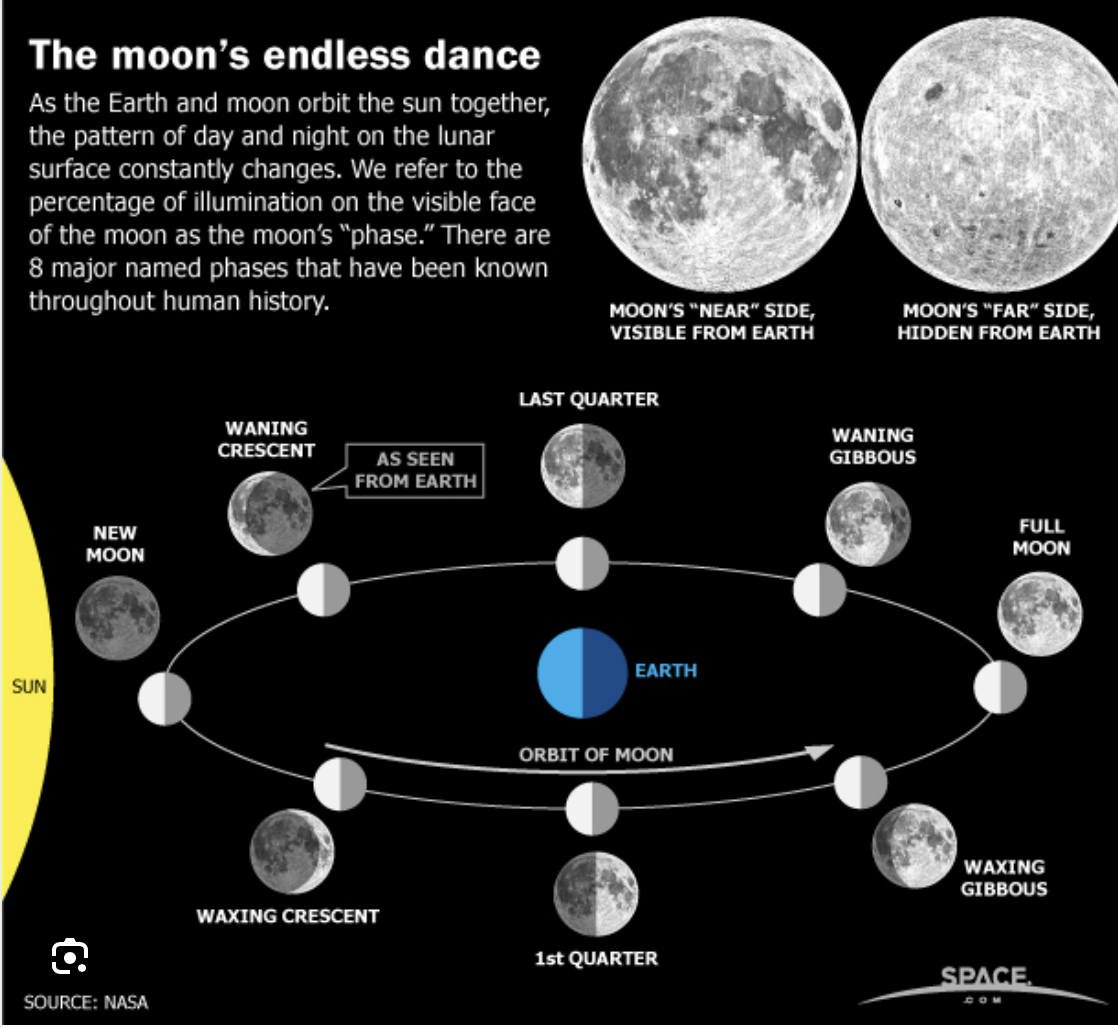
- The moon rotates itself in the same period, so the same "light" side is always facing us
- Every planet in our solar system rotates in the same direction around the sun (except Uranus, as it was hit long ago)
- Even the sun rotates in the same direction
- If you want a satellite to look down on the same place on earth, it has to rotate in the same direction every 24 hours too.
Screenshot 2026-02-04 at 8.24.27 AM.png
Screenshot 2026-02-04 at 8.21.04 AM.pngPart 1: Earth and Moon
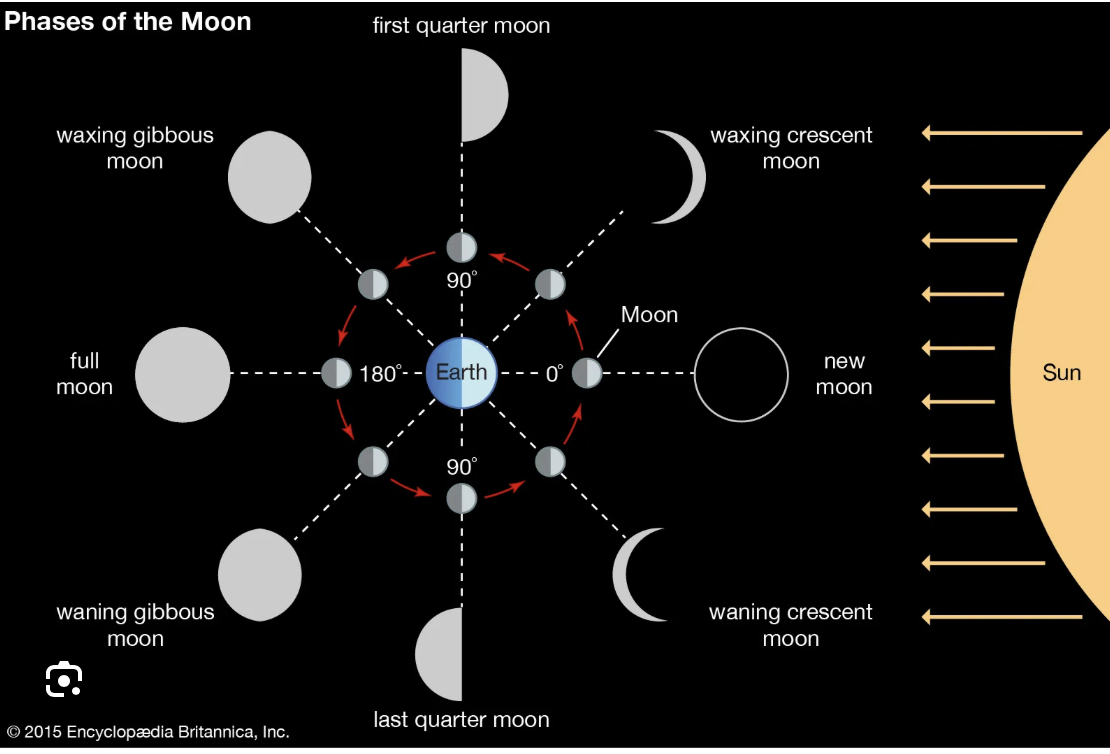
Look at this diagram of the earth and moon orbiting:
Screenshot 2026-02-04 at 8.27.06 AM.png
Here's another view:
Screenshot 2026-02-04 at 9.03.50 AM.pngTry this to visualize the moon phases:
1. stand with your back to the north
2. put your left hand out-this should face east, the sunrise
3. put your right hand out-this should face west, the sunset
4. at sunset:
1. a first quarter moon will be right overhead
2. a full moon will be east, where your left hand points (second quarter)
3. a third quarter moon will be straight down, below your feet
6. at sunrise:
1. a full moon will be setting to the west (best one to remember)
2. a third quarter moon will be overhead
3. a first quarter moon will be straight down, below your feet
Part 2: Earth tilt and shadows
1. stand with your back to the north
2. put your left hand out, this should be east, the sunrise direction
3. put your right hand out, this should be west, the sunset direction
4. at noon the sun should be straight overhead
5. from our work on latitude, your shadow will be on your north side for most of the year
6. on the globe, find Hawai'i and the tropic of cancer-are we above it or below?
7. on the shortest day of the year, December 21, your shadow should be short and to the north
8. on the equinoxes (March 21 and September 21) your shadow will be north of you and about 21° from vertical (our latitude above the equator)
9. since we are between the tropics and the equator, on the longest days of the year, our shadow will actually be SOUTH of us-why?
Part 3: Earth tilt and seasons
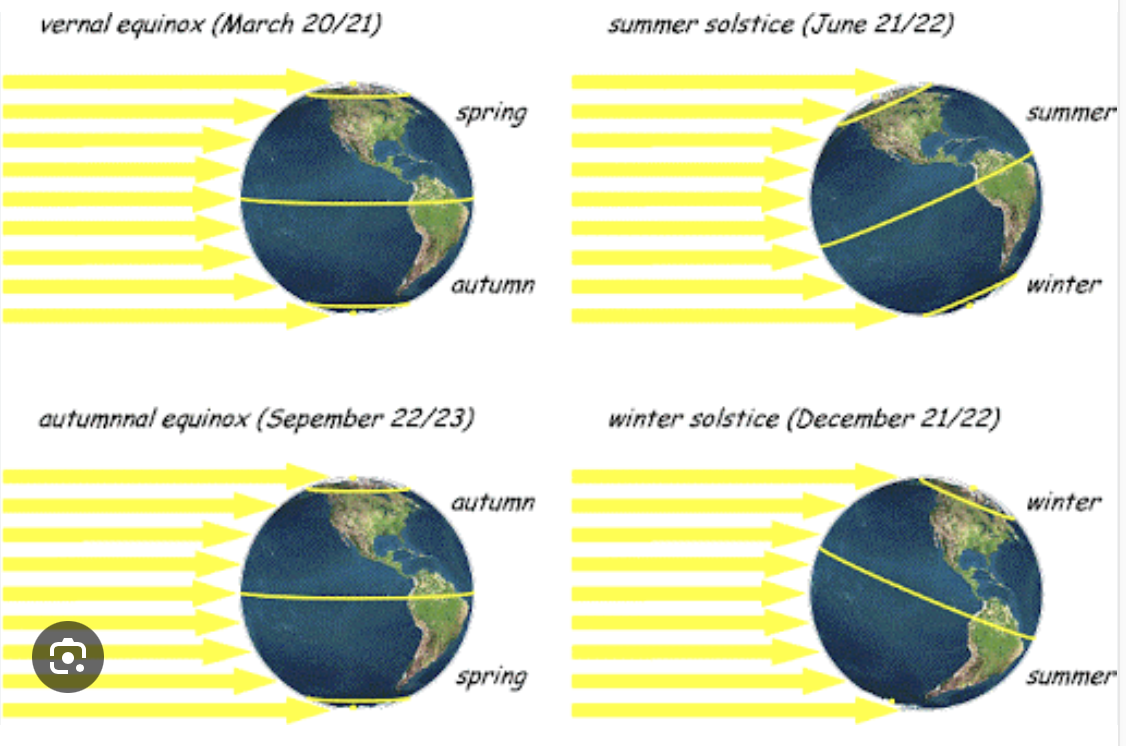
Many folks think that our seasons are based on our distance from the sun, but it is actually the tilt (from above) that makes summer and winter, look at this:
Screenshot 2026-02-04 at 9.20.35 AM.png
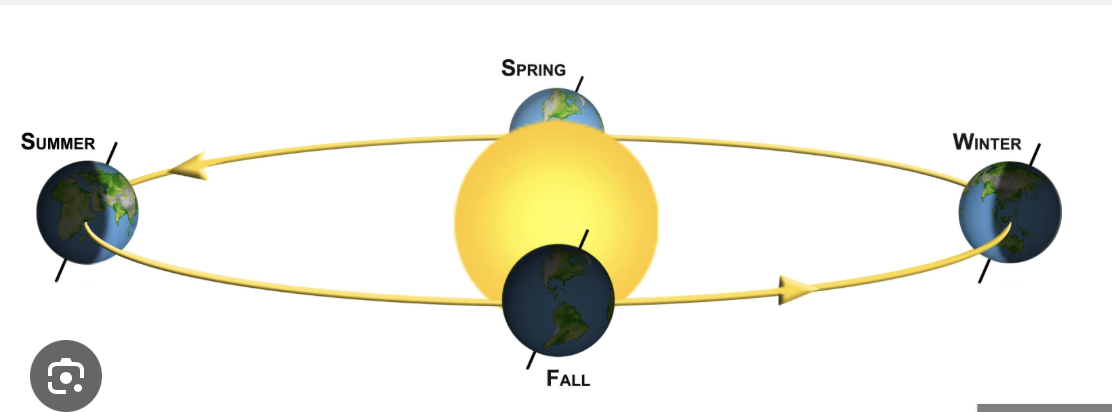
- This diagram can be confusing: the earth is always tilted at an angle of 22.5 degrees, but as it orbits the sun, this angle is away (winter for us), towards (summer for us) or perpendicular to the sun (equinoxes), so look below:
Screenshot 2026-02-04 at 9.27.02 AM.png
- From your work on latitudes, notice how at noon on the equinoxes the sun hits every part of the planet at the angle of latitude, e.g. 0 degrees from vertical at the equator, and 90° from vertical at the poles
- Equinox means "equal night" so every part of the planet has a 12 hour day and 12 hour night.
- In Hawai'i our days do get shorter in the winter and longer in the summer, but because we are closer to the equator, this change in angle is not as great as it is near the poles, away from the equator.
Part 4: Earth and constellations
- Ancient folks used the stars to navigate, most importantly the Arabs traveling on the desert, and the Polynesians traveling on the ocean, since in both cases there are no mountains, rivers or other features to navigate by.
- Arabs used the winds to some extent and the Polynesians used the winds and the waves to navigate as well as the stars.
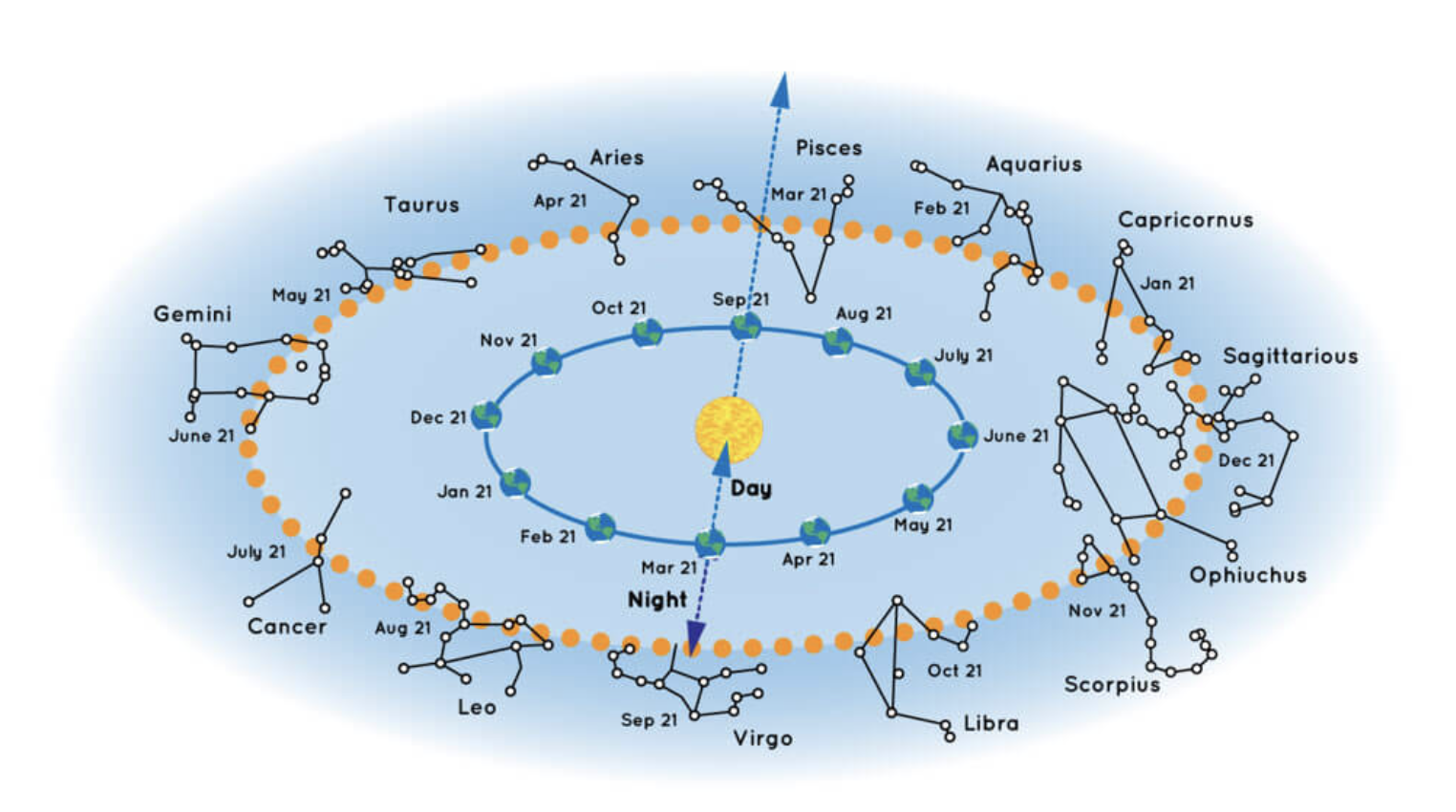
- Have a look [here](https://spaceplace.nasa.gov/constellations/en/) and check out this diagram:
Screenshot 2026-02-04 at 9.35.11 AM.png
Now for a surprise: count the constellations
- How many months in a year?
- How many constellations?
- Look up why one was dropped, and which one...
Next: Polynesian navigation-how they used these constellations to navigate around the ocean...
---
Migrated from Apple Server Wiki. Original page ID: 94Z4B4N3