
24.09.11 Environmental indicators
Migration
Alternate resource: https://elab.hpa.edu/apes/texts/fr3e/friedland-relyea-3rd-edition.pdf
Modules 1-3 are useful...
Please download while in progressthe elab today, and look over modules 1-3
Energy->water->food->culture
- With energy you can move/purify water
- With water you can grow food
- With food you can maintain a culture
Climate change map-try this out:
Look up the sea level rise simulator as well:
Nebraska->Alberta by 2050; Why? Where should you buy land?
Terms:
- Bio=life, so biotic means living, abiotic means not living (druids had a neat view on this)
- Ecosystem services: can be economic, direct or cascading (fishing in the Gulf of Mexico impacted by offshore oil spills)
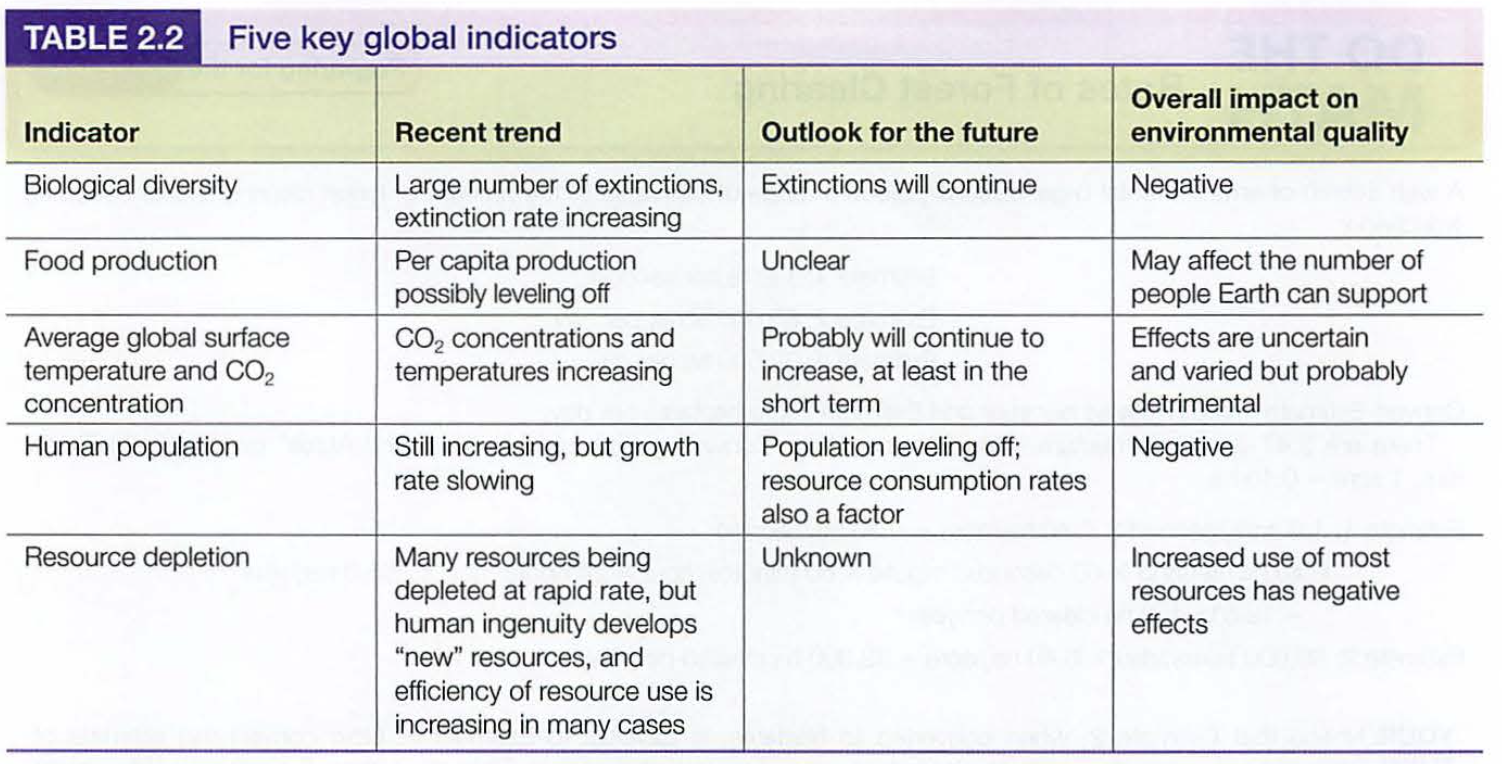
Environmental indicators: what we know and can observe that indicate the condition of a system
- Biodiversity
- Food production
- Global warming
- Human Population
- Resource depletion
- Robust systems (can be biological, racial, technological) all have strong diversity
- Genetic Diversity: genetic variation within a population (corn for example)
- Species: ducks vs. dogs
- Species diversity: variation of species in an ecosystem
- Speciation (more) vs. extinction (less)
- Background speciation rate (cosmic rays)
- Background extinction rate (before humans, much higher in the anthropocene era)
Speciation: an adaptation based on stress (evolution)
Evolution needs three things:
- some form of genetic variation
- some stress that favors this variation
- survivors have to reproduce and carry on the variation
Think of giraffes as an example:
- longer necks in some animals
- drought that kills all short neck creatures (just like in land before time)
- long neck animals survive to reproduce and carry on the variation
Cool stuff:
- There is a theory that the background rate of mutation/speciation was much higher long ago because our atmosphere was thinner, and enabled more cosmic rays to penetrate, causing much higher rates of mutation/speciation.
- In England, butterflies have adapted since 1850 to look more like soot from coal fires.
- In NYC, a species of "subway mosquitoes" have been found that feed on humans in a dark, cool place
- Huh.
Then there are the Darwin Awards:
Extinction is the opposite of speciation, where species die off (except in the film Jurassic Park)
There is such a thing as a "background rate of extinction", which we have surpassed by many times
Diversity is good: think of monoculture food crops: one pest kills everything
2. Food production: see Malthus and Norman Borlaug, e.g. Mexico famine (look this guy up)
- grain variation and monoculture
- regional grain production (e.g. Pearl river delta)
- vegetarian vs. carnivores
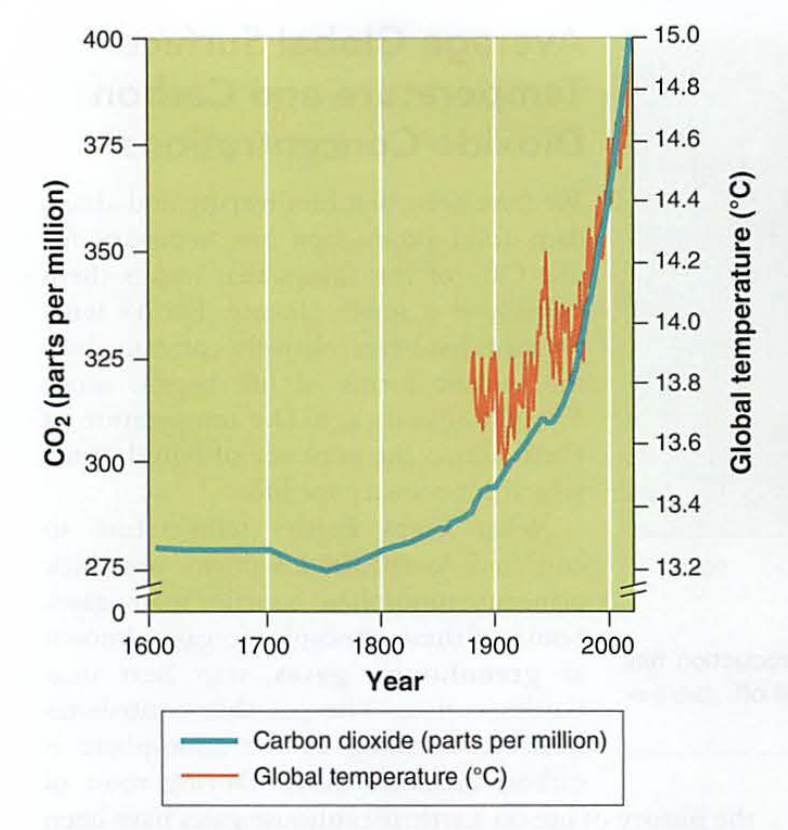
3. Global Warming
- Man made, from burning fossil fuels (anything that was living, decayed capturing atmospheric carbon)
- carbon dioxide was in the air, then captured as plants and animals
- we burn their carbon with oxygen to make carbon dioxide
- greenhouse gases: trap infrared radiation, warming the planet (cause and effect)
- Not too many people know we need some CO2 to keep water above freezing-think of this as we search for exoplanets...
4. Human population
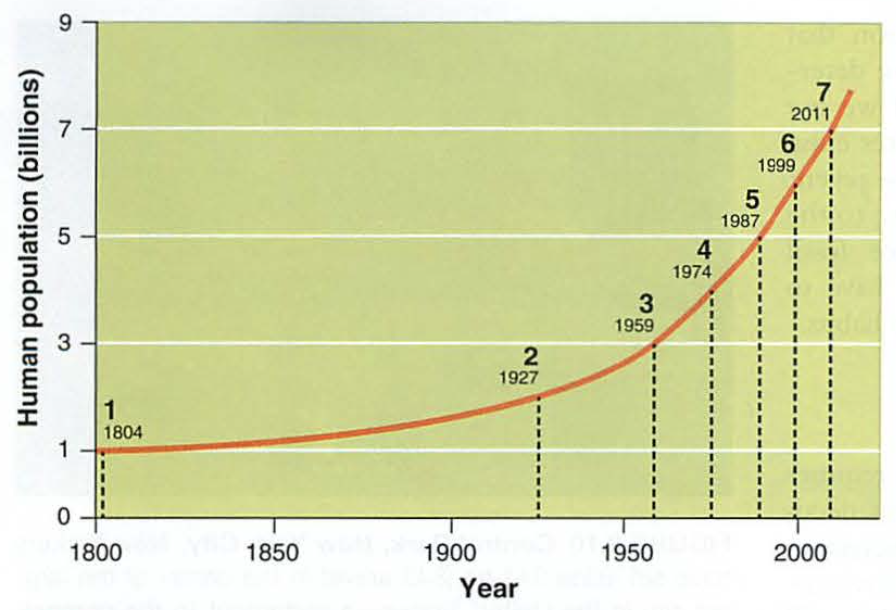
- growth rates
- dispersion due to climate change
- access to water-where, how much, salty?
- why was China’s one child policy eventually a problem for China?
- education, reproductive rights and religion
5. Resource depletion
- water is first
- Resource depletion is hard to grasp, but resource constraints are easier:
- If we had a major tsunami here that closed airports (all near the shore) and ports, how long would we have electricity?
- water? (pumped by electricity)
- food?
Sustainability: ability to sustain present conditions forever (not likely)
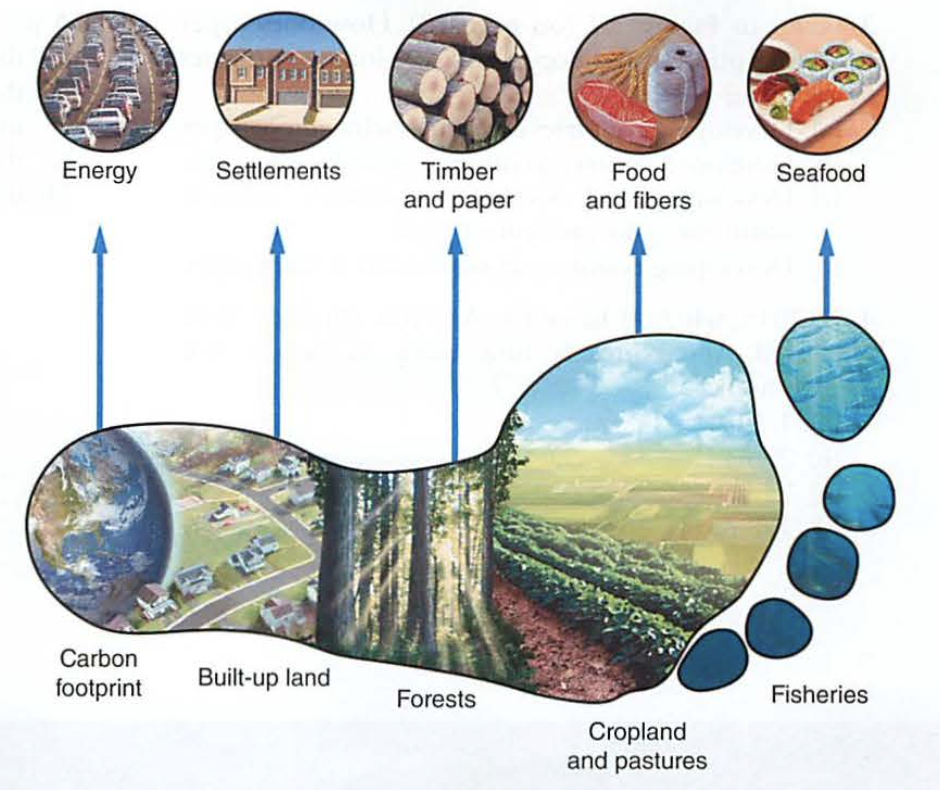
Ecological footprint: what you calculated
Homework:
2.1 Environmental indicators
- Locate your home on the climate change map, and describe conditions when you are 50 years old
- Hawaii is often noted as a “biodiversity hotstpot”. Why is this?
- Create another example of how evolution favors survival
- The Darwin awards are often nicknamed “chlorine for the gene pool" Why?
- Look up the film “Jurassic Park” and do some research into recent real examples of this
- Why will sea level rise challenge the food production of Asia?
- Why is some carbon dioxide needed in the atmosphere for our survival?
- What is the global trend for population growth?
- Why did I list the energy-water-food-culture in that order?
- What is your most important "why" for learning about APES?
Migrated from Apple WikiServer Wiki. Original page 22e8X678.ID: 22e8X678