
24.09.9 science review: methods and terms
MigrationAlternate resource: https://elab.hpa.edu/apes/texts/fr3e/friedland-relyea-3rd-edition.pdf
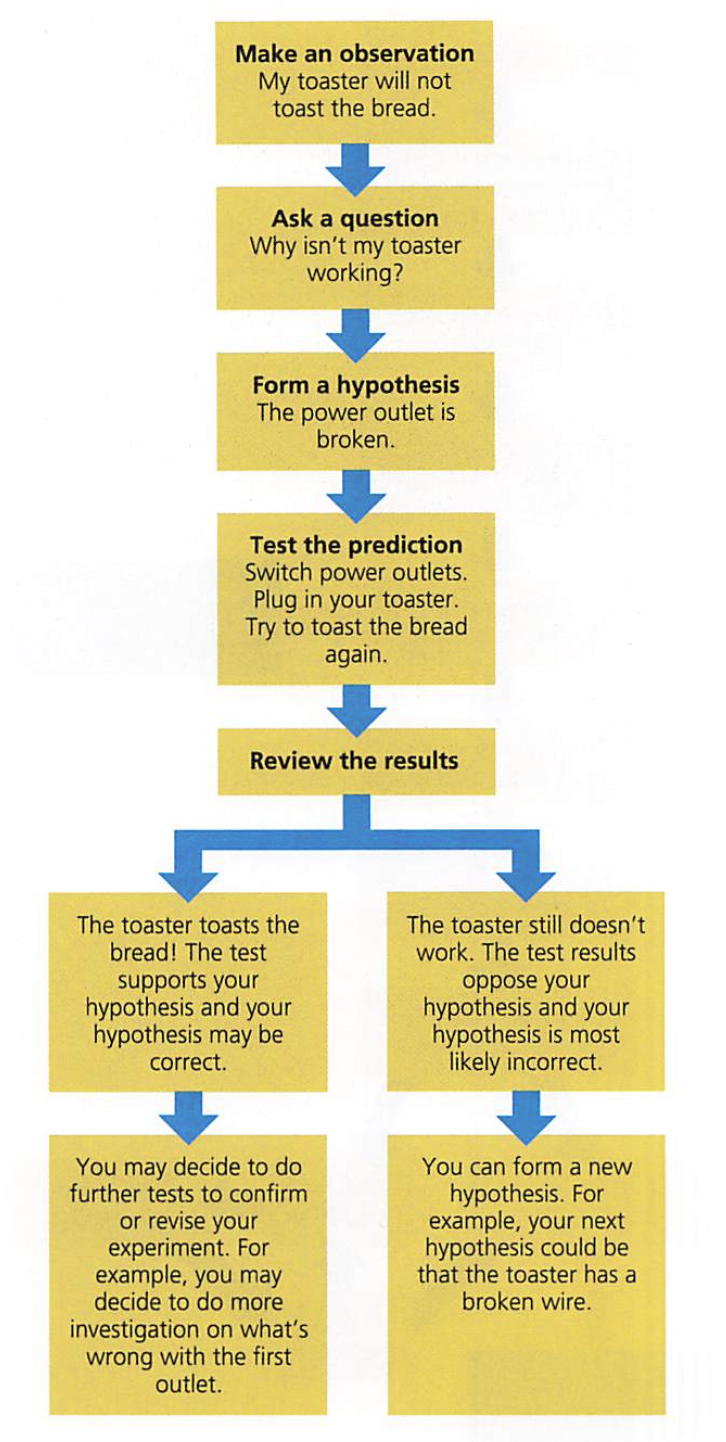
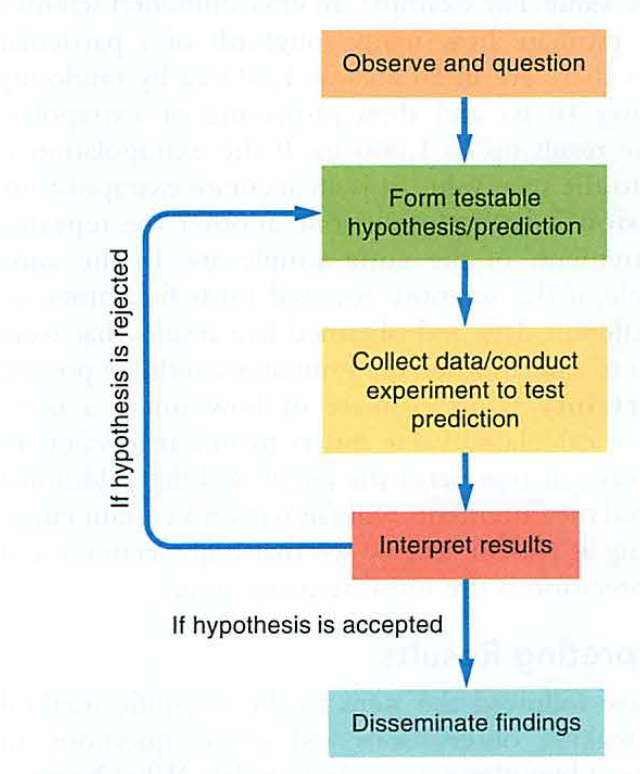
Scientific method:
- Peer review: qualified folks who know the subject well review the process, data and interpretation
- Replication: once published in
progressreputable media, the experiment must be able to be replicated using the same tools - Pons and Fleschmann: no replication possible, same with the S. Korean human cloning guy
Key skills:
- Be skeptical about everything you read or hear.
- Evaluate evidence and hypotheses using inputs and opinions from a variety of reliable sources.
- Identify and evaluate your personal assumptions, biases, and beliefs and distinguish between facts and opinions before coming to a conclusion.
Bad example: Monty Python Witch scene: https://www.youtube.com/watch?v=Ii68tPIiZOo
Law vs. theory: if verified and proven cause and effect, theory can become law: tentative, open to future data
Climate change example:
- Global temperatures are rising based on ice core data and recent measurements
- Carbon dioxide and other greenhouse gases follow the same pattern
- The dynamics of light, heat and gases is well known
- The impact is far greater than smaller variations (e.g. tilt of the earth)
- Carbon dioxide is a byproduct of human fossil fuel burning
- Human activity is linked to climate change
Important terms (yes, these actually show up on the AP exam):
- Variable: any difference, in a planned or "natural" experiment
- Independent variable: the part that does not change (like x in a graph)
- Dependent variable: the part that changes-or not
- Null hypothesis: proving something is NOT cause and effect (can sheep's bladders be used to predict earthquakes)
- Replication: everybody must be able to get the same results, using the same materials
- Sample size (n): must be large enough to be accurate
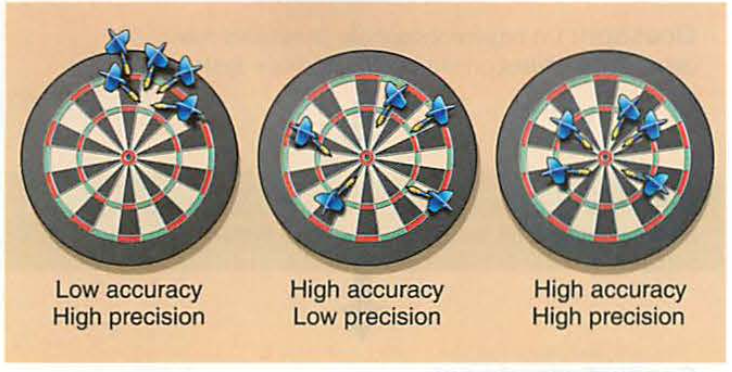
- Accuracy: close to truth or true value
- Precision: how close your results are to each other (gas pump is in 0.01liters, but your odometer is only in miles)
- Control group: those you DON'T mess with in the experiment (think of some drug test)
- Natural experiment: variation not planned (Lahaina, COVID, Mount Pinatubo and cooling of the planet, etc.)
Trivia question: what does Frankenstein have to do with an erupting volcano?
Graphing:
X axis: independent variable
Y axis: dependent variable (the result)
question: in math, a function is something with only one dependent variable-why?
Y axis: dependent variable (the result)
question: in math, a function is something with only one dependent variable-why?
Units:
mks system is meters, kilograms, seconds
prefixes to know:
prefixes to know:
- kilo: thousand, 1000 or 10^3
- mega: million, 1000000 or 10^6
- giga: billion, 1000000000 or 10^9
- centi: 1/100 (like cents), 1 cm is about the width of your pinky
- milli: 1/1000, millimeter is 1/1000 meter, 1/10 of your pinky
- micro: 1/million
- nano: 1/billion
Demo: meter stick
challenges:
- how many cm tall are you?
- How many mm to Kona (62 km)?
- How many kg do you weigh?
Temperature:
- Fahrenheit: only used by older civilizations, or the US (joke there), based on goofy science from long ago
- Centigrade: based on 0° for ice, 100° for steam
- Kelvin: bad guys in Star Trek, or based on molecular motion: absolute zero is 0°K, ice is 273°K, steam is 373°K
- Cool idea: at absolute zero, things could vanish (actually they would get very, very small) why?
Homework: 2.1
Migrated from Apple WikiServer Wiki. Original page h5C1E5x9.ID: h5C1E5x9