
24.11.11: energy flow: trophic levels
Migration
- Recall:
introphprogress=forfood - Autotrophs make their own food (photosynthesis)
- Examples: plants
Trophic levels explain how energy (food) moves up through a food chain
Simple food chain: think of Madagascar...
- Consumers are known as heterotrophs (hetero=not same, troph = food)
- Herbivores (herb=plant, vore=eat) eat plants, and are primary consumers
- Consumers that eat other consumers are known as carnivores (carne=meat, vore=eat) or secondary consumers
- Tertiary consumers eat secondary consumers
- Apex predators have few predators for them, e.g. sharks, humans (cannibals don't count, and they don't eat clowns, they taste funny)
- Trophic levels are each stage up the food chain
- Only 10% of energy moves up each level (why?)
- reproduction
- metabolism (grazing etc.)
- avoiding predators
- romping with friends
- scavengers: eat dead animals, e.g. vultures
- detritivores: eat decaying matter, e.g. beetles (not the Beatles, that's something else)
- decomposers: break down decaying matter, e.g. bacteria
Back to the 10% rule:Just like Marty had to romp around, and in some cases run away from Alex, some energy was used for other things (reproduction is included, though Marty did not have kids that we know of...)
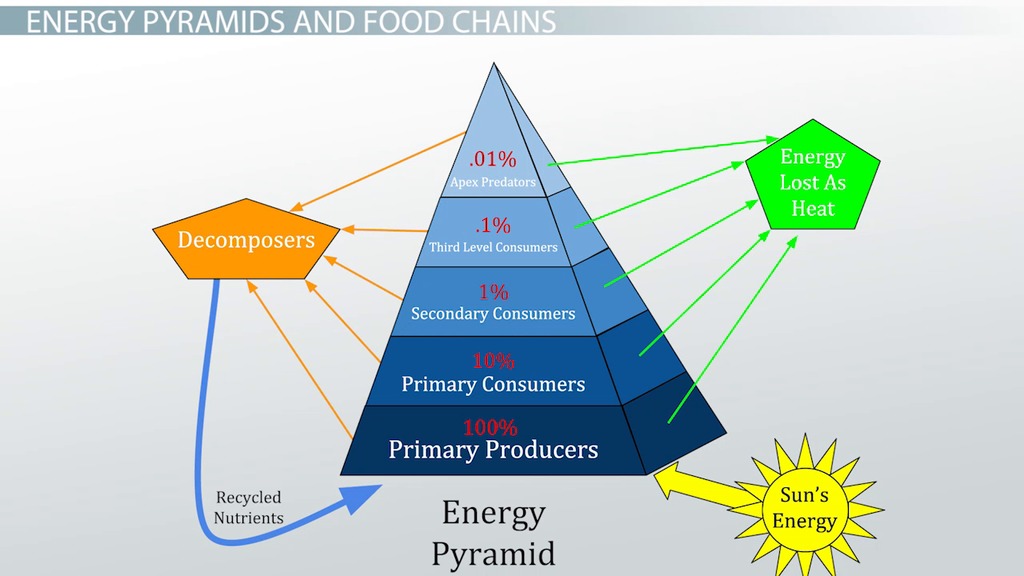
Make sure you understand this: just take one zero off for each level...
Also make sure you can duplicate a complex drama like this:
Or this wetter version:Trick question: could the Lions see the Hyena as a predator or prey? (remember Scar in Lion King?)Another one: what is the connection between Madagascar and the show Friends?
Net Primary Productivity: The rate of turning solar energy into organic materials
From last module: photosynthesis (water, CO2 based) or chemosynthesis (sulfur based) turn energy into organic compounds (light+water->sugar)
- Autotrophs= auto (self) troph (food)
- also known as Producers in the food chain
- GPP: gross primary productivity = all energy into all food
- NPP: net primary productivity = gross - energy of respiration
- Net is usually only 25-50% of gross (not much)
- Fun fact: your body is only about 33% efficient, the rest goes to heat
- Same with your gas powered car...
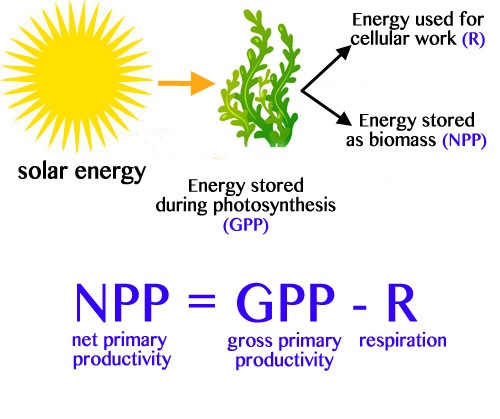
If this were a business, they would charge 20$ for a shirt, that cost them $12, so they only make $8 per shirt. Not good business.
This is most efficient where there is lots of solar radiation, biomass and water:
Look for the richest and the poorest in each ecosystem: Note connection with biomes...
- Richest land biome: lots of sunlight (energy), warm temperatures and lots of water (photosynthesis)
- Poorest land biome: less sunlight, long dark winters, cooler, and drier
- Richest aquatic biome: warm, close to shore, sunlight
- Poorest aquatic biome: cooler, far from shore
Net vs. Gross is easy to understand:
- If your business takes in money, this is your gross income, say 100$
- If your materials cost 20$, then your net income would be 80$
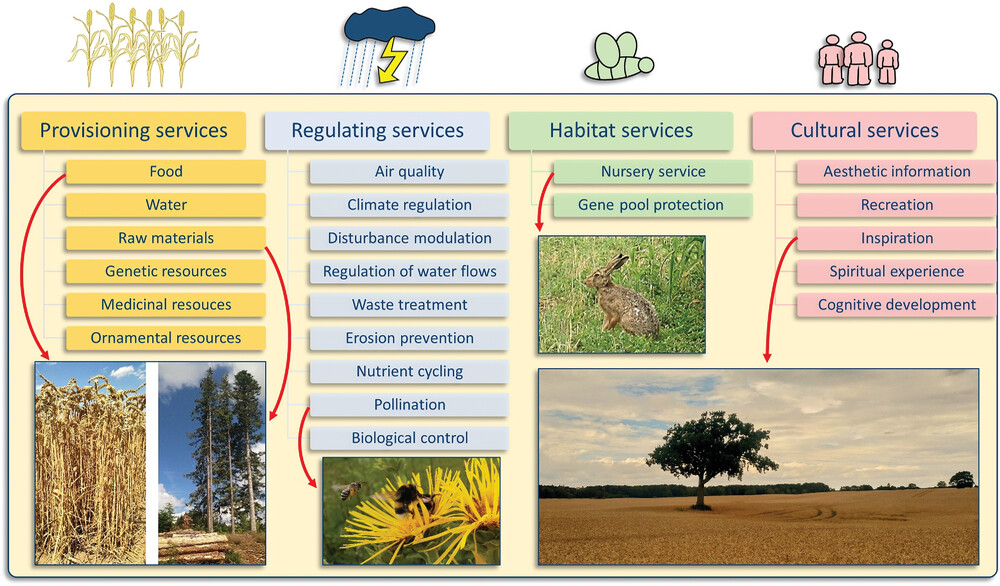
- Ecosystem services: processes by which clean water, timber, fisheries and ag crops are produced
- Provisions: goods humans can use: timber, food crops, plants
- Support systems: pollinators (bees), water filtration (soils)
- Cultural services: aesthetics (John Muir, Ansel Adams)
- Monetary value: lumber, fishing, tourism, ecotourism
Island (physically separate) bio=life, geography=mapping the earth
Important: Size of islands determines number of species on an island: bigger island=more species
Species-area curve: what this means: larger islands have more species
Dependent on several factors:
- colonization: how many new species can make it to the island, e.g. is it far from the mainland like Hawaii?
- extinction: how many species die out, and how fast, from what (disasters, humans)
- distance from each other: greater separation=fewer species (think of birds migrating across our island chain)
Migrated from Apple Server Wiki. Original page B8K6R6B3.ID: B8K6R6B3