
24.11.15: Biodiversity
Migration
- Genetic Diversity: genetic variation among individuals in
progressa population (e.g. redheads, blondes, black hair) - Species Diversity: number of species in an ecosystem (moose, wolf, bear)
- Habitat Diversity: number of habitats in an ecosystem (forest, plains, swamp)
- Genetic variation occurs because reproduction is always a combination of factors: genetics, environment, even lifestyle (kinin potentiation: health impacts genetic variation)
- When a population suffers a massive reduction in population (e.g. whales being hunted) the total genetic variation in the remaining population is lower.
- This is called a Population bottleneck
- This makes them vulnerable to disease and threats that apply to that limited gene pool.
- A greater genetic variation, like ideas, makes for a richer population, able to survive and thrive in different challenging conditions.
- They are also able to diversify food sources, shelter and the ability to withstand environmental challenges.
- The opposite of this biodiversity has a perfect example: monocropping, where one threat can wipe out an entire group of crops (no diversity)
- Habitat diversity has two categories: specialists and generalists
- Specialists can only live in certain limited conditions, and tend to be located in niches
- Generalists can live in many conditions, and many invasive species tend to be generalists
- Species richness means many different species in an ecosystem
- Species evenness means no one species takes over
Recall our main themes: energy->water->food->culture
Food!
Three main groups:
- Proteins: always include Nitrogen
- Carbohydrates: CHO in chains (starches) or simple (sugars)
- Fats: CHO again, but in a special branch structure (glycol backbone) that is good for energy storage and insulation (e.g. killer whales, eskimos)
Proteins: complex molecules of CHO and N.
- Look up amino acids, note the common structure.
- Now look up the amino acid methionine.
- What element does it contain as well?
- Why do rotten eggs, swamps (and Kilauea volcano) stink?
CHO=carbohydrates (clever name),
- usually in a chain, short chains are sugars (used for fuel),
- longer ones are starches and can be used for structures (e.g. cellulose in plants) or pasta...
- smallest: sugars, all end in -ose (glucose, sucrose) LOOK THESE UP, CHECK OUT THEIR MOLECULE SHAPE
- glucose is a "monosaccharide" created by photosynthesis
- longer chains: starches (rice, pasta) slowly digested (see diabetics, and glycemic index)
- structural CHO: cellulose-little boxes with goo inside, need enzymes to break these down (cows)
- ENZYMES ALL END IN -ASE
Fats/lipids: same chemical structure as CHO, but built along a glycol (alcohol) backbone.
- If the fats have long carbon chains with only single bonds, they are saturated (lots of Hydrogen atoms) and can hold together (e.g. animal fat)https://en.wikipedia.org/wiki/Saturated_fat
- If the long chains have double bonds and don't fit together, they melt easier (e.g. oils) and are called "unsaturated", usually better for your health.
- n.b. McDonalds® got into real hot water a while ago for frying all of their stuff in "supersaturated fats". Ugh...
Notes: Frog book
- Frog 12.3 Agriculture
- Frog 12.4 Food Production
- Trophic pyramids in nature are sustainable
- Planet is nearing carrying capacity (K)
- Think of how many "earths" your global footprint represents
- To meet this food demand, current farming and fishing is industrial, not sustainable
- Undernutrition: lack of calories
- Malnutrition: lack of critical part of diet, usually protein (Kwashiorkor)https://en.wikipedia.org/wiki/Kwashiorkor
- Food security: not just in lesser developed countries ("LDC"), also in the US"Food deserts"-what are these?
- Famine: one of these impacting a large group, often from crop failure, drought or war/displacement
- Overnutrition: common in the US, look up the US obesity rate-how is this determined? Why? Seen any food ads lately?
- Wait-Eskimos eat lots of blubber, why don't they have heart disease?
- How is this different from Kalahari bush tribes?Climate
- Wait, wait-what happened to Japanese health care system when they moved from their traditional diet?
- What impact does this have globally?
- Diet for a small planet 1971: planet can sustain population using fewer calories while supplying protein, vitamins and calories. Not by relying on meat.Vitamins="vital amines"
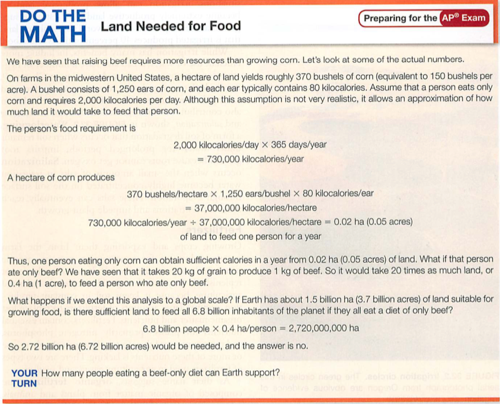
2.8 kg of grain to produce 1 kg of chicken (2.8:1 factor, or subsidy factor of 2.8)
Better to eat beef, chicken, fish or tofu? (you need protein in some form)
Industrial Farming (and fishing)
Agribusiness:
- Just what it sounds like, the larger conglomerates taking over instead of smaller privately owned family farms.
- Often use monoculture crops to increase profits (economy of scale), as well as patented seeds and herbicides (e.g. "roundup ready corn")
Hybrid crops vs. GMO crops:
Started as a good thing:
Hybrid crops"Selective breeding" works for animals (dogs, etc.) and crops called "hybrid crops" created by mixing pollen from one breed of plant (e.g. large kernel corn) with another breed of the same plant (e.g. short stalk corn) to form a "hybrid".
Green Revolution, Norman Borlaug-Mexican famine averted by development of hybrid (not GMO) wheat, called dwarf wheat (large kernel, short stalk).dwarf wheat
GMO crops:in the beginning were just to withstand frost, now into a larger patent issue with GMO seeds and "round up ready crops"What is the impact on lesser developed countries of this business model?
Genetically modified organisms (GMO) are different: they are done by splicing one part of a gene from an organism (like a frost resistant bacteria) into a totally different species (like a tomato) to make it frost resistant."IP" means intellectual property
- Monsanto spends money creating GMOs, so they patent the process, meaning using their seeds requires an IP license from them (just like software).If your farm has these seeds, intentionally or by accident, you have to pay them.
- You also cannot "re-use" seeds in the next season without paying for them.
- This is just like software in that you could buy the software or pay a monthly fee to use it.
- Which makes more money for the company?
- What is the impact on poorer countries?
Roundup ready corn: seeds genetically modified to resist roundup (a herbicide)
- Result: plant their seeds, spray their herbicide and save money on weeding, more crops, more money (to whom?)
- Issue: exposure to roundup (a carcinogen) and possible impacts of mutated food
- Labeling? Where is this done so far?
- Transgenic seeds?
- Can you patent life?
- GMO from Food inc.
Give examples...
Can also be used as a fuel: "gasahol" or E85 (85% ethanol, 15% gasoline)
Brazil: sugar cane->ethanol for cars
Iowa: corn->ethanol for cars
Iowa: corn needs petrochemical fertilizers, pesticides and GMO seeds
Net energy: 2 units of energy in for 1 unit of transportation fuel
Why?
"domestic energy supply"
Iowa primary (this week): no politician will ever go against corn or the corn lobby
Not really "domestic" if we use crude oil from Saudi Arabia to grow corn in Iowa.
Fun fact: "E-Free" gasoline (needed for small engines and all marine engines) has more power, better mileage and more energy per liter.
It is heavily taxed to promote E10 fuel (10% ethanol) or E85 (85% ethanol)
Why marine engines?
Ethanol dissolves fuel lines (ouch!)
- Corn Lobby is very powerful (Iowa=presidential primaries)
- Corn: HFCS (food, meat, fish) and Corn Ethanol (energy, fuel)
- HFCS is in everything
- Corn is used to feed cattle, pork, poultry, even fish
- Cattle are not used to metabolizing corn, it makes them sick
- Bad for humans, increases incidence of diabetes
- HFCS from Food inc.
Main farming problems:
- Irrigation-desertification
- Pesticides-persistent organic pollutants (POPs)
- Fertilizers-eutrophication
Pesticides and herbicides:
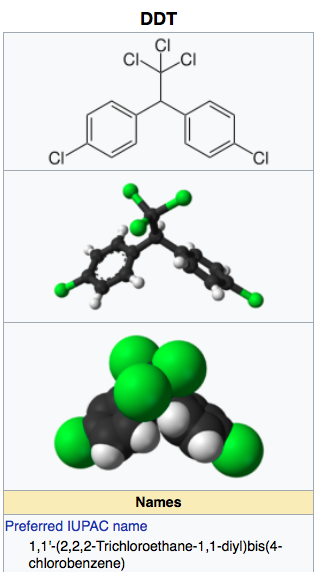
- Can be persistent or not (DDT, round up)
- Invented during WWII to kill humans (nerve gases, nazis), ("homicides")
- Modified to kill pests ("pesticides") or insects ("insecticides")
- Special cases include rodent poisons ("rodenticides") and others, like plants ("herbicides")
- Pesticide resistance-much like COVID: genetic variation in a rapidly multiplying pathogen will eventually overcome the stress (recall evolution) by replicating only those with immunity to the stress (vaccine, pesticide, drug resistant TB)
Haber process enabled nitrogen from the air (N2) to be chemically grouped with other compounds to form fertilizers like Ammonium nitrate: NH4NO3
This process uses huge amounts of petrochemicals, so these fertilizers are attached to the cost of oil and natural gas (not coal)
Fishing:
- Aquaculture means fish or other water animal farmed in the ocean
- Hydroponics means growing plants in a water/air medium
- Fisheries: population of fish, look up Atlantic Cod fisheries collapse in 1990
- Bycatch: unnecessary death of animals caught in fishing nets/traps (dolphins, sharks, etc.)
Mod 33: Sustainable agriculture (fishing too)
- Desertification (see above)
- intercropping vs. monocropping, see "the three sisters"
- Contour cropping: saves space, reduces runoff, preserves top soil (e.g. our garden, most of Asia)
- No-till ag: same idea, retains organic material in topsoil, reduces erosion by wind and water
- IPM: integrated pest management (see Lalamilo Farmers)
- Organic agriculture (also mentioned in Portlandia and Colin the Chicken)More than just N-P-K, also micronutrients, slower release time, low salinity
- CAFO: concentrated animal feed operation (e.g. chickens, pigs, cattle)Usually inorganic feed (purines), hormones and other drugs
- Methyl xanthines: caffeine, theobromine, theophyllineevolved plant poisons for insects:
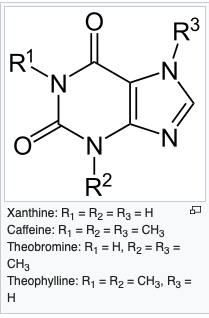
- Xanthine: group name
- Caffeine: energy drinks, coffee, soft drinks (to offset drowsiness from insulin spike)
- Theobromine: chocolate
- Theophylline: tea (also a bronchodilator-helps breathing)
- nicotine: tobacco
- caffeine: coffee, tea
- cocaine: coca plants
See also Chapter 11 in the Frog Book (iPad)
Check out windy.com, zoom forward to Wednesday Nov. 29
Tragedy of the commons:
- First use of the term: 1833, village commons overgrazed (what is a commons?)
- Garret Harding 1968: modern use of the term to describe any public resource that is abused (no ownership)
- Think of places like this in your life: dorm commons, locker room, student union
- Basic premise: if nobody "owns" the resource, it eventually becomes abused
- Tragedy: nobody wins (fun fact: look up the Greek origin of this word)
- Is private ownership a solution? Lahaina fires were fed by neglected invasive grasses in the privately owned lands uphill...
- Possible solution: community ownership
- Externality: shedding financial responsibility for your impact the the whole
- If your company produces pollution, and expects the community or government to clean it up, it costs you nothing, you have "externalized" your cost (the cost is "external" to your business)
- This could also be used to refer to a resource you use without paying for it
- Think of places this happens in our community...
- Create an example here in class: someone makes money doing something, the community pays the price
From your frog book (iPad):
"Sustainability = thinking about forever"
Also: native peoples: "seventh son of seventh son"
In the US, we classify public lands as
- Rangelands-open range, enables some ranching with leases (like the series "Yellowstone")
- National forests-old growth and new growth, limited forestry
- National parks-national treasures, limits on visitors, infrastructure (e.g. Denali)
- National wildlife refuges-usually associated with an endangered species or transit/migration path (e.g. wolves)
- Wilderness areas-no development, often noise abatement as well (think of helicopters in Waipio or Haleakala)
We have several of these national parks here in Hawaii: https://www.nps.gov/state/hi/index.htm
- Kilauea Volcano (Madame Pele)
- Haleakala ("House of the sun")
- Kaloko-Honokohau ("City of Refuge")
- Pearl Harbor
- Pu'u Kohola (Whale Heiau)
- Papa hanau moku a kea-Northwest Hawai'ian Islands NWHI
- Ala Kahakai (shore trail on this island)
Federal lands: owned by the people, but can be leased to individuals
Two ethics are in competition:
- Resource conservation ethic-maximum use based on greatest good for everyone, usually preservation
- Multiple use lands-designated lands for grazing, timber, minerals, leased to individuals or companies for profit
USFS: Us Forest Service
FSC: Forest stewardship council:
- no clear cut
- no damage to land
- replanting
- selective cutting
- underbrush considerations
FSC wood-how different?
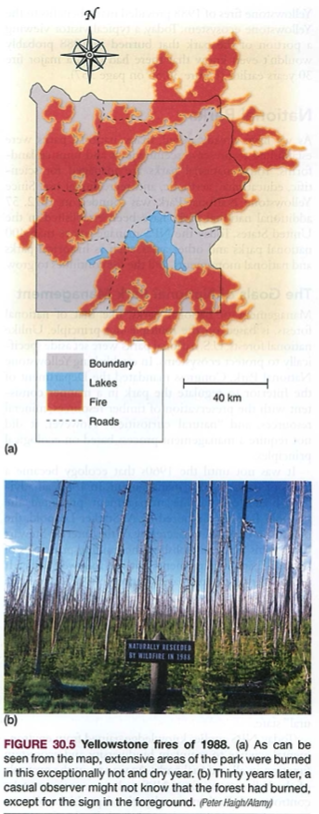
- USFS (US Forest Service) believes in regular forest fires to deplete the amount of underbrush (as in nature)
- See also California and Australia wildfires: drought, no regular fires, buildup of underbrush
- See Yellowstone fire of 1988-result of overgrowth of underbrush
- Also 2009 SoCal fires and 2000 Los Alamos fires accident
- https://www.northcountrypublicradio.org/news/npr/94114095/series-overview-yellowstone-s-evolution
Also significant native peoples monuments (see above)
Know these:
- BLM: Bureau of Land Management
- USFS: US Forest Service
- NPS: National Park Service
- FWS: Fish and Wildlife Service
NEPA: National Environmental Policy Act 1969 (why then?)
- Mandates an EIS for all development
- EIS (environmental impact statements) are new standard for any project
- ESA endangered species act-often brought in where development could impact ES
Classifications: note recreation is part of each
- US Forest Service: timber, grazing, recreation
- National Park Service: recreation and conservation
- Fish and wildlife service: conservation, hunting, fishing, recreation
- Bureau of land management (BLM): grazing, mining, timber, recreation
- Land management, conservation ecology
- "Land Ethic": moral responsibility to protect nature (for all, including next generations)
- Compare with William McDonough: cradle to cradle: "How do we love all the children of all species for all time?” Not just our children. Not just our species. Not just now. All the children, of all species, for all time"
Henry David Thoreau-Walden "truth in nature and wilderness over the deceits of urban civilization". 1845https://en.wikipedia.org/wiki/Henry_David_Thoreau
Ansel Adams: Photographer championed the National Parks: 1920-1980
- "More than any other artist of the century, he would help transform the meaning of "wilderness" in America and change what people thought and felt about their own land"
- "It's a place that you step into, and you don't know what's going to happen, a place that can surprise you, it's a place where you are small, where being small is not a bad thing, where being small is actually a wonderful thing"-Carl Pope, Sierra Club
- "...The world is beautiful, that humanity is part of this larger world, that the concerns of the moment are part but not separate from a larger system of forces that that connect us to all of creation"Jonathan Spaulding, Biographer
Question: How did his photographs change the awareness of the public? People usually care about what they know...
Aldo Leopold-environmental ethics, wildlife management, conservation, Sand County Almanac (Wisconsin) https://en.wikipedia.org/wiki/Aldo_Leopold
John Muir-started the Sierra Club: "wilderness mirrors divinity, nourishes humanity and vivifies the spirit"
Rachel Carson-silent spring DDT (persistent pesticide, weakens bird egg shells), 1963:
- Rangeland: open dry grasslands for grazing
- Forests: land dominated by trees
- Clear-cutting: all trees, regrowth is all same age trees, promotes erosion, wildfires (litter)
- Selective cutting: older trees first
Migrated from Apple Server Wiki. Original page X7c473x.ID: X7c473x