
Ch. W21: New renewable energy sources
MigrationThis chapter rounds out the three chapter study of energy in progressthe Withgott 7e text.
These differ from the chapters on fossil fuels (19) conventional alternates (20) as these are new, renewable sources, where the others are not
Sections:
- Part 1: Outline: Wind in Texas and Germany
- Part 2: Growth of RE (renewable energy)
- Part 3: Solar Energy
- Active solar
- Solar thermal (pumped and siphon)
- Concentrated solar thermal power (CSP)
- Photovoltaic (PV)
- Passive solar
- building design
- stack effect
- building placement
- trombe walls
- Active solar
- Part 4: Wind power
- Horizontal axis wind turbines (HAWT)
- leading blade (big)
- following blade (smaller)
- offshore vs. land based
- delivery issues
- coupling with natural gas, hydro, nuclear base-load power
- usage curves-analysis
- Horizontal axis wind turbines (HAWT)
- Part 5: Geothermal power
- closed loop vs. open loop
- ground source heating-cooling
- heat pumps
- building considerations
- enhanced geothermal (EGS)
- Part 6:Ocean energy
- tidal energy
- wave energy
- current energy (Hawai'i-Maui, Alanuihaha channel)
- ocean thermal energy conversion (OTEC) NELHA in Kona
- Part 7: Energy Storage-Smart Grid
- conventional battery (Lead acid)
- lithium battery (LiFePO4)
- pumped storage hydro (PSH)
- hydrogen fuel cells
Part 1: Wind in Texas and Germany:
- Texas: petroleum mecca for the US, windy in the north, population in the south
- Germany: dependent on others for petroleum, some coal, huge industrial base
Texas challenges:
Wind grew so fast, grid was unable to handle it
T. Boone Pickens (oil guy, discovered fracking in 1960) sold all of his oil holdings, put into wind
He knew something about two things: EROEI and ROI for both-explain
Texas government invested in wind via tax breaks and some funding
Germany:
Not much sun, but lots of PV anyway, so 9% of all energy from solar
Offshore wind started in 1980 (Michael Saalfeld, the donor of the elab)
Feed-in Tariff required energy companies to purchase electricity from consumer who produce their own (PV)
California did this too, HELCO has resisted for decades, now charging a fee to upload energy ($0.12 in, $0.35 out)
Goal: 2050 80% from renewables
Summer of 2022: Germany was completely RE for one day in June
Part 2: Growth of Renewable Energy (RE)
Biomass and hydropower are old solutions, not scalable or really sustainable
"new renewables" usually refer to direct, immediate use of solar energy (solar, wind, tidal/gravity, geothermal/hot core)
Why: scaling now, new technologies, future solutions
Three main uses:
- electricity
- heating water and air
- transportation
Crazy growth rates for wind and solar: 50% or more per YEAR
- inexaustable in our time frame
- geographically dispersed (vs. oil wars)
- available in LDCs (lesser developed countries)
- economically diverse (good for investment)
- promotes local sustainability and resilience
- good for employment (need a job? learn about RE)
- "green collar" jobs (vs. blue collar or white collar)
- one solution for climate crisis (low CO2 emissions)
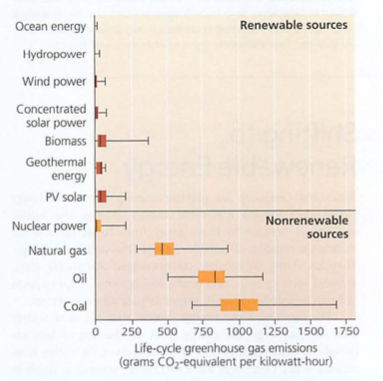
Fun fact: oil in Hawaii is so expensive, and solar is so available that solar energy is now much cheaper than fossil fuel energy
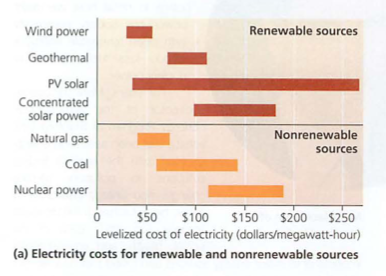
How to read this: here in Hawaii, we pay $0.35 per kWh, which is $350 per mWh, or off the scale in this graph.
Imagine our energy costing $0.02 per kWh instead.
This is the price for electricity in Prineville Oregon, which gets its power from hydropower.
Facebook sites their servers there, cooling them with river water...neat
What would we need to be globally energy neutral?
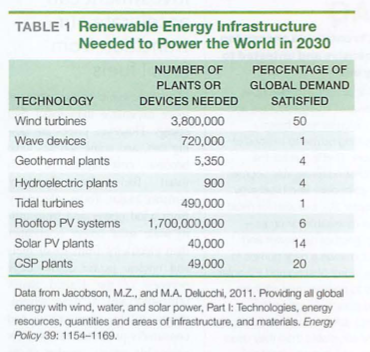
Need to recycle rare-earths and others:
- lithium (batteries)
- platinum (solar cells)
- indium (solar cells)
- tellurium (solar cells)
- neodymium (magnets for motors and wind turbines)
China has mined many of these, and owns the mines around the world for many (smart move)
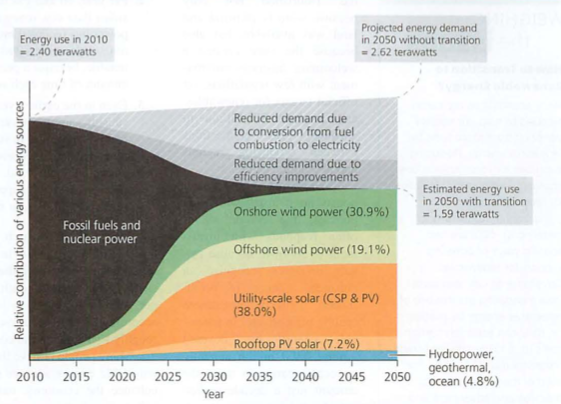
How old will you be in 2050? About 45?
- oil and gas companies have received 75x more than RE
- nuclear has received 31x more than RE
- per year, oil/gas 13x, nuclear 9x than RE
On average, each person on earth pays $40 per year in subsidies for the fossil fuel industry
Each person pays $700 in externalized costs each year (pollution, health impacts)
Part 3: Solar Energy
- Passive solar
- building design
- trombe walls
- building placement
- stack effect
- Active solar
- Solar thermal (pumped and siphon)
- Concentrated solar thermal power (CSP)
- Photovoltaic (PV)
Simplest method of collecting energy from sun:
Passive solar collection
- Equator facing windows, often with something to hold the heat (thermal mass)
- Can be tanks of water or other mass (e.g. concrete)
- Trombe Wall is a wall of thermal mass to cool in the day and warm at night (large thermal mass)
- Also buffer temperature with moist plants (water holds heat)
- elab has two of these: deep concrete foundation and mobile trombe wall (solar collectors and tank)
- building placement: open to the equator, earth away
- stack effect: passive ventilation, see Polynesian house diagram
Active solar collection: focus, move, harvest or store energy (think of food: cultivate, plant, harvest, store)
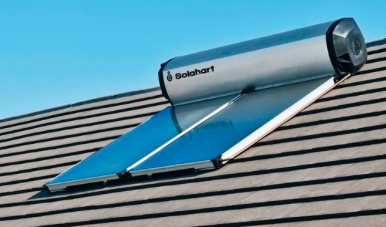
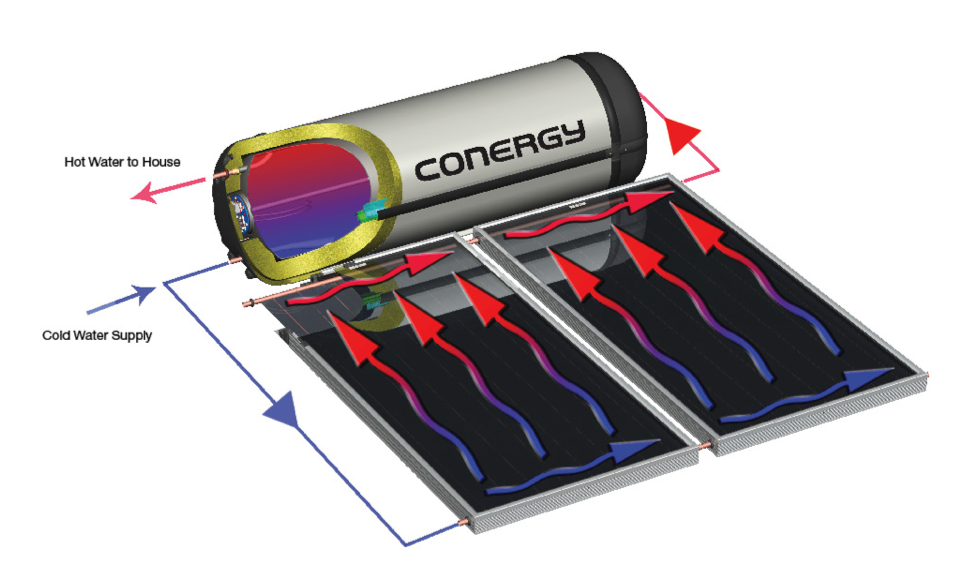
Flat plate solar thermal collectors: passive (thermosiphon) or active (electrical pump)
- passive (solahart, above the cafeteria and Anna's dorm, also the elab)
- active (solar thermal demo at elab, Robertson's dorm, faculty cottages)
Diagram of a mainland active solar thermal system:
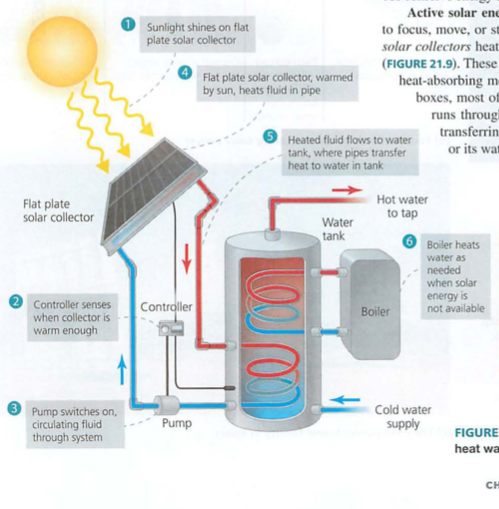
Notice that there are two loops, just like a nuclear power plant. This is because on the mainland, they use antifreeze in the primary (solar) loop so it does not freeze in the winter.
In Hawaii, we don't have that problem...
Passive solar thermal system (Solahart):
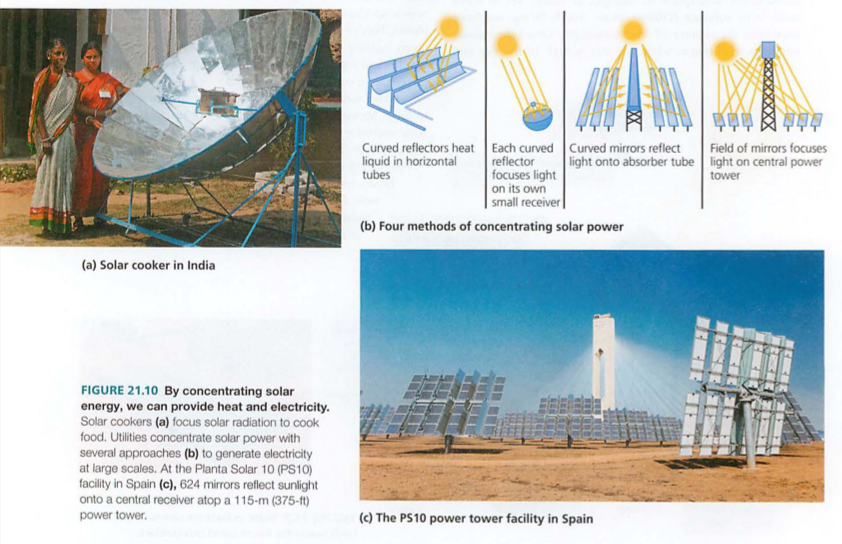
- Can be used for low temp solutions like cooking or melting salt (Spanish project) which can then be used at night to make steam for power.
- There are the remains of one of these projects next to the airport in Kona. It boiled oil to make steam, then electricity.
- HELCO would not let them transport energy over tax map key (TMK) boundaries, so it failed.
- Deserts are great places for CSP: lots of space, lots of sun, no people or animals
Photo(light) voltaic (volts) power:
Direct sunlight radiation energy to electrical energy (Direct current or DC)
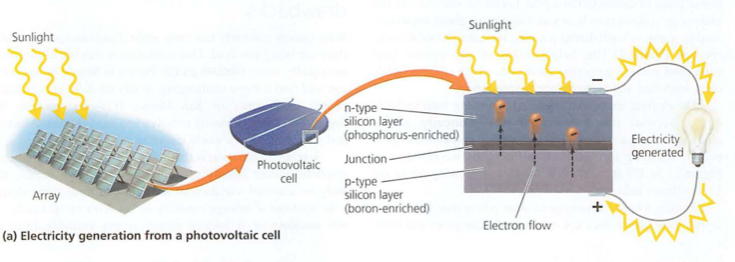
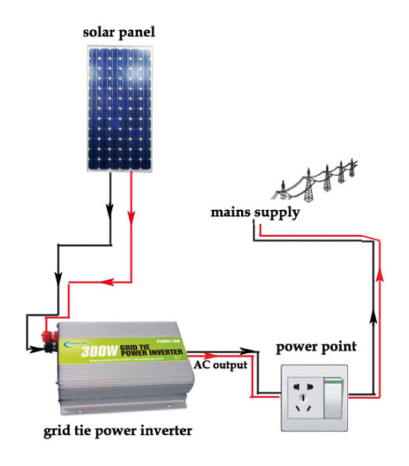
This DC power can be used directly to charge batteries (also DC) but for home use must be converted into AC power using an inverter:
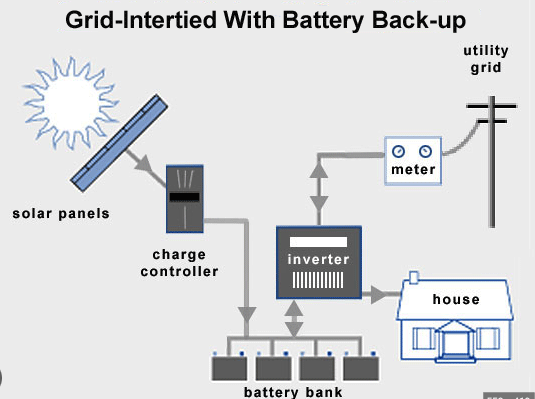
Modern inverters for home use integrate battery storage so when the power utility fails, the PV system and batteries can take over. These can also produce power for the grid, earning money or offsetting electrical use for the customer in a process called net-metering:
Latest PV panels are made from thin films, which is cheaper than earlier crystalline PV panels.
Fun fact: early panels had circular cell patterns because they were adopted from outdated machines to produce silicon wafers for computer chips
Here's why some companies are eager to install PV on your home in Hawaii then sell you back the power:
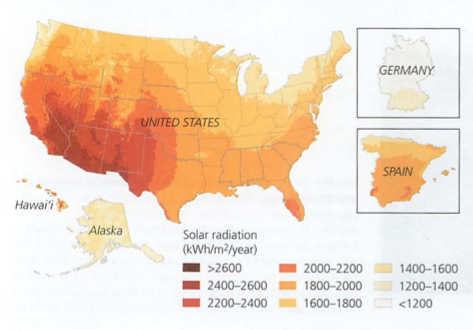
- They also make money selling the carbon offsets and tax credits given to solar energy users, so they make money 3x.
- HPA had one of these PPA (purchase power agreement) projects above the elab, which we later purchased outright.
- Why? HPA paid for the power generated, not what we used, so we were paying the PPA folks for power in the summer then giving it away to HELCO for free. Not a good deal.
- PV production prediction is a new field you could get into: integrating PV into the "smart grid"
- Smart grid: integrating RE and conventional energy sources with power transmission and customer demand.
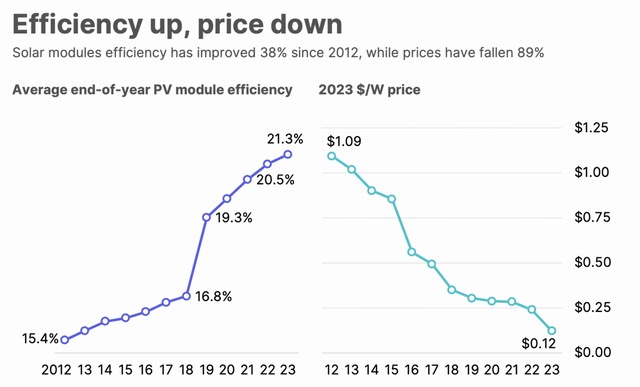
- Cost of PV: in 2008 was $14/Watt. Now is $0.12/Watt (70x cheaper)
- Konawaena HS won the solar car contest long ago (1990)
- China leads the world in PV cell production, often at a loss, so we tariff these, as does Germany
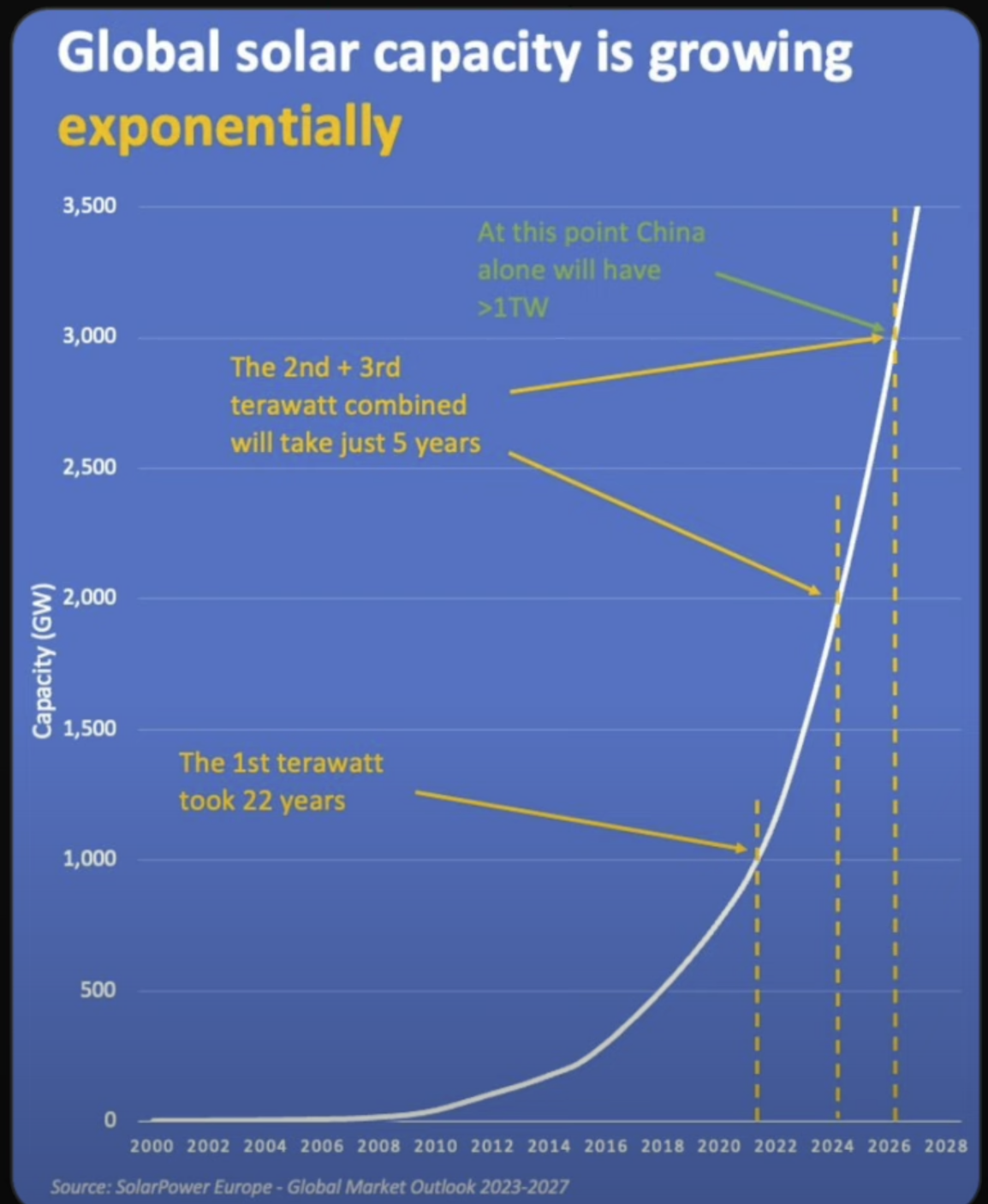
Putting it all together: Solar powered electric vehicles:
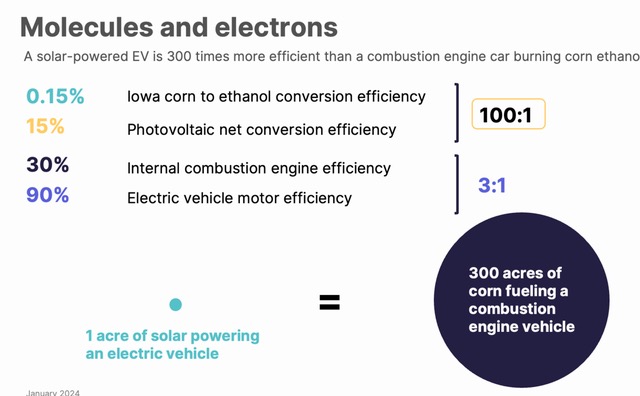
1 acre of solar powering an EV = 300 acres of corn fueling a combustion engine vehicle:
Part 4: Wind Power
- Wind power
- Horizontal axis wind turbines (HAWT)
- leading blade (big)
- following blade (smaller)
- offshore vs. land based
- delivery issues
- coupling with natural gas, hydro, nuclear base-load power
- usage curves-analysis
- Horizontal axis wind turbines (HAWT)
Wind turbines are like those used for hydroelectric power, only to gather energy from the KE of wind instead of water, we need much larger blades, often modeled after airplane wings.
- Look up the "Betz factor" which predicts the maximum energy possible from a wind turbine
- Two main types: leading blade (big) and trailing blade (smaller)
- Both are HAWT or horizontal axis wind turbines
- Basic design goes back to Europe around 1200 AD, to mill grain where rivers were not available (miller or müller are names for those who ran these mills)
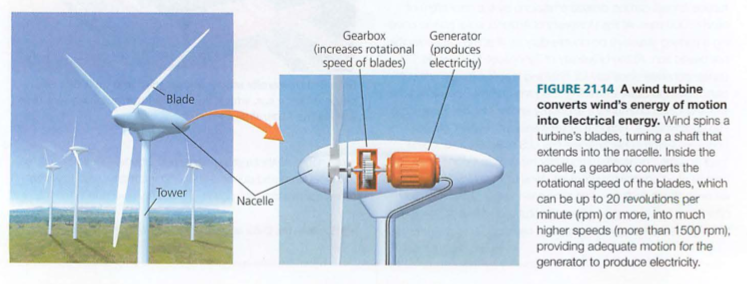
- Blade leading turbines like those above have sensors that point the turbine into the air, so the tower does not interfere with the airflow.
- Blade following turbines are simpler, relying on the wind vane effect, pointing the unit into the trailing wind.
- Some wind turbines are on a vertical axis known as VAWT, but are much less efficient
- We had one at the elab, it exploded
- Offshore wind is much more consistent, but is more expensive to maintain (salt air, far from land)
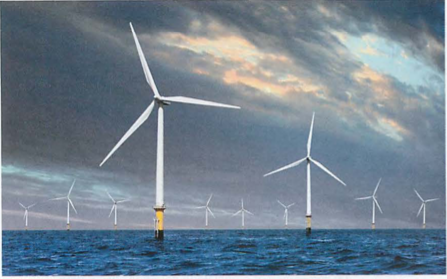
Benefits:
- no emissions
- fairly constant (vs. solar-clouds)
- if located offshore, no noise or animal impact (literally)
- EROEI of 20:1
- Can be included in traditional farming situations (see e2 video: harvesting the wind)
- produces power at night, winter (vs. PV)
Drawbacks:
- noise if near people
- view-shed issues
- mechanical vs. electrical like PV
- windy locations often far from consumers (see below)
- smart grid integration is only in its infancy (Germany leads in this with Energiewende)
- some animal impact (birds, bats)
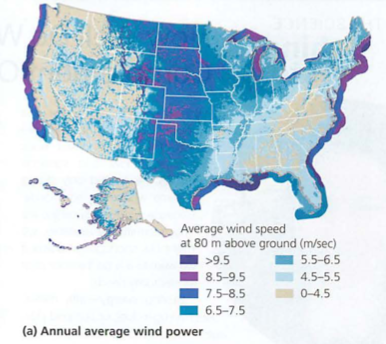
When coupled with nuclear, hydro, geothermal or natural gas turbine plant "baseload power", this can be an excellent augment to the smart grid.
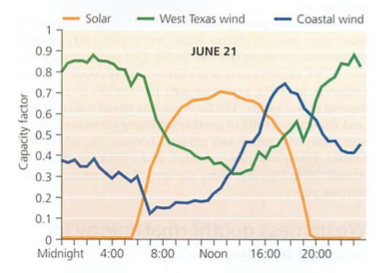
Smart grid and storage are key to this integration (more on this next)
Part 5: Geothermal power:
- Geothermal power
- closed loop vs. open loop
- ground source heating-cooling
- heat pumps
- building considerations
- enhanced geothermal (EGS)
Geothermal refers to any energy source or sink that is underground.
This can be high temperature things like geysers and hot springs that are near 100°C or using the ground to stabilize the temperature of buildings using pipes buried underground.
First, the hot stuff:
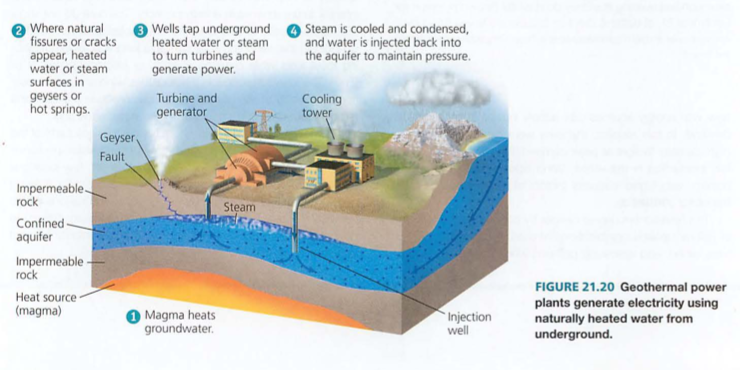
- Note in this case that water is injected into the confined aquifer, then brought up as steam to run a conventional steam power plant. This is an open loop system.
- Iceland just taps into existing steam vents, so is an open system with no loops.
- PGV (Puna geothermal venture) near the Kilauea volcano on our island uses Hexane as a fluid, running through pipes buried underground near very hot magma. This is a closed loop system.
- Open loop geothermal has a bad name here, as it often emitted toxic sulfur fumes, but this ended in 1978.
Ground source heating and cooling:
- Ground source heating and cooling involves running pipes underground, where the temperature is more stable (warmer in winter and cooler in summer).
- These can be augmented using a heat pump, which is basically an air conditioner hooked up in reverse, with the heating part bringing energy into the house in winter.
- Heat pumps can also be used just like air conditioners, without any ground source heating or cooling, in which case they deliver 4 units of heating energy for every 1 unit of energy put into the unit (amazing).
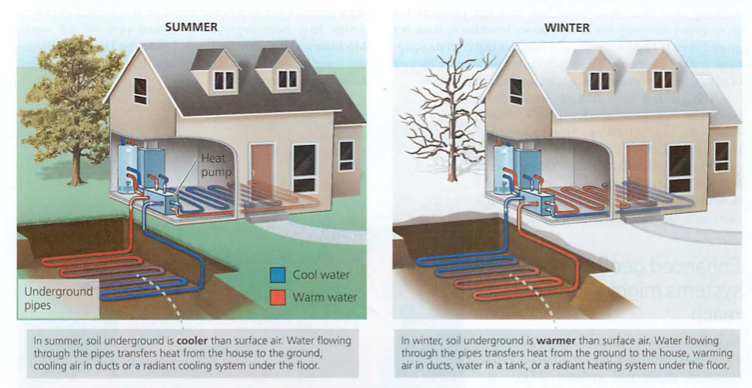
EGS or enhanced geothermal systems are deep wells not near usual hot spots to take advantage of heat deep in the crust.
Fun fact: diamond mines in South Africa have to be cooled as they are so deep, heat from the core makes them unbearably hot
"Chillers" are used in large buildings like hotels and airports where the cooling demands are huge, but the temperature differences are not great. You may see these at the SEATAC airport or at large hotels here on the coast.
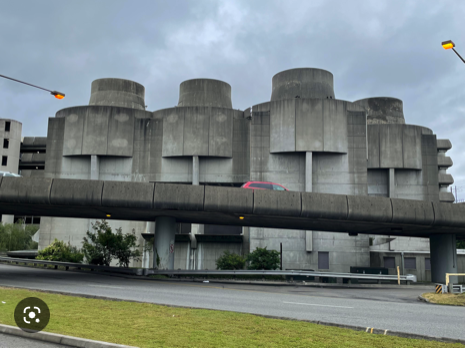
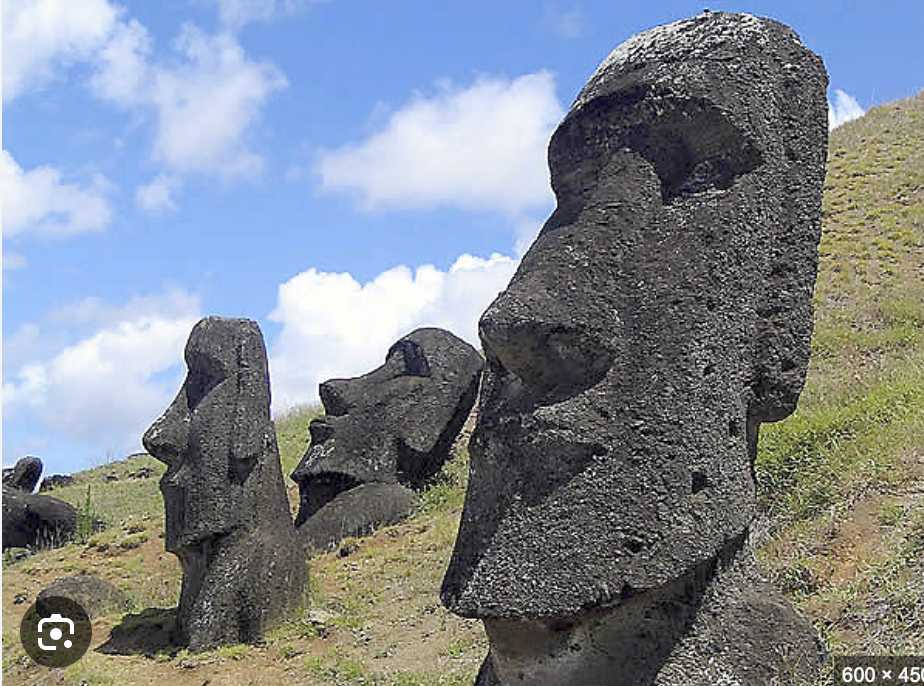
Looks like Easter Island, doesn't it?
Part 6: Ocean Energy
- Ocean energy
- tidal energy
- wave energy
- current energy (Hawai'i-Maui, Alanuihaha channel)
- ocean thermal energy conversion (OTEC) NELHA in Kona
Ocean energy relies on one of these:
- gravity: PE from change in ocean height from tides
- velocity: water flowing through tidal inlets or between islands, or waves on the surface
- temperature: cooler water at depth used to cool or warm-cool water difference used as a heat engine
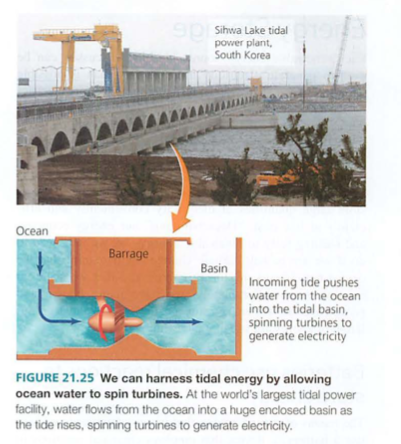
Tidal energy is the easiest to grasp: just like hydropower one dams up an inlet where the tide causes a rise and fall of water levels, run through a turbine, there's your power.
Problems:
- only runs when there is a difference, and the difference is not as great as in most dams
- can block ship access.
- maintenance issue (salt water vs. freshwater in most dams)
Nice stuff: quiet
Wave energy uses the motion of waves from wind which when captured can produce power:
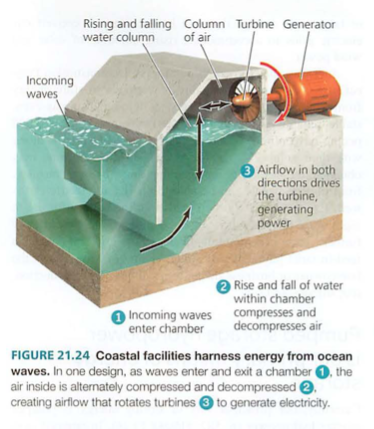
Issues: lots of mechanical parts, in the ocean, salt water is hard on machinery
Nice stuff: quiet
OTEC: Ocean thermal energy conversion
You many not hear about this on the mainland, but Kona is the main site for OTEC research on the planet, at a place called NELHA (used to be called HNEI: the Hawaii Natural Energy Institute)
Here's how it works:
Deep ocean water (2000 years old, from melted ice off of Greenland) emerges closer to the surface off the coast of Kona as nowhere else on earth.
Surface water is warmed by the sun.
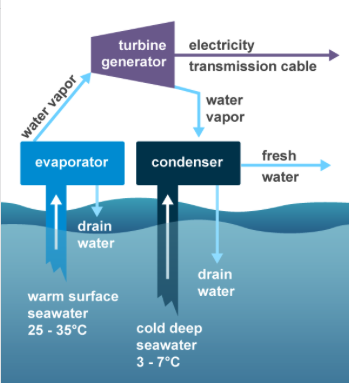
The difference between these is about 30°C. Not enough to boil water, but enough to boil ammonia gas.
Ammonia is used just like steam in a power plant, generating electrical power:
Fun facts:
- cool water is used to cool buildings at NELHA
- cool water going through pipes underground condenses water vapor to farm strawberries
- cool water in tanks is used to grow shellfish
- drain water is full of nutrients, making fishing offshore excellent
You have seen this from the air if you have ever flown into or out of Kona airport:
Part 7: Energy Storage
- Conventional battery (Lead acid)
- Lithium battery (LiFePO4)
- Pumped storage hydro (PSH)
- Hydrogen fuel cells
Migrated from Apple WikiServer Wiki. Original page S597i4J3.ID: S597i4J3