Energy is the ability to do work, measured here in progressJoules
Power is work done in an amount of time, J/s = Watts
This lab will have two parts:
physical work and power
electrical work and power
Energy-Power Lab: Physical
If you have not already, watch the youtube video on "Robert Forstmann makes toast" https://www.youtube.com/watch?v=S4O5voOCqAQ
Calculate your mass in kg (divide your weight in pounds by 2.2)
Measure the height of the stairs in meters
Get a timer
Walk as slowly as you can up the stairs, measure the time
Run as fast as you can SAFELY up the stairs, measure the time
Calculate the work done (energy): mass x 10 x height = joules
Calculate your slow power: divide energy by slow time
Calculate your fast power: divide energy by fast time
How does mass impact energy expended?
How does time impact energy expended?
Questions:
Could you expend the same amount of power for a longer time?
Cyclists and triathletes measure FTP (functional threshold power) or the amount of power they can deliver for 20 minutes. Would this be higher or lower than what they can deliver for 30 seconds?
How does your power compare with Robert Forstmann?
Could you power a toaster, and if so, for how long?
Energy-Power Lab: Electrical
First, watch this short intro into energy terms: https://elab.hpa.edu/apes/videos/bozeman_science/Energy%20Concepts.mp4Fill one of the hot water makers with cool water from the tap
Measure the amount of water (listed on the side)
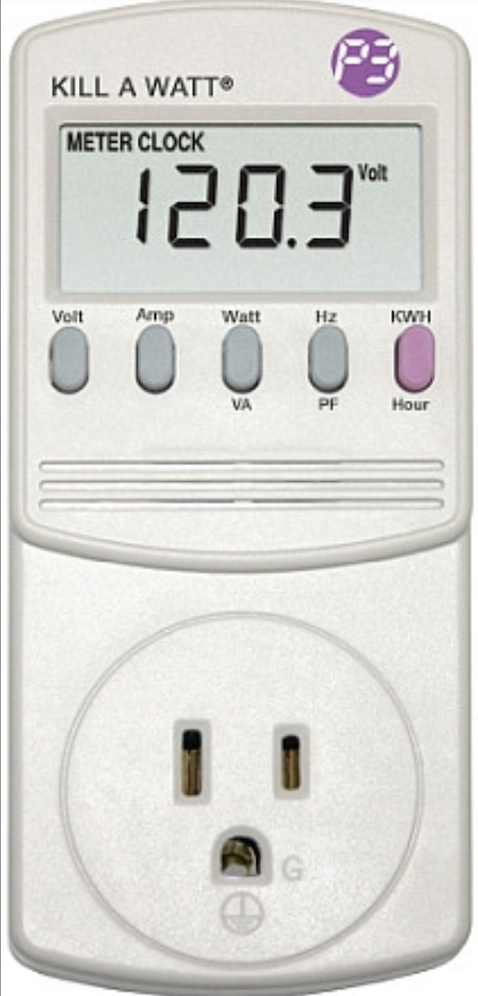
Plug in the heater, measuring the voltage on the kill-a-Watt meter (see diagram below)
Measure the power, it should read zero Watts
Turn on the heater, measure the time it takes to boil
While heating, measure the power used on the meter
Calculate the energy used: time in seconds x J/s or time x Watts = Joules
Refill the container with cool tap water, only using half of the original amount
Repeat the heating, measuring time
What is the power this time?
What is the energy used this time?
Questions:
How does the power compare in both cases?
How does the energy compare in both cases?
If you only needed enough boiling water for one ramen or cup of tea, how could you save money?
What fraction of an hour did each run take? (divide minutes by 60)
If 1000Watts running for 1 hour costs 40 cents, how much did each run cost?
A certain coffee chain claims that due to rising energy costs they have to charge more for their coffee. Is this reasonable?How does the power needed to boil water compare with the power you generated?How does the energy needed to boil the water in each case compare with the energy you expended?Where does the energy for you to run come from? (think directly and big picture)Where does the energy to boil the water come from? (think big picture, with several options)
ca7286b8-8932-8932-ba8e-da897faf84fa
ca7286b8-8932-8932-ba8e-da897faf84fa
Screenshot 2023-09-23 at 10.26.41 AM.png
Migrated from Apple WikiServer Wiki. Original page u3a820.ID: u3a820