
Frog book Ch. 17: Energy
energy -frog book notes
- chemical energy: electrons
- nuclear energy: nuclei (protons, neutrons)
- combustion-usually oxygen, but any oxidizer (chlorine etc.) as well
- hydrocarbons usually CnHx + O2 -> CO2 and H2O
- Incomplete = CO (toxic to hemoglobin)
- food is CHO (also N), when burned by body, creates CO2 and H2O (breath, urine and perspiration)
- efficiency: energy out/energy in %

Evolution of fuels:
- wood: renewable, but hard to find, limited growth rate, but sustainable for small populations
- coal: non-renewable, stored energy from fossil plants, more concentrated energy, easier to transport, hotter burning (to create steam, melt iron), various grades based on source and degree of decomposition/reduction (peat,lignite, bituminous, anthracite, diamonds)
- oil/natural gas: non-renewable, stored energy from swamps and marine organisms, both can be distilled into smaller or larger fractions in refineries:
- oil-> naptha, kerosene, diesel, gasoline, tar (bitumen), plastics, etc. <question: why is gasoline more expensive here in Hawaii?>
- nat gas -> methane->butane->pentane-> denser HC, fertilizers, plastics, etc.
See also LNG (liquified nat gas)
question: look up the price of crude oil. notice the names and the trends. what is “sweet” crude oil?
electricity generation: coal (steam), diesel (only in Hawaii, direct or steam), nat gas (steam or direct turbine), nuclear (steam)
Think of ships, this is where most of our electrical generation technology was developed
Hubbert Peak: King Saud (see opening credits to “The Kingdom”), Saudi Arabia, geopolitical implications

Fracking: Nat gas game changer: water impact, price of oil, change in electrical grid (smarter, faster, more nimble)
others: oil shale, oil sands (Alberta), methane hydrates deep sea deposits
ERoEI: Energy Return on Energy Invested
http://physics.hpa.edu/physics/apenvsci/videos/ERoEI.mov
summary: there will always be some oil, but how expensive is it to get out of the ground?
Salt Audio clip: James Woolsey
Unmigrated media: 20100626_wesat_05.mp3 (audio/mpeg, 2.7 MB)
http://www.npr.org/templates/story/story.php?storyId=128127191
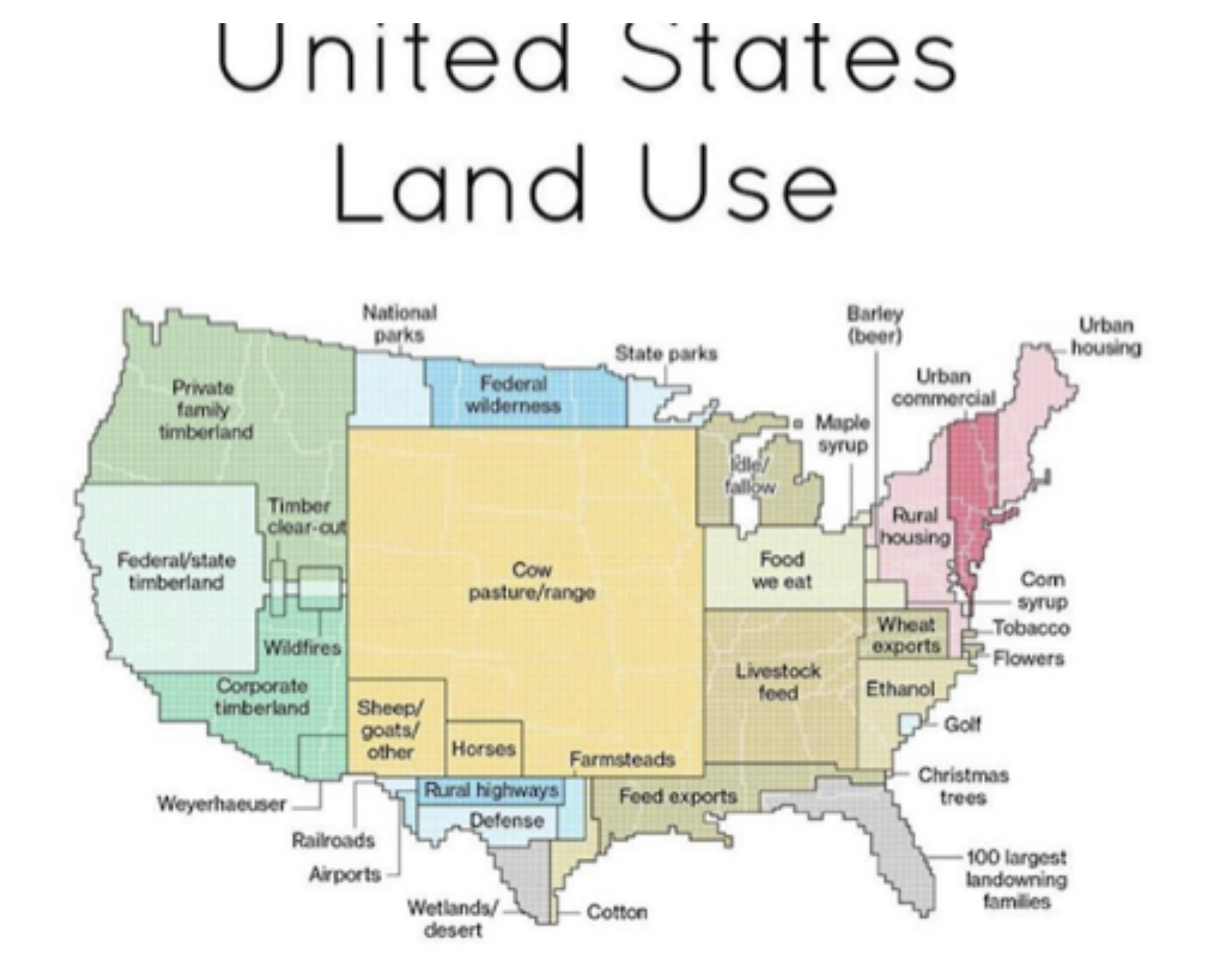
Land use diagram:
News Flash 1.18.2023: China population growth was negative this week: first time in 60 years
News Flash 1.18.2023: TFR in South Korea is now 0.8 (negative growth)
17.3-Fossil fuel hazards
- Look up how many mine deaths per day in China
- Keep in mind many coal deaths are due to lung disease in miners and normal folks
- Greenhouse gases from fossil fuels-CO2 and methane (CH4)
- Air pollution: SOx, NOx, Pb, heavy metals (worst with coal, lowest with nat gas)
- Water pollution: esp. with fracking
- Oil spills, coal ash accidents e.g. Aberfan in Wales, Kingston TN,
- "Fly ash" from burning coal for power is illegal in Europe (why?)
- Acid drainage-mines (see also metal mining, Butte, MT)
- Geopolitical issues-imagine if we did not care about oil countries since 1930…
Energy Conservation
e2 car segment
http://physics.hpa.edu/physics/apenvsci/videos/e2_videos/e2%20energy/3%20paving%20the%20way.mp4
17.4 Nuclear power
Until now, most of our energy has come from burning stuff
Your world will move on to something else…
Chemical energy (e.g. burning) vs. nuclear energy:
- Chemical energy: electrons, low energy (electron volts)
- Nuclear energy: protons and neutrons, high energy (million electron volts)
- Fission: heavy stuff (Uranium, Plutonium) to smaller stuff (like Kr, Ba)
- Fusion: light stuff (Hydrogen, Helium) to heavier stuff (Lithium, etc.)
Fission (splitting) was discovered by Enrico Fermi (U. of Chicago) around 1940, first used for heat, then bombs (WWII: Hiroshima, Nagasaki))
Next, used in nuclear subs (why there?)
Electrical power on land copied from subs (why is this crazy?)
Fission example: U235 + 1 neutron -> 3 neutrons, Ba 141 and Kr 92
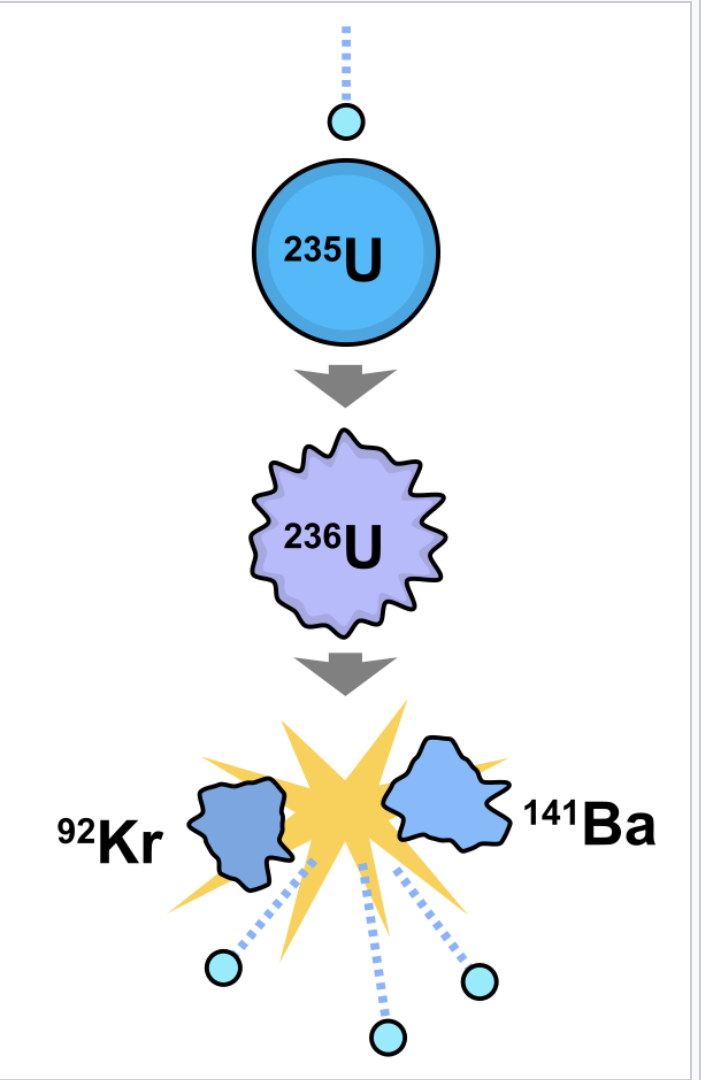
Note: 1 neutron in, 3 neutrons out
- If we capture 2 out of 3, this is sustaining reaction (factor 1.0)
- If we capture 3, then it stops
- If we capture 1, the reaction will increase
- If we capture none of them, we have a nuclear bomb
Moderators capture extra neutrons and slow them into “thermal neutrons” (control rods also) to heat water for steam powered turbines
- Bomb: make it all happen really, really fast: add materials that create more neutrons
- Power plant: make it slow down, capture the neutrons into thermal neutrons, make steam, then electricity
***make sure you can draw ALL of the parts of a nuclear power plant***
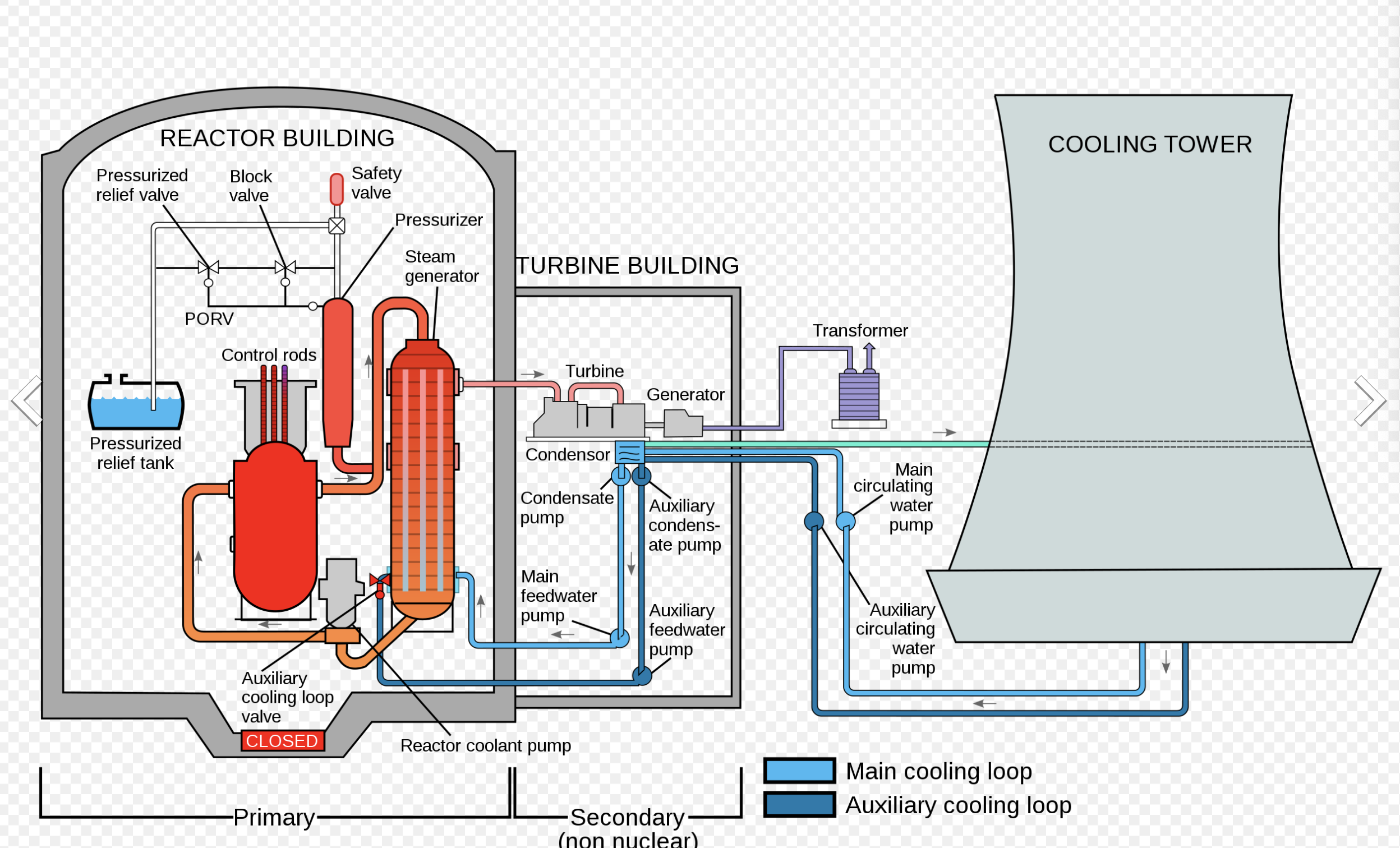
Compare this with any "thermal power plant":
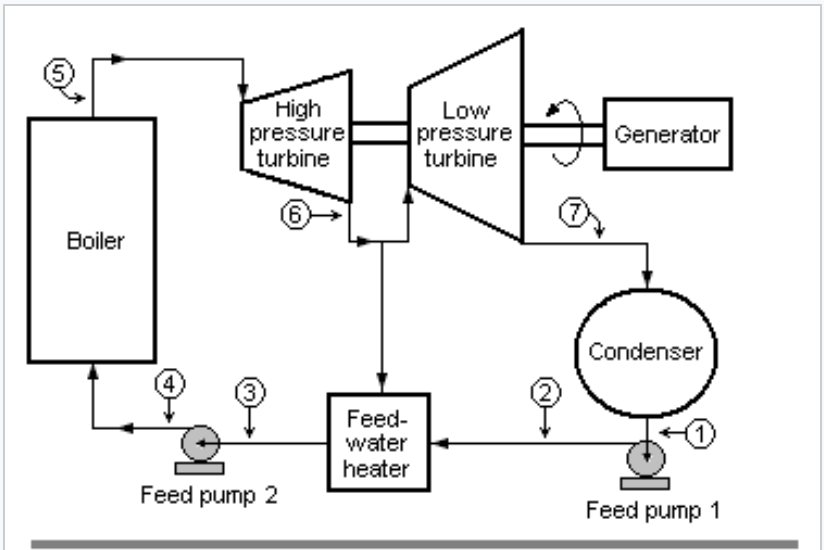
- See why engineers copied this for nuclear plants?
- How is this different in a natural gas turbine plant ("Gas Combined Cycle")
- How is a solar thermal power plant set up?
Good stuff: few greenhouse gases
Bad stuff:
- radioactive waste
- pollution
- radioactive fallout
- limited supply of Uranium (Thorium possible)
Bad ones: 99 so far since 1945:
https://en.wikipedia.org/wiki/Nuclear_and_radiation_accidents_and_incidents
- Kyshtym/Chelyabinsk disaster 1957 Plutonium (level 6 disaster)
- Windscale fire (GB level 5, 1957)
- Navy reactor accident Idaho SL-1 (1961) secret until recently
- Various Russian submarine accidents (secret) K-19, K-11, K-27, K-140, K-429, K-222, K-314, K-431
- Three Mile Island (1979) see video clip from film China Syndrome
- Goiania accident 1987 (Cobalt) also Mexico city, Zaragoza, Morocco, Costa Rica
- Chernobyl 1986 (level 7)
- Fukushima Daiichi 2010 (level 7)
What common theme? How dangerous? How could we avoid these in the future?
***be prepared to cite at least three of these, and explain what happened and why****
Fusion 2023: LLL Shiva (look this up) NIF: National ignition facility
***Make sure you understand and can replicate the Coal energy graphic at the end of ch. 17***
Trends:
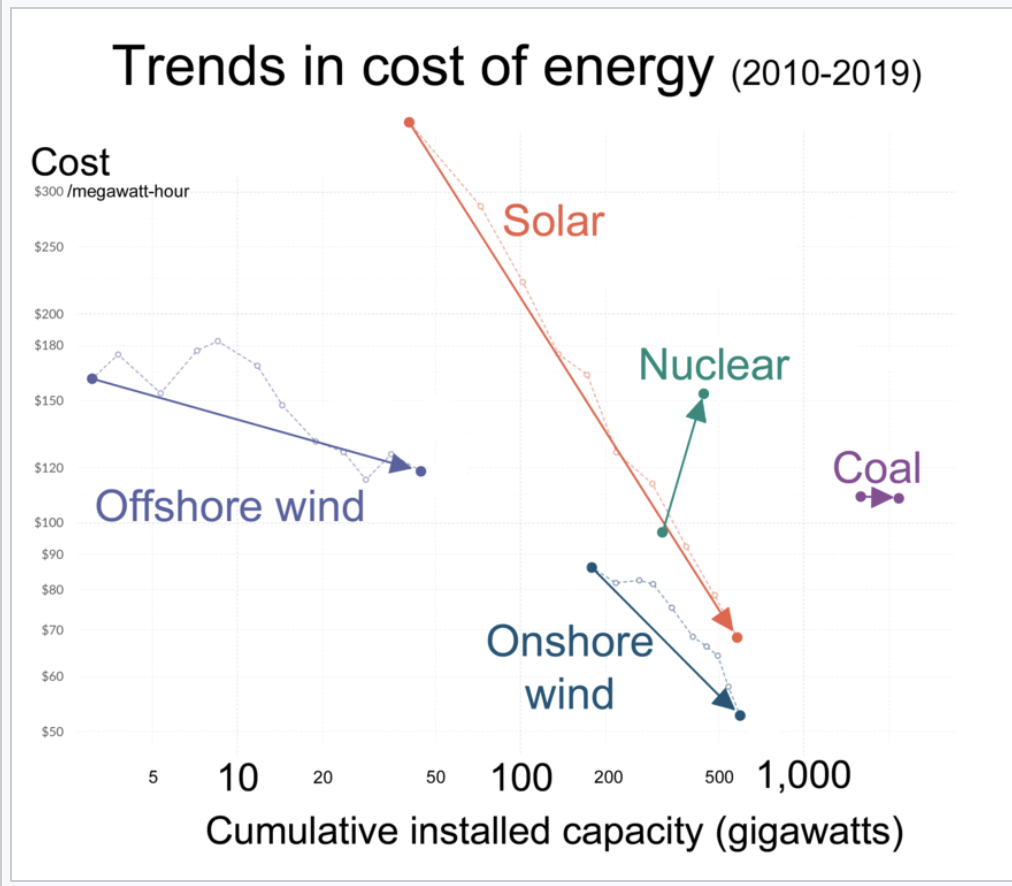
- How has this changed since 2019?
- What is missing?
- How will it look when you are 50? (2055)
Unmigrated media: Essential Environment_ The Science Behind the Stories ( PDFDrive.com ) .pdf (application/pdf, 226.9 MB)
Unmigrated media: 19-20.pdf (application/pdf, 24.6 MB)
Migrated from Apple Server Wiki. Original page ID: x7_668R3