
Module 04: matter
Migration
Overview:
- Frog book chapter 3: systems (3.1 and first part of 3.2 on your iPad)
- FR chapter 2: systems (modules 3,4,5 in
progressthe FR text, Goodreader on your iPad) - Math bits: radioactive decay, pH
Why this chapter now? How does it enable us to study other things?Soils-capillary actionPopulations-radioactive decayEnergy-PE/KE, thermodynamicsGlobal warming-radiation, thermodynamics, feedbackWater-pH, chemistry, colligative propertiesFood-fat/CHO/proteinsSustainability-feedback, thermodynamics
Some of these may be review for you, for others it may be new, so let's take our time...
Module 4: Systems and matter----------matter=takes up space and has mass (better definition: anything that has density since d = m/v)mass=amount of matter (n.b. NOT weight, you can be weightless in orbit, but you still have mass-watch the film Gravity...)atom: a=not, tom=cut (look up tomogram, CAT scan, or go to subway)atom=smallest particle (known then) that cannot be cut further (we now know there are protons, neutrons, electrons, and quarks, even smaller things than these are predicted, look up string theory)
Element: recall all of your previous science courses-this is a collection of atoms that share the same identity, usually noted on the periodic table by their number of protons, NOT neutrons (e.g. isotopes) or electrons (e.g. ions)Look at carbon 12, 13 and 14-look at the notation for each (isotopes=iso, same tope, type)Look at sodium atom and sodium ion, note the notation for each
Why do they have certain charges? Who does every element "want" to be? Why?Diverge here into orbitals if you like; s,p,d,f (sharp, principal, diffuse and fundamental spectral lines)
https://ptable.com/?lang=en#Properties
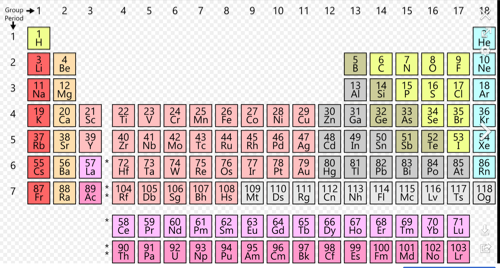
Molecules: more than one atom (H2)Compound: more than one element (NaCl)
Questions:
- If density = mass/volume, why is this a good definition of matter?
- Hydrogen can be an atom, while Hydrogen gas is a molecule. Explain
- What is the difference between atomic number and atomic mass?
- Carbon 14/12 is an isotope of Carbon 12/12. Explain
Radiation summary: (n.b. you may see these referred to "rays" or "particles", they are the same)
- alpha rays: Helium nuclei, slow, charged, stopped by your skin or paper
- beta rays: fast electrons (137,000 mph), charged, stopped by foil
- gamma rays: fast photons with very high energy, penetrates almost everything, stopped by lead
- neutrons: can be fast (bad) or slow (thermal, useful in creating steam in nuclear power plants), goes through everything but 2 meters of concrete or lots of lead shielding
Biggest danger to you if you live near granite or other similar rocks (Alaska, Colorado, Oregon, Washington):Alpha emitter, so not dangerous alone, but if breathed in, it emits alpha particles deep in your lungs, causing cancer (lung cancer and leukemia).
Second main cause of lung cancer in the US!Much denser than air (226 grams per mole, vs. about 42 for room air) so found in basements or lower parts.Ventilation is the solution, or not living in lower areas of a house.Most states where this is found have laws requiring a ventilation fan system (ask someone from Alaska, Montana or Minnesota)
Half life: not just a boring Saturday nightTime it takes for half of whatever to decay, depends on amount left, like water leaking from a large water tank
If you are into math, this is known as a differential equation, meaning the rate is dependent on the amount left. We'll see more of this in population curves, but any time a rate is dependent on how many there are, you'll see the half life rear it's head.Some math you will need to know:A half life is the time it takes for half of something to go away.In radioactivity, we use the formula: amount left = starting amount x (1/2)^n. where n is the number of half lives:
Sample problem:Starting with 128 grams of unobtainium, which has a half life of 10 minutes, how much will be left after:10 minutes20 minutes60 minutes15 minutes (tough one, make sure you know how to use your calculator in real mode, not "hello Kitty" mode
You can also write the formula as: amount left = starting amount/2^n
Questions:
- What is similar and/or different between U 234/92 and U 238/92?
- How many protons, neutrons and electrons in each?
- Would you expect this to be radioactive?
- A news announcer says:”Iodine 131 has a half life of 8 days, so it will all be gone in just 16 days”. What is wrong with this?
- pour at least 40 M&Ms® into a jar, close the lid and mix
- pour the M&Ms® out onto a plate, and count the total number
- remove any M&Ms® that have the logo face up
- count again
- repeat #1 above, one minute later
- graph your results, with the X-axis as number of tests and Y-axis as number remaining after each removal
- what does the X-axis represent?
- what does the Y-axis represent?
- what is the half life for emanemium?
- graph our results along with the data from other teams on one graph-what do you notice? (x-axis is minutes, y-axis is # remaining)
Review:
Bonds: (not the money kind)- Covalent: weak, think of plastic, butter or things that can melt. Electron is shared between both atoms (e.g. pilot-copilot), examples: any twin (H2)
- Ionic: strong, electron moves from one atom to another (NaCl is a good example), hard to melt, usually dissolves in water
- Polar molecule: has one end more + than the other (like water, which is polar covalent-confusing!).
- Hydrogen bonds are formed when a polar covalent molecule like water has one end (the hydrogen end) that bonds weakly with the negative charge (the oxygen end) on another molecule
Water!!!!--------------
- What do blonde people and very tall trees have in common?
- What do vaping teens and premature babies have in common?
Capillary action: cohesion and adhesion (think of adhesive)Key to most plants...
- Cohesion: water molecules want to "hold hands"
- Adhesion (like adhesives): water molecules want to stick to other molecules
- Capillary action: combination of these two, where walls are close together (hair, trees, all plants)
Questions:
- what is the connection between water striders, tall trees, premature babies and vaping?
- what is the connection between wifi, microwave ovens and dry toast?
Here's the trick: Acids have more Hydrogen, but they have a lower pH (1) than bases (14) huh?pH: n.b. the notation, this means "potency of H+ ions" (don't misspell it)
Here's why:pH is the -log10 of the [H+], so larger numbers are actually closer to zerolog10 of 1EE-14 is -14, a very small amount of hydrogen, so a baselog10 of 1EE-1 is -1, a much larger number of hydrogen atoms, so an acidSee? The negative sign in the formula makes these into positive numbers, so:pH of acid is 1, pH of base is 14
Quick dive into pH and pOH:pH is LOWER the stronger the acidn.b. the pH and pOH always add to 14:water is pH 7 and pOH 7some acid might be pH 2 and pOH 12some base might be pH 12 and pOH 2pH of perfect acid is 0, which has a pOH of 14pH of perfect base is 14, pOH is 0
Acids: battery acid, your stomach acid, fruit juice, vinegar, old wine, your skin (why?)Bases: soaps, drain cleaners----------------------9.9.21---------------------<="colligative">Colligative properties<="colligative"> (collected properties): bp (boiling point), fp (freezing point), mp (melting point, often the same as fp)Can be influenced by other substances, e.g. antifreeze, which is ethylene glycol, an alcohol. You could use any alcohol in your car to raise the boiling point, but ethylene glycol is less flammable (yet toxic to animals) than ethanoln.b. anything that ends in -ol is an alcohol: methanol, ethanol, butanol, propanol, etc., (see below).
- You could also use salt, which is hard on the bodies of cars (rust), but is great for melting ice on roads, or making ice cream (freezing point depression)
- Water is weird stuff: as it boils, it gets less dense (e.g. steam) AND when it freezes, it gets less dense (e.g. ice)
- Why is this critical for life in lakes in the winter?
- It is also a "universal solvent" since it has pH of 7, dissolves ionics and is polar covalent. Nice to drink as well.
- Fancy-pants word for this: amphoteric (both acid and base)
Alcohols:"Organic chemistry" means based on carbonAny organic (carbon) molecule with OH attached is an alcohol (different from OH in acids and bases)Look these up:MethanolEthanolPropanolButanolWhat do you notice?
----On alcohol being used as food for alcoholics:Ethanol is metabolized in the body into ethanoic acid also known as acetic acid. You bio folks may recognize this as one of the inputs in the TCA (citric acid or Krebs) cycle. Once a human body "learns" how to live off of ethanol (e.g. alcoholics), many of their calories come from this source. One theory uses this as a possible explanation for certain genetic predispositions towards alcohol dependence. This is what the chemistry looks like:C-C-OH ---> C-C-O-O-H ---->C-C-H-Oethanol --> ethanoic acid --> ethanalThe other name for ethanal is acetaldehyde, which is the strange smell you detect coming off the breath and skin of alcohol drinkers.
Methanol takes a far more toxic path:C-OH --->C-OOH ----> C-HOmethanol --->methanoic (formic) acid ---> formaldehydeYou might recognize the second one as the sting from fire ants, and the third as a carcinogen they embalm dead bodies in...
As if that was not enough for one module...Chemical reactions: usually involve movement of energy (light, heat), no mass is created or destroyed (conservation of matter)melting and boiling don't count, sorry
Organic stuff (this could be an entire separate chapter-ask Ms. Anton!)Organic=contains carbon, the base for life on our planet usually C-H or C-C bonds.Look on the periodic table below Carbon, we could be Silicon, but we'd have to be lava creatures since the energy needed for chemical reactions would be higher.n.b. some thermal creatures use thermosynthesis instead of photosynthesis, using sulfur instead of oxygen (look again at the periodic table)
Inorganic=either no carbon, or bound carbon (C02, like in carbon dioxide)Food stuff:Proteins, fats and carbohydrates: all contain C-H-O in some combination, only proteins have N as well...Dive deep if you dare:CHO=carbohydrates (clever name), usually in a chain, short chains are sugars (used for fuel), longer ones are starches and can be used for structures (e.g. cellulose in plants) or pasta...smallest: sugars, all end in -ose (glucose, sucrose) LOOK THESE UP, CHECK OUT THEIR MOLECULE SHAPEglucose is a "monosaccharide" created by photosynthesis (next chapter)longer chains: starches (rice, pasta) slowly digested (see diabetics, and glycemic index)structural CHO: cellulose-little boxes with goo inside, need enzymes to break these down (cows)ENZYMES ALL END IN -ASE
Fats/lipids: same chemical structure as CHO, but built along a glycol (alcohol) backbone. If the fats have long carbon chains with only single bonds, they are saturated (lots of Hydrogen atoms) and can hold together (e.g. animal fat)https://en.wikipedia.org/wiki/Saturated_fat
If the long chains have double bonds and don't fit together, they melt easier (e.g. oils) and are called "unsaturated", usually better for your health.n.b. McDonalds® got into real hot water a while ago for frying all of their stuff in "supersaturated fats". Ugh...
Proteins: complex molecules of CHO and N. Look up amino acids, note the common structure.Now look up the amino acid methionine. What element does it contain as well? Why do rotten eggs, swamps (and Kilauea volcano) stink?
Nucleic acids: DNA and RNA (another whole chapter)
Questions:
- What is the difference between carbohydrates, fats and proteins?
- How much more acidic is something with a pH 4 than one of pH 5?
- An element has a half-life of 30 days. If the original sample is 100 grams, how many grams will remain after 45 days?
- Which is more acidic: NaOH or HCl? Why?
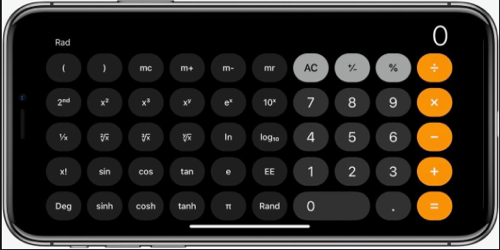
How to do half lives:
Let's say you are given 64 grams of something with a half life of 7 days. This means every 7 days, half of what you started with goes away.If they ask you how much is left after 21 days, you first divide 21 by 7 to get "n" the number of half lives: 3Then you set up your calculator like this:Amount = Starting amount (0.5)^nBest way is to do this from right to left (backwards)so,Enter 0.5hit the xY key (just below m+)enter n (3 in this case)press equalsmultiply all of this by your starting amount (64)you should get 8 grams left
Try this with 128 grams and a half life of 6 days, after 42 daysYou should get 18/6 = 3 = n0.5 xy 7 = 0.125128 x 0.125 = 16 grams
How to do pH calculations:
pH is a number between 0 (acid) and 14 (base)pH is defined as -log10 [H+]What this usually means is just the exponent of the [H+] concentrationso,[H+} of 1 ee -4 has a pH of 4[H+} of 1 ee -6 has a pH of 6[H+} of 1 ee -4 has a pOH of 10
why? pOH is just 14 - pH, so pH + pOH always = 14On your calculator, calculate the pH of something with a hydrogen concentration of 1 ee-3enter 1press ee key (to the left of 1 on the calculator)press 3press the +/- key (above 8 on the calculator)press log10 (left of 4 on the calculator)change the sign from minus to plusyou should get the answer: 4
This also works for complicated numbers like [H+] = 4 ee -3: pH = 2.39
Migrated from Apple WikiServer Wiki. Original page B9n8F1z.ID: B9n8F1z