
Module 14: Biodiversity
MigrationMod 14: Biodiversity: (see also chapter 7 in progressFroggie book)
- Species: a particular type of organism
- Population: a group of individuals of a given species, at one place and time
- Evolution: inherited changes in the population of organisms over time
- Natural Selection: inherited characteristics that enhance survival and reproduction
- Adaptation: better adapted individuals survive to pass on their traits
- Phylogeny: the branching pattern of evolutionary relationships
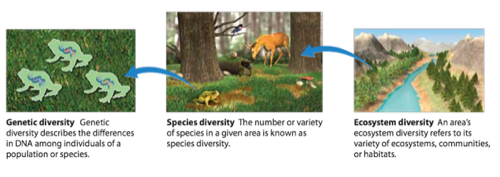
- Species Richness = number of species in an area
- Species Evenness = balanced relative proportions
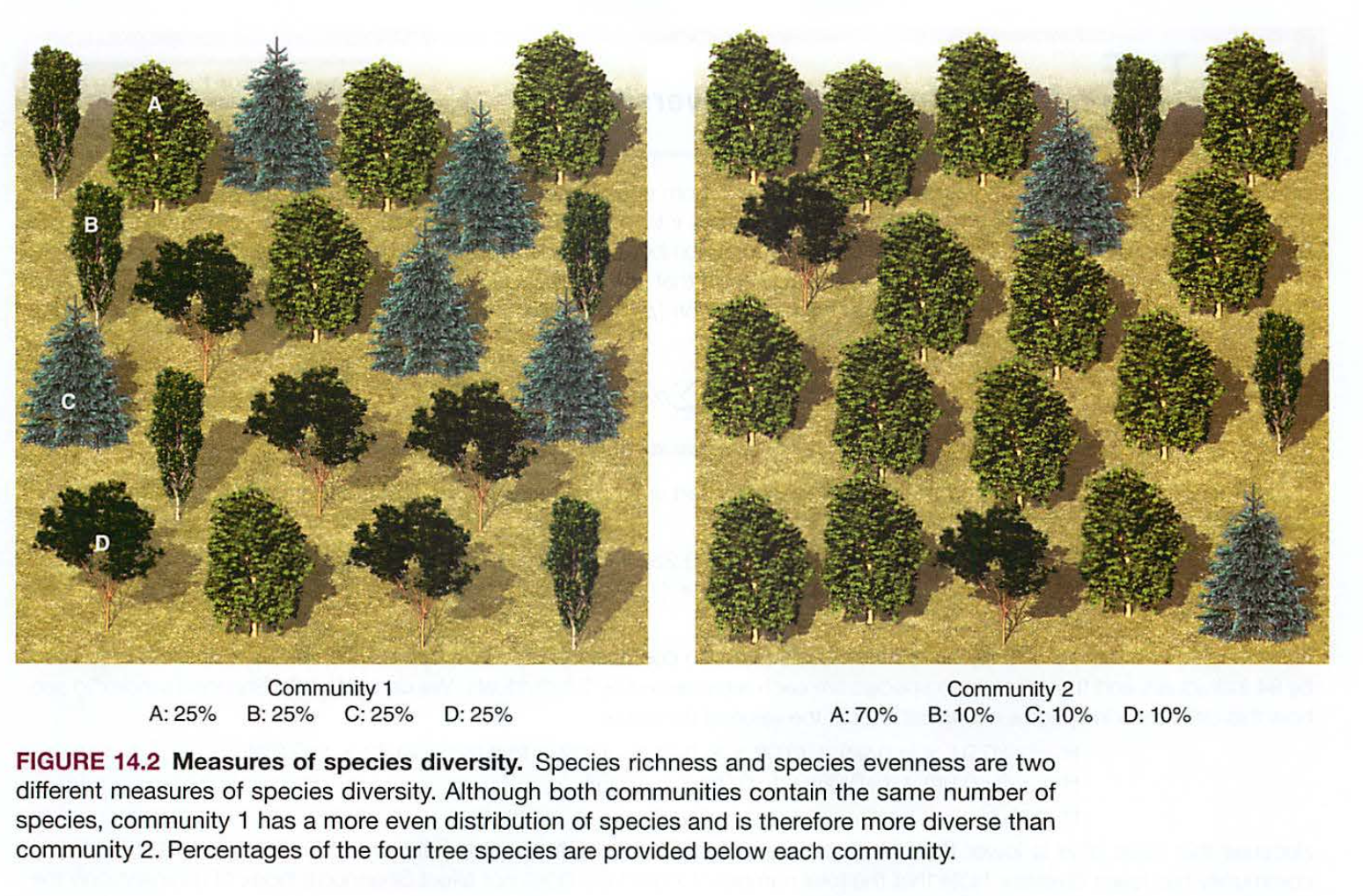
Measuring species diversity (lab):
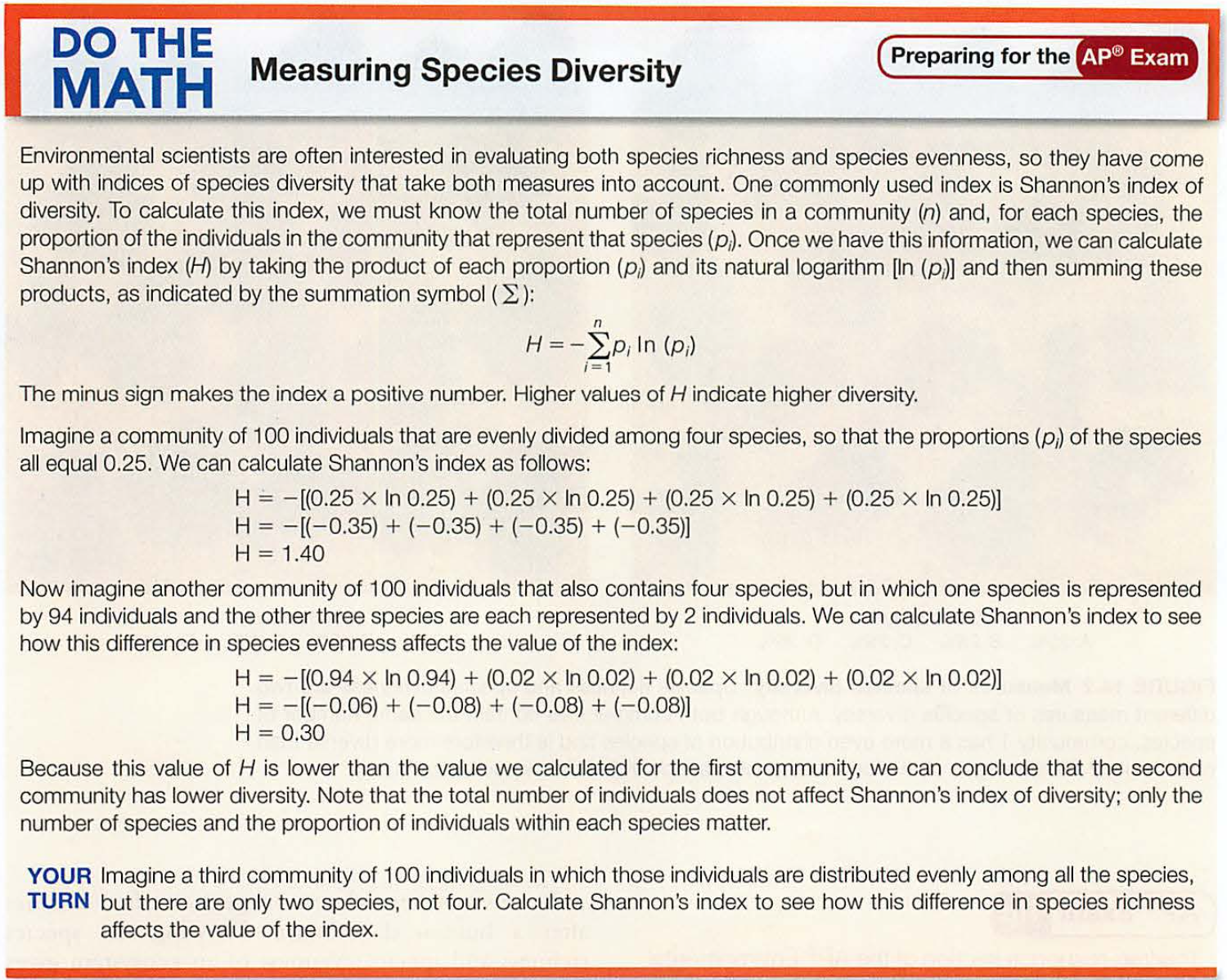
Lab: Calculating Shannon's index, using baked goldfish (the cheddar kind, not the ones that stink)
- wash your hands
- pour out a random number of different colored goldfish on your plate (your "pond")
- determine the number of distinct populations by color, using chopsticks
- determine the proportion for each population (e.g. 5 red ones out of 20 total would be 5/20 or 0.25)
- calculate Shannon's index (H) for this "pond"
- repeat the experiment with a very low biodiversity, calculate H
- repeat with a very high biodiversity, calculate H
- eat the contents of your "pond", representing a catastrophic event
- what is the value of biodiversity in any community?
- what are the benefits and drawbacks of a low biodiversity?
- how does this play into competition (next chapter)
- why is it important to determine the number of "distinct populations"?
- what is the impact of this on a human population, e.g. the census?
Migrated from Apple WikiServer Wiki. Original page z7Z0C31.ID: z7Z0C31