
Unit 8: Pollution: module 4.43 Photochemical smog, thermal inversions
Migration
Module in43: progressPhotochemical forsmog, thermal inversions, particulates
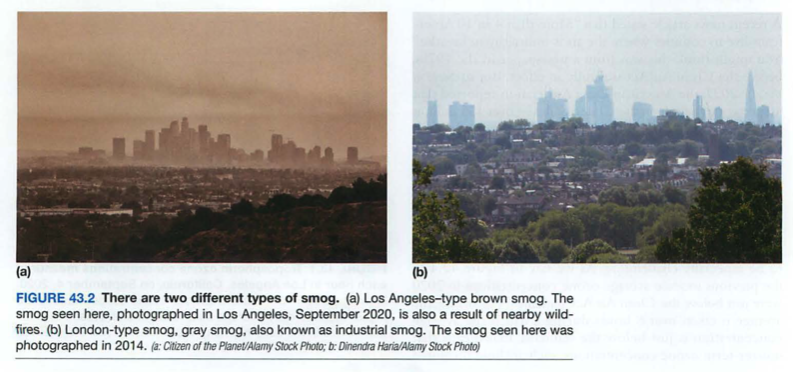
Two types:
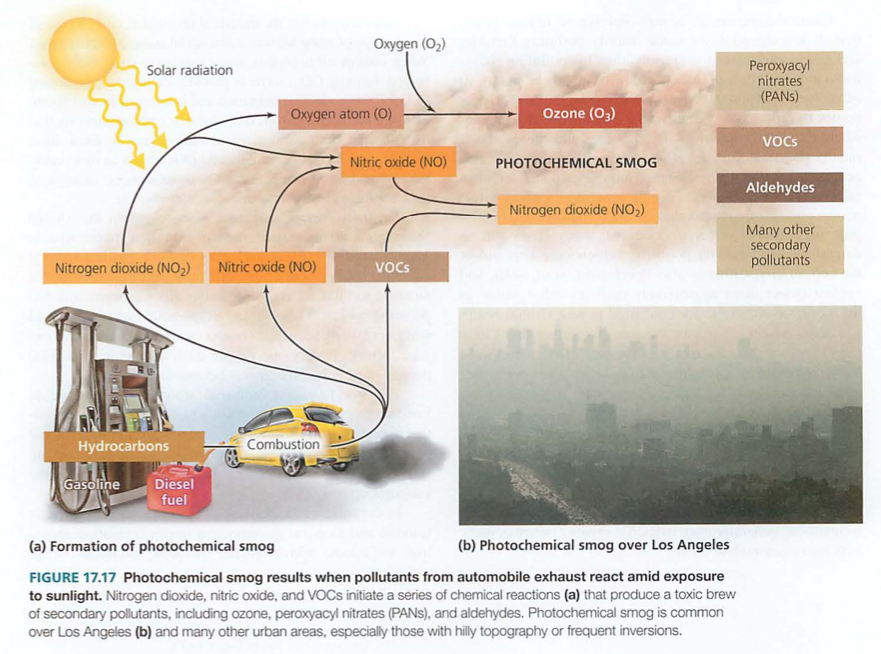
- Photochemical smog: LA smog, brown smog, caused by surface ozone reactions
- Sulfurous smog: grey smog, VOG (includes bits of volcanic glass)
Smog and other photochemical reactions:
Primary and secondary pollutants:
- Secondary pollutants: need a chemical reaction (often energy from sunlight) to form (see figures above)
- Example: PhotoChemical Smog: Photo (light) Chemical (reaction) smog
- See PANs: Peroxyacyl nitrates: formed from VOCs, NOx https://en.wikipedia.org/wiki/Peroxyacyl_nitrates
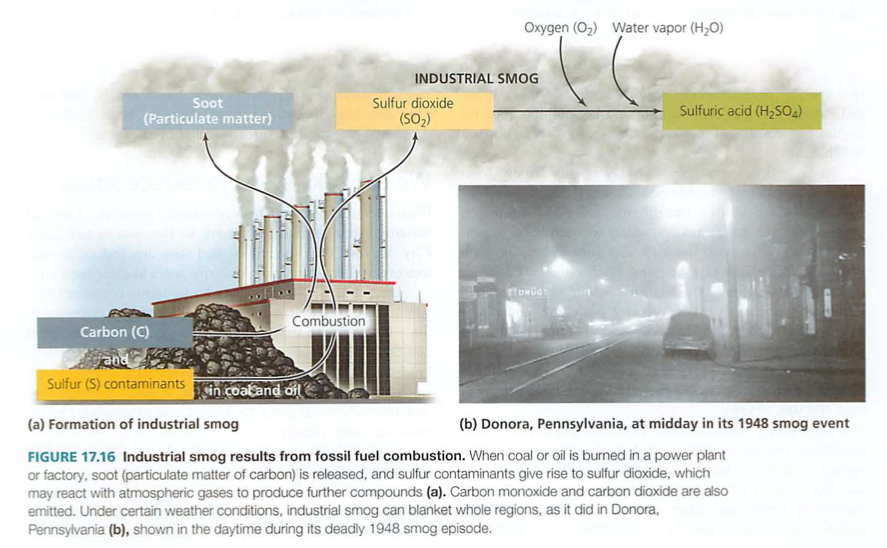
Thermal inversions: London fog, US, Donora, PA 1948 k.20, sick 7000
- 1952 London 4000-12,000 dead, three nights
- Mexico city 1996 300 dead, 400K sick
- How?
- Normally, the sun heats the surface, warming the air there, which rises. Cooler air aloft then falls to replace this rising air.
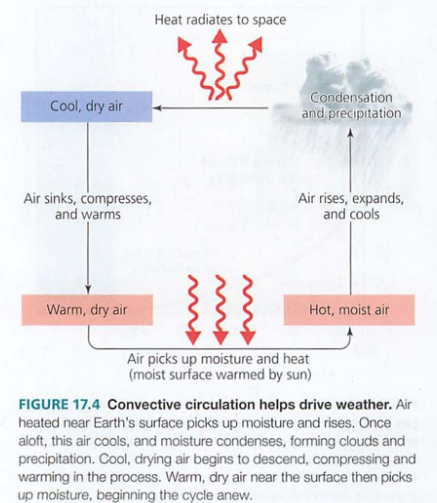
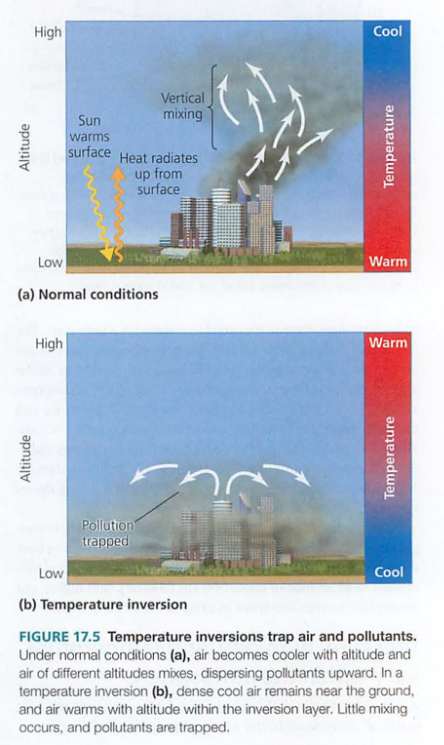
In an inversion, warmer air aloft traps the air at the surface (no temperature difference, so no convection), causing the pollution to be trapped in the lower levels. Most dangerous in valleys or bowl shaped cities (London, Mexico City, Denver, Donora).
Los Angeles has severe smog in the daytime, when hotter air draws in ocean air ("onshore breeze"), but the cycle reverses at night when the water is warmer than the land, so they have an "offshore breeze". Surfers like the first one.
Another diagram: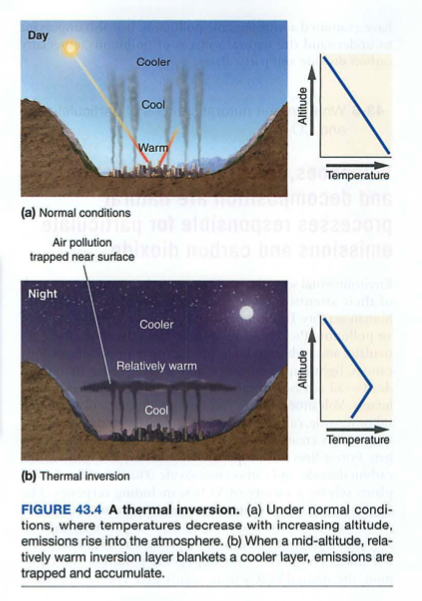
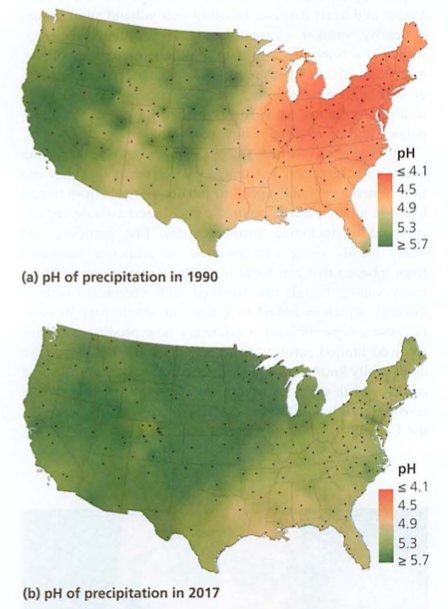
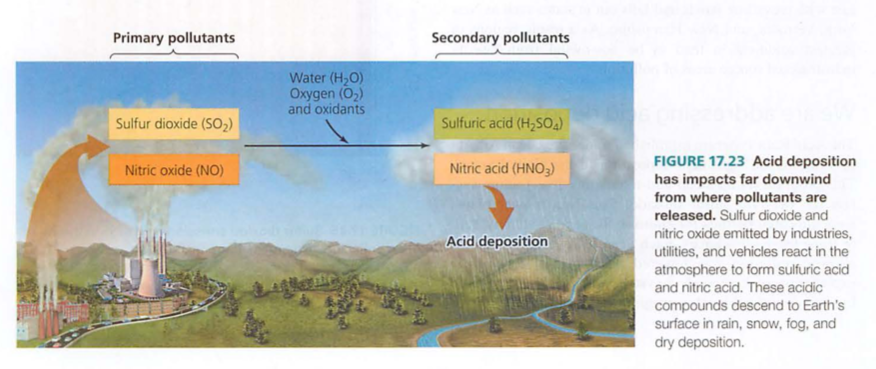
- SO2 + O2, water = H2SO4 (sulfuric acid)
- NO3 + O2, water = HNO3 (nitric acid)
- “Acid snow” yes, acid snow...
- W. VA had rain more acidic than stomach acid in the 1970's
Important: Know how a power plant air scrubber works (just like the nuclear plant diagram)
Migrated from Apple Server Wiki. Original page r705h0s31.ID: r705h0s31