
Unit 8: Pollution: module 4.47: Pollution sources
MigrationModule 47: Pollution, impacts, endocrine disruptors
Video: Poisoned waters
- Point source vs. non-point source: easy to trace in
progressa river, not so easy in farmlands, or ocean - Homeostasis: balance in organisms: temperature, nutrition, water, energy
- Pollution first causes impaired survival or activity, then acute (sharp) physiological impacts, including death
- Presence vs. concentration (also ability to clear, ability to store, lifetime exposure)
- Case studies: THC, Mercury in Sushi, PCBs in killer whales, coral bleaching
- Pollutants can by synergistic: the total impact is greater than the sum of the discrete or separate parts
- Multiple attacks, e.g. coral:
- pesticides
- sediments
- ocean warming
- ocean acidification
- human interaction (tourism, anchorages)
Chemical pollutants:
Heavy metals (not the musical kind) and synthetics not found in nature
------
Lead:
- in the air (tetra ethyl lead)
- in the water (lead pipes "plumber"=Pb)
- in soldered pipes
- lead paint
- damages brain, kidneys
- esp. damaging to kids, stunts mental development
- water filtration is a smart idea: sediment filters (white) plus charcoal filters (black)
- Case study: Flint Michigan: saved $5m using river water with Chlorine, leached Pb from pipes into drinking water
- EPA limit is 5 ppb (parts per billion), Flint Michigan was 13,000 ppb
Arsenic:
- can be found naturally in well water (look up India As)
- can be removed with filters
- causes cancer
- EPA limit is 10 ppb
- Arsenic poisoning in India and Bangladesh
- See also Antimony ("monk killer")
- used in mystery stories to murder people...
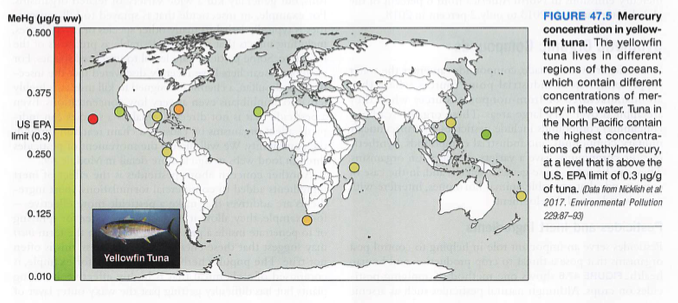
Mercury:
- can be inorganic (safer) or organic Methyl Mercury (much more dangerous)
- Hg from the latin Hydrargyrum, or "quick silver" (like the surf company)
- very high in coal
- also incineration of rubbish, e.g. dental fillings
- limestone heating into concrete also, since coal is used to heat the limestone, which also has Hg
- inorganic (metallic) mercury can be oxidized into organic mercury (dangerous)
- bacteria convert inorganic mercury into methyl mercury, a CNS toxin
- See Minamata disaster
- also fish and shellfish, esp. apex predators (e.g. tuna), 50% increase each decade
- actor Jeremy Piven suffered from mercury poisoning after eating sushi regularly (apex predator-Ahi Tuna)
Synthetic compounds: man-made, not found in nature
Pesticides: result of nerve gas research in WWII (WWI was all about using chlorine and phosgene in trenches)
- herbicides: kill plants, e.g. roundup ("liquid lawnmower" or "haole cane knife")
- fungicides: kill fungus
- rotenticide: kills rats
- many cross-species interactions: killing bees, amphibians (thin skin)
- inert additives: e.g. roundup uses a penetrant that is toxic to amphibians
Pharmaceuticals and hormones:
- antibiotics (in rivers and in poultry, beef)
- BCP and other reproductive hormones
- non-prescription drugs
- steroids
- water treatment systems don't stop these
Military compounds
- perchlorates (explosives)
- rocket fuels
- DU: depleted Uranium (Hawai'i island, PTA)
Industrial compounds:
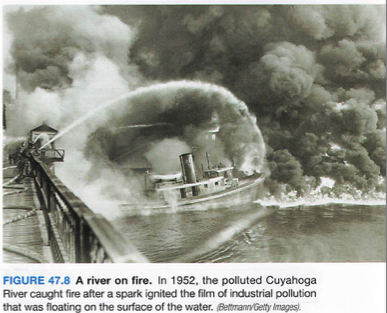
- Cuyahoga river, Cleveland, 1969 (many other times back to the 1860's)
- CWA was one result from this
- PCBs: polychlorinated biphenyls
- used as insulation in transformers, plastics
- lethal and carcinogenic (you may see hazmat trucks near a transformer fire)
- PBDEs: poly brominated diphenyl ether: flame retardants, toxic, found in fish, birds, human milk
- PFAS: polyfluoro alkyl substances: teflon in clothing (Goretex) and in cookware
- 15,000 different types in the environment
- also known as "forever chemicals" since they never break down
Summary chart: Focus on the type--->
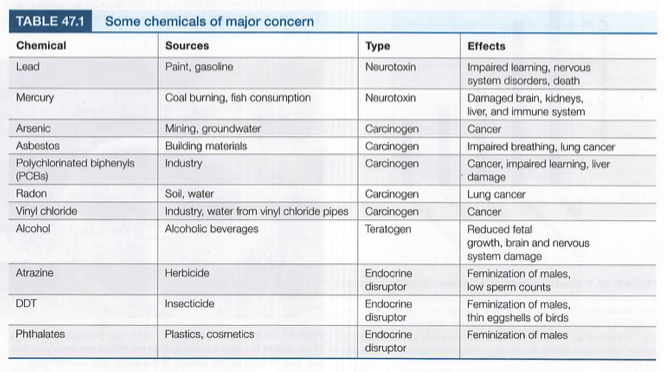
Chemical categories:
- disrupt the nervous system
- many insecticides
- ACHe inhibitors
- cause cancers
- may be acute (sudden) or long term (chronic)
- interferes with normal cell replication, causing cancer
- mutate cells, causing cell death or cancers
- impact increases with age (more mutations)
- different from teratogens, which cause birth defects
- radon, asbestos, formaldehyde, tobacco
- fun fact: you get cancer every day (mutations) but your immune system cleans them out
- if your immune system is compromised, or synergistic toxins are present, cancer is more likely, e.g. radiation exposure to a smoker is worse than for a non-smoker, or alcohol plus nitrites in smoked meats...
- from the Greek τέρας teras (word stem τέρατ-terat-), meaning "sign sent by the gods, portent, marvel, monster"
- cause birth defects by crossing the placenta in pregnant women
- only one generation, unless they reproduce, carrying the broken gene (see also germ editing)
- Case study: thalidomide, sleep aid, caused many tragic birth defects, around 1960, some still survive today
- alcohol is a potent teratogen, FAS (see also decreasing fertility in Russia due to alcohol use)
- often not taken seriously
- can cause immune system impact, even death (peanuts, milk, bees, penicillin, codeine)
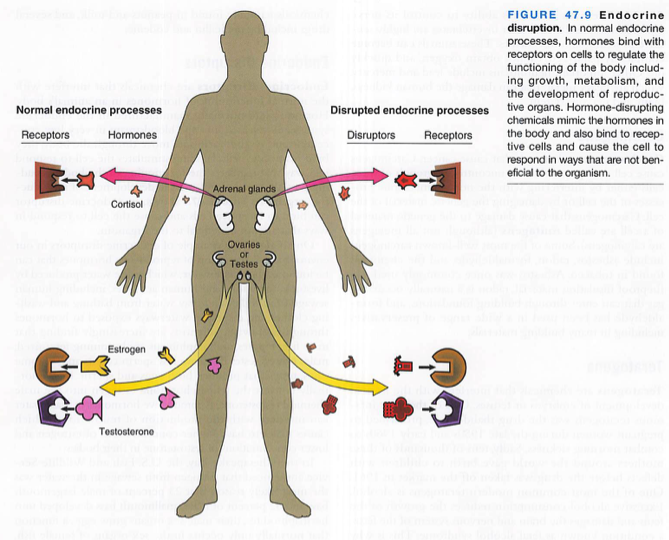
- note structure of estradiol and xenoestrogen-similar?
- disrupt normal hormonal balance, stasis or levels
- can mimic or impede binding sites (see below)
- growth, metabolism, gender (e.g. intersex in frogs)
- ED in wastewater (see video on poisoned waters) causing intersex
- drinking water treatment facilities do not remove these
- examples: birth control pills, hormones, drugs (prescription and recreational)
- U shaped response curve-very weird: low and high levels cause more impact
Oil Pollution:
- historically leaking from ground (Native Americans) or in seawater (rare until 1870)
- since 1870 usually from spills (tankers like the Exxon Valdex in AK) or oil well disasters (Deepwater Horizon)
- Exxon Valdez: 11 million gallons of crude oil
- Deepwater Horizon: 206 million gallons of crude oil
- serious impact to coastline, fisheries, corals, seabed
- remediation:
- booms to isolate
- dispersants (e.g. Dawn dish soap: why is there a duck on their label?)
- burning
- GMO bacteria
Migrated from Apple WikiServer Wiki. Original page m612n0Q.ID: m612n0Q