
Unit 8: Pollution: module 4.48 Eutrophication and thermal pollution
Bozeman science:
Migration
- Levees: raised banks of a river, meant to prevent flooding (see Nile river flooding and soils)
- Dikes: raised bank to prevent the ocean (tidal, storm or sea level), NL example 1953 dike failure
- Dams: stop flow of river, increased depth can be used for hydropower
- Reservoir: the body of water behind the dam-see also: Yangtze river, fish ladders (Ballard Locks)
- Aqueducts: long usually open lined pathways for water (loss about 55% on the way-evaporation)
- Catskill Aqueduct NYC: underground supplies water to NYC
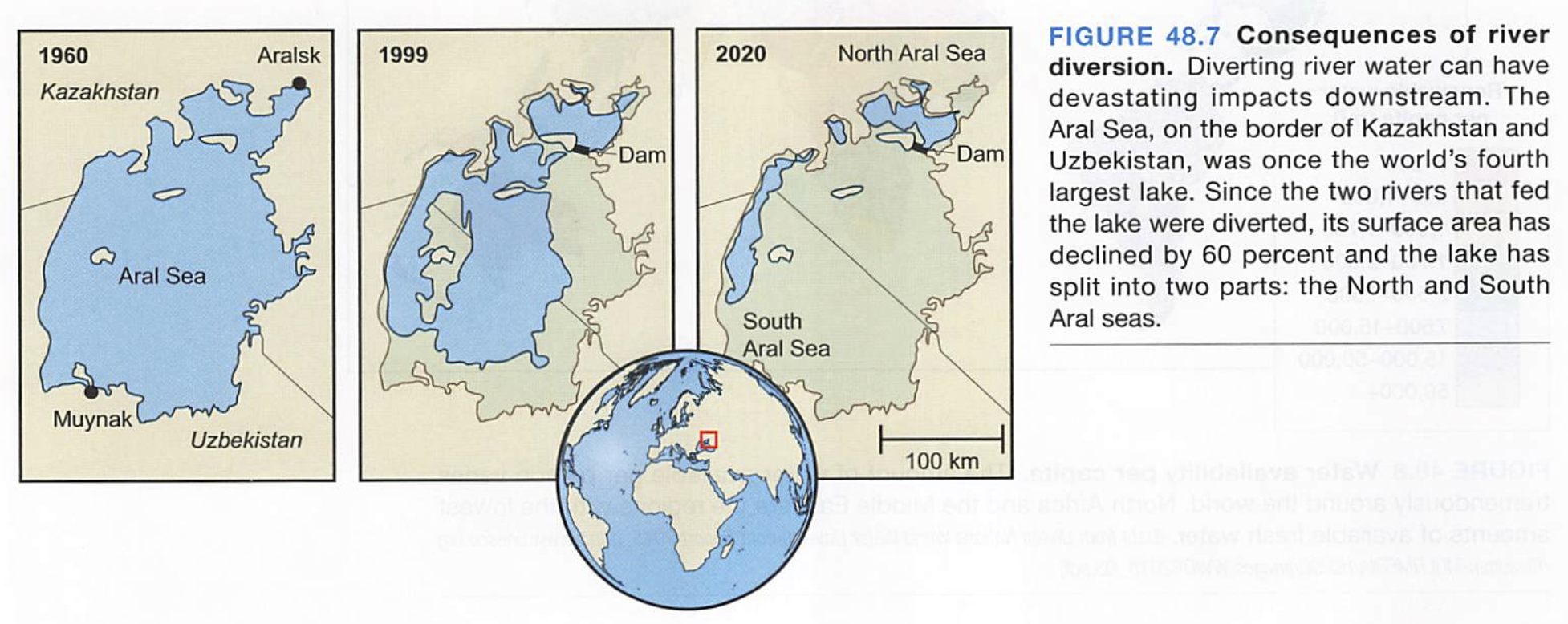
- River diversion: (see also three gorges dam in
progressChina)
Water Purification and desalinization:
- Distillation: uses heat, either solar, fossil fuels or electrical (nuclear proposed), brine impact can be serious
- Reverse Osmosis: uses energy to force water under pressure through a membrane, fresher water passes through
Three types of waste water:
- white water: relatively clean, may be potable (drinkable)
- grey water: soapy water, not potable, can be used to water plants, may be recycled
- black water: raw sewage, not for watering, must be treated
Wetlands impact:
- fertilizers (nitrates, phosphates)
- development-increases runoff
- diversion (coastal diversion reduces resilience in storms)
Eutrophication: too much of a good thing (e.g. food)
- usually associated with nitrates (e.g. fertilizers) or phosphates (manure)
- If caused by humans, "anthropogenic" or "cultural" eutrophication
- BOD (biochemical oxygen demand) refers to anything that can be decomposed with oxygen (e.g. manure, sewage)
- algal bloom has three steps:
- nitrate and phosphates cause algae to grow: "bloom"
- algae runs out of food, then dies
- algae settles to the bottom, decaying and using up dissolved oxygen there (dead zone)
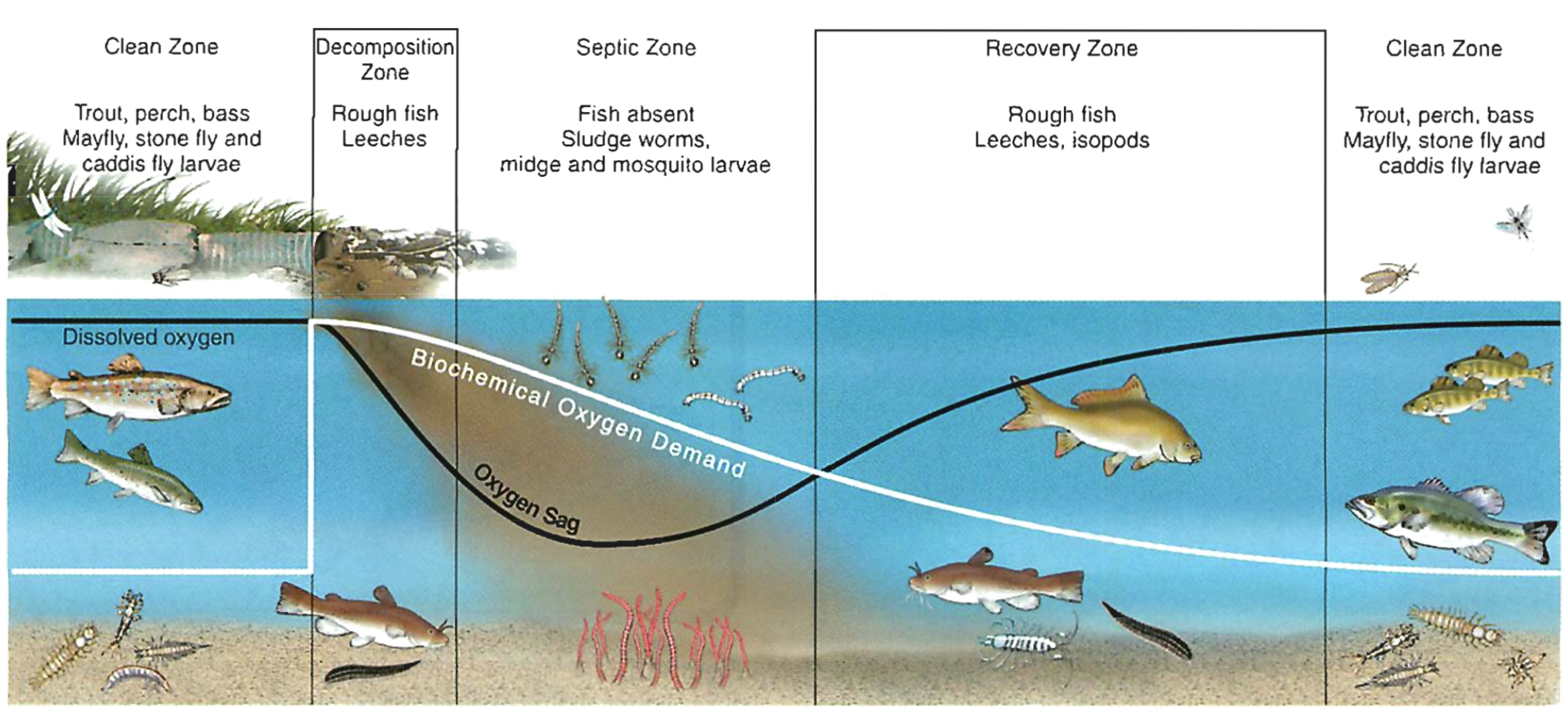
Oxygen sag curve: in a river, when biological matter is added:
- sewage or other microbial food is introduced into the river
- BOD (biochemical oxygen demand) increases
- dissolved oxygen (DO) drops (dead zone again) as microbes decompose the material, using dissolved oxygen in the water
- agitation, photosynthesis eventually improves DO levels
Thermal Pollution
- Since DO is dependent on water temperature, warm water has less dissolved oxygen
- Power plants and other thermal waste sources reduce DO
- Other locations include sediment filled shallow basins like Chesapeake bay (dark water absorbs solar radiation)
"Perfect storm" for low dissolved oxygen: (see Chesapeake Bay example)
- high phosphates: algal bloom, high BOD
- high nitrates: algal bloom with toxins
- shallow: solar heating of water, low DO
- low agitation: no waterfalls
- sediment: no photosynthesis (ties to BOD test: brown bottles)
- BOD: sewage added (manure)
Noise Pollution:
- Airborne or waterborne
- Airborne: tour helicopters, industry
- Waterborne: military sonar, explosions (BBC piece on whales 3.28.24)
- OSHA sets limits on noise levels based on dB scale
- Exposure time limit is halved for every 10dB increase
Migrated from Apple WikiServer Wiki. Original page K9x4p90.ID: K9x4p90