
Unit 8: Pollution: module 4.50 solid waste
Migration2026 Q4 plan:
6 weeks, then AP week
- 3.24 Solid waste, mining, BZ 019 AP diagnostic
- 3.27 Human waste, sewage treatment BZ 030
- -
- 3.31 Health, LD50, BZ 032
- 4.2 Infectious diseases
- -
- 4.6 Biodiversity, human threats, BZ 035
- 4.8
- 4.10
- -
- 4.14 Ozone BZ 033
- 4.16
- -
- 4.20 Climate change BZ 034
- 4.22
- 4.24
- -
- 4.28-begin iPad review
- 4.30 Weak spots: Land use, forestry, fishing BZ 019, 020, 021, 016, 017, 018
- -
- 5.4-AP weeks-review
- 5.6
- 5.8
- -
- 5.12
- 5.14
- 5.15-AP exam
Topics:
- 4.50 solid waste
- 4.51 recycling
- 4.52 human waste->sewage treatment
- 4.53 toxicity, LD50
- 4.54: health, Infectious diseases
- 4.55 ozone
- 4.56 greenhouse effect
- 4.57 greenhouse gases
- 4.58 ocean acidification
- 4.59 Biodiversity: Shannon’s index, threats
Pollution overview:
- 4.50: solid waste
- 4.51: waste reduction
- 4.52: sewage treatment
- 4.53: LD50
- 4.54: Human health: pathogens and infectious diseases
4.50: Solid waste
Solid waste: produced by humans, non-toxic, results of civilization
Nature: no solid waste, everything is recycled (cue "circle of life" from Lion King here)
Bozeman science:
Full listing:
Solid waste:
- Primitive societies had no solid waste: they used everything, or it degraded naturally (dispersed, not concentrated)
- "disposable society" meant buying instead of repairing: post WWII (affluence)
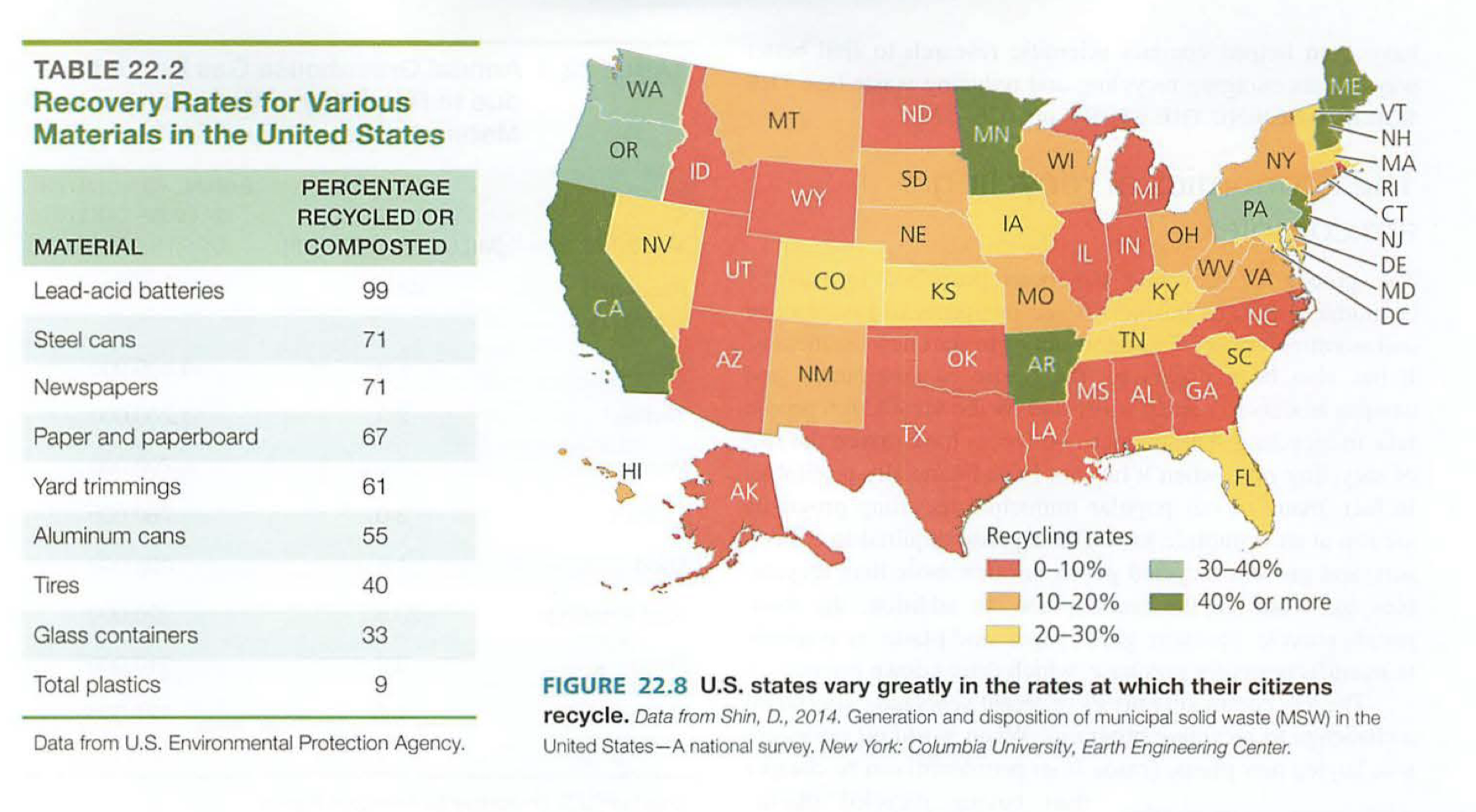
- MSW: Municipal (e.g. city) Solid Waste, 60% residential, 40% commercial
- per capita (per head) 2 kg/person per day in
progressUS, - LDC (lesser developed countries) is 0.5 kg/person per day
- waste stream: everything-landfill, recycling etc.
- ewaste: new problem: heavy metals, don't degrade, toxic, growing with IPAT
- Make sure you remember IPAT: Impact = Population x Affluence x Technology
- think of two extremes:
- small population of primitive folks living on an island with no money
- urban professionals with lots of money and tech
MSW destinations:
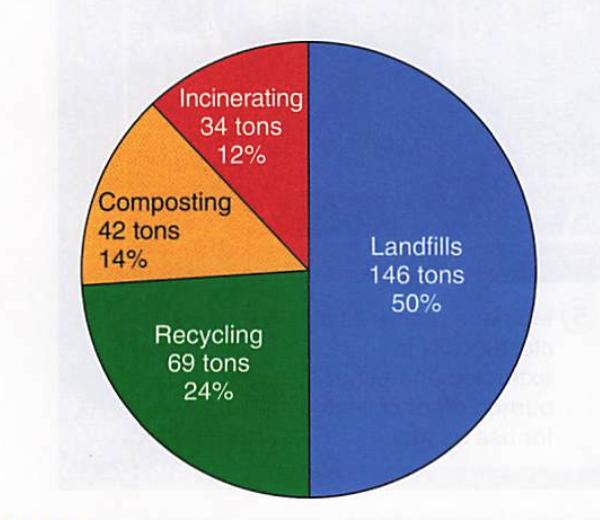
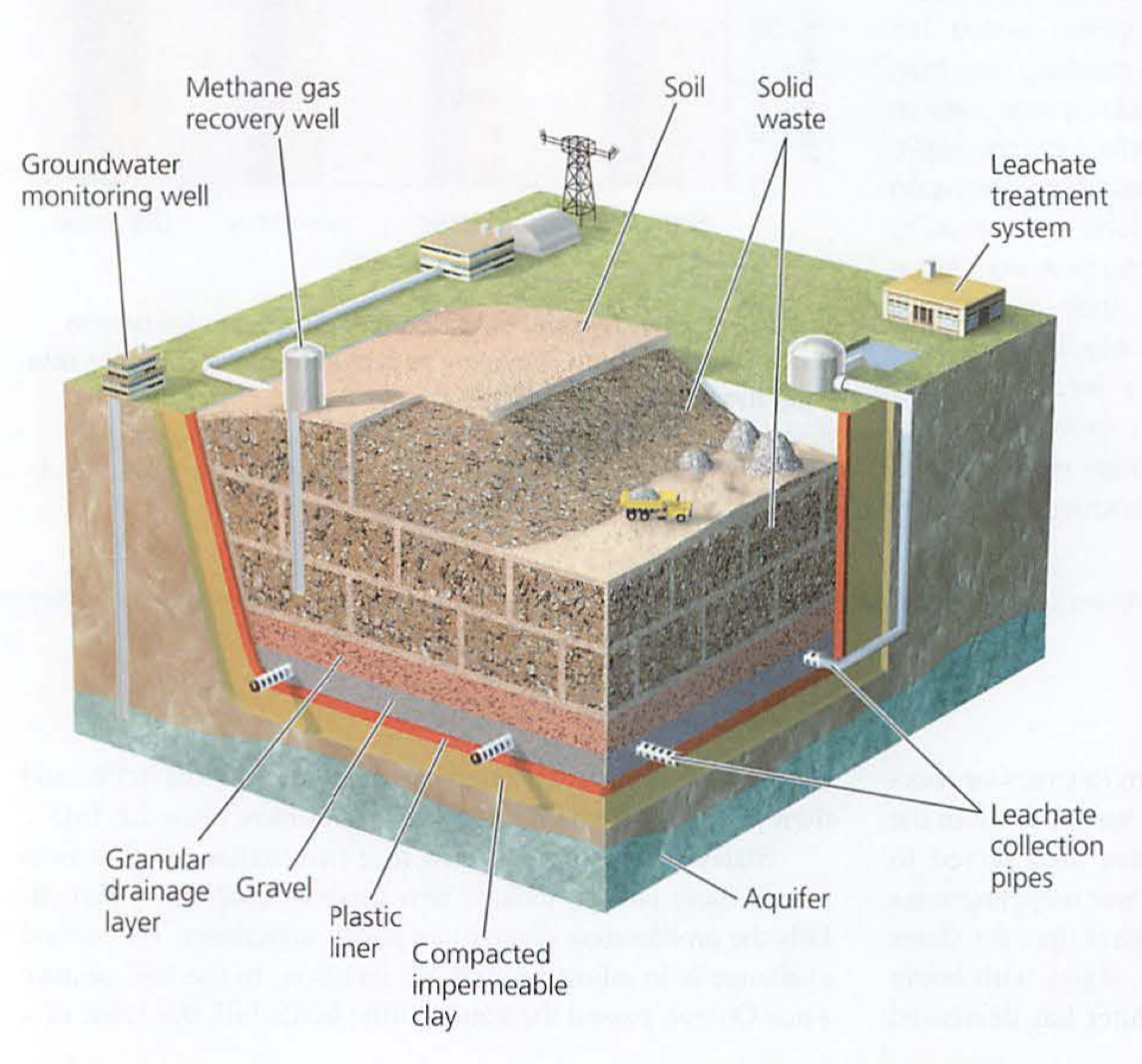
Landfills: used to be piled up on surface, then dug into ground, leachate (liquid) flowed into water table, gases (methane, CH4) into atmosphere
Sanitary landfill: liner catches leachate, surface is covered and methane captured for use as fuel
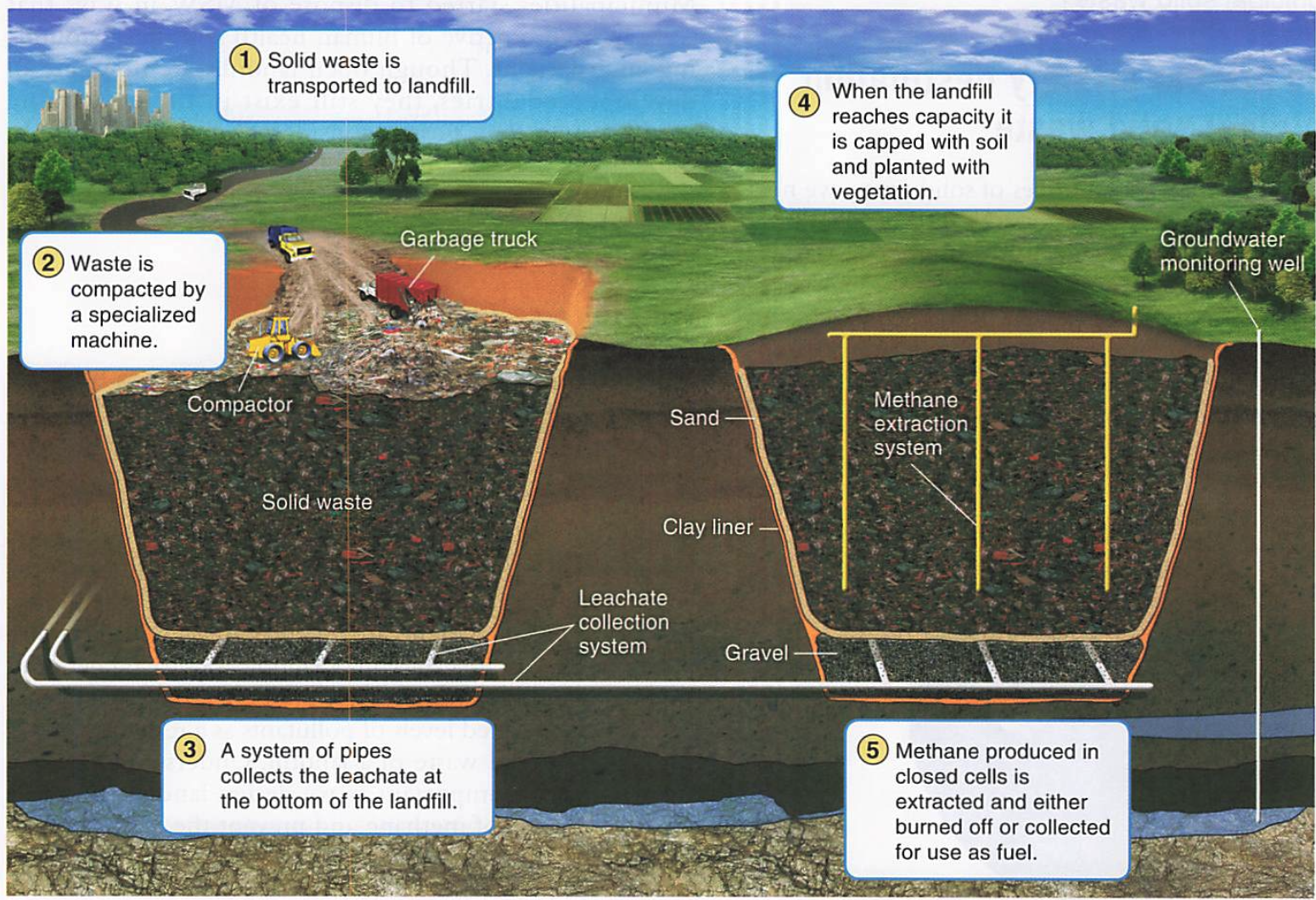
- "Tipping" fee: very high in Hawaii (limited space), even higher on other islands (San Juan Is. = $6 per bag)
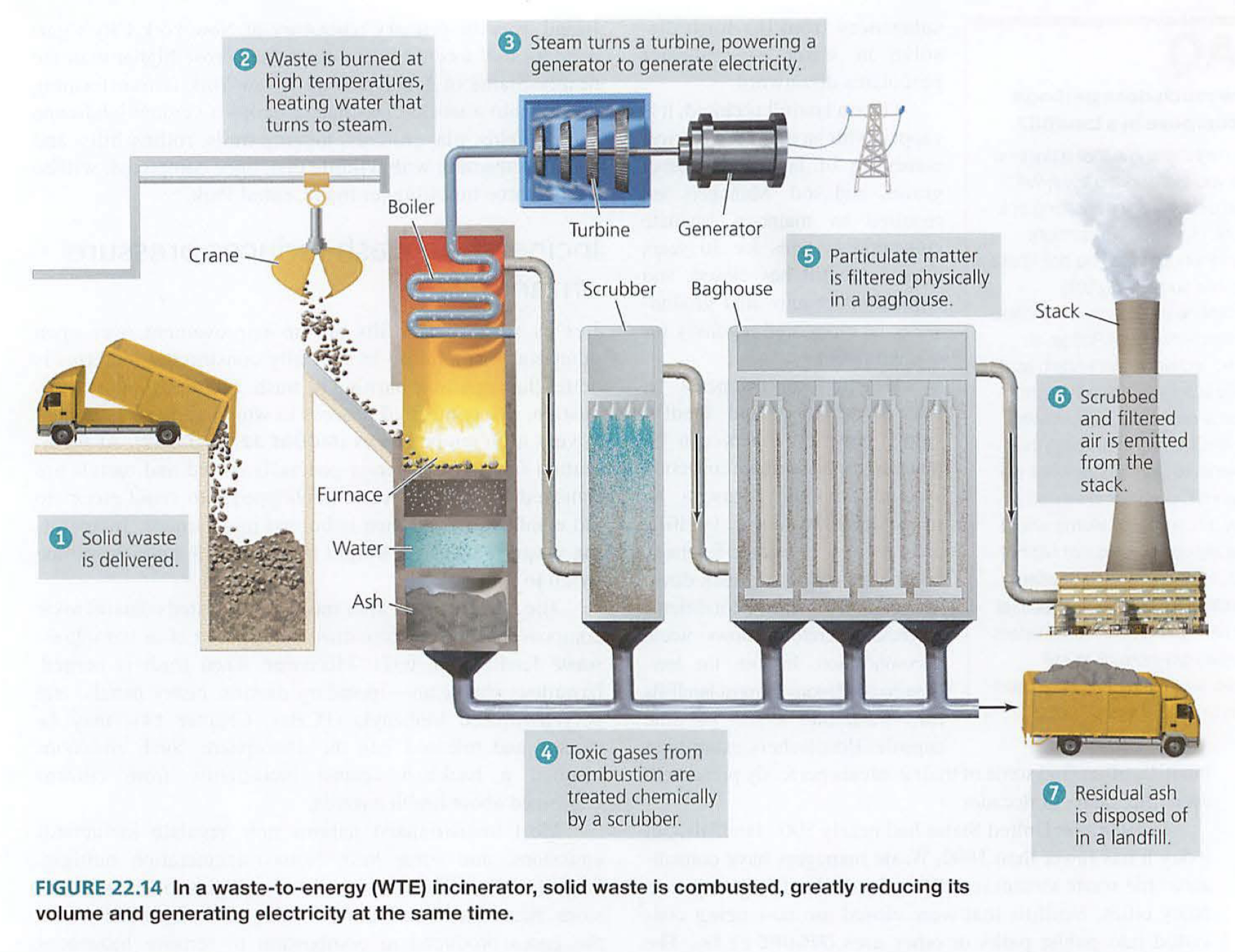
- Another option: incineration-can be for energy (H-power on Oahu) or others
- Japan uses plasma incineration for medical waste: completely ionizes viruses
- Fly ash is toxic, banned for use in EU (heavy metals, toxins)
- Ocean dumping was common, now largely illegal (still done though, watch "The Sopranos")
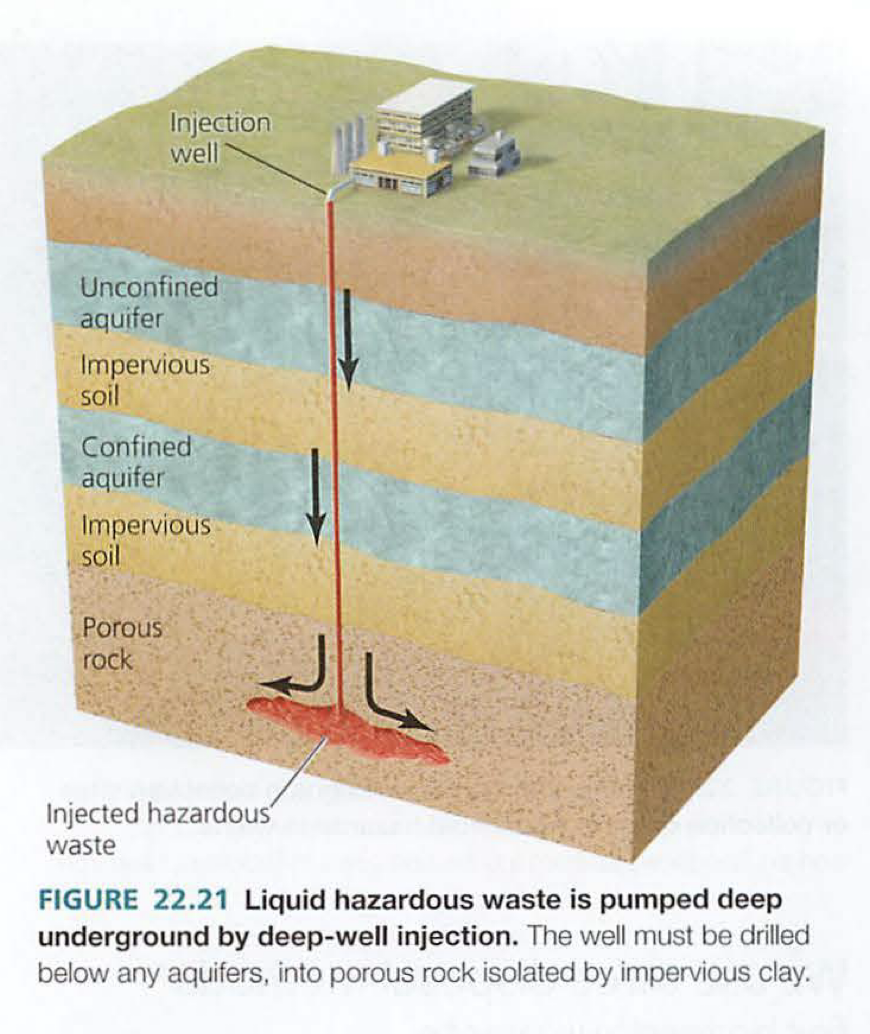
Hazardous waste: different category: toxic and hazardous are too general
- toxic: e.g. fly ash, heavy metals
- flammable: burns
- reactive: chemically active, e.g. oxidizers
- radioactive: just like it sounds
You may have seen signs like this on the back of trucks:
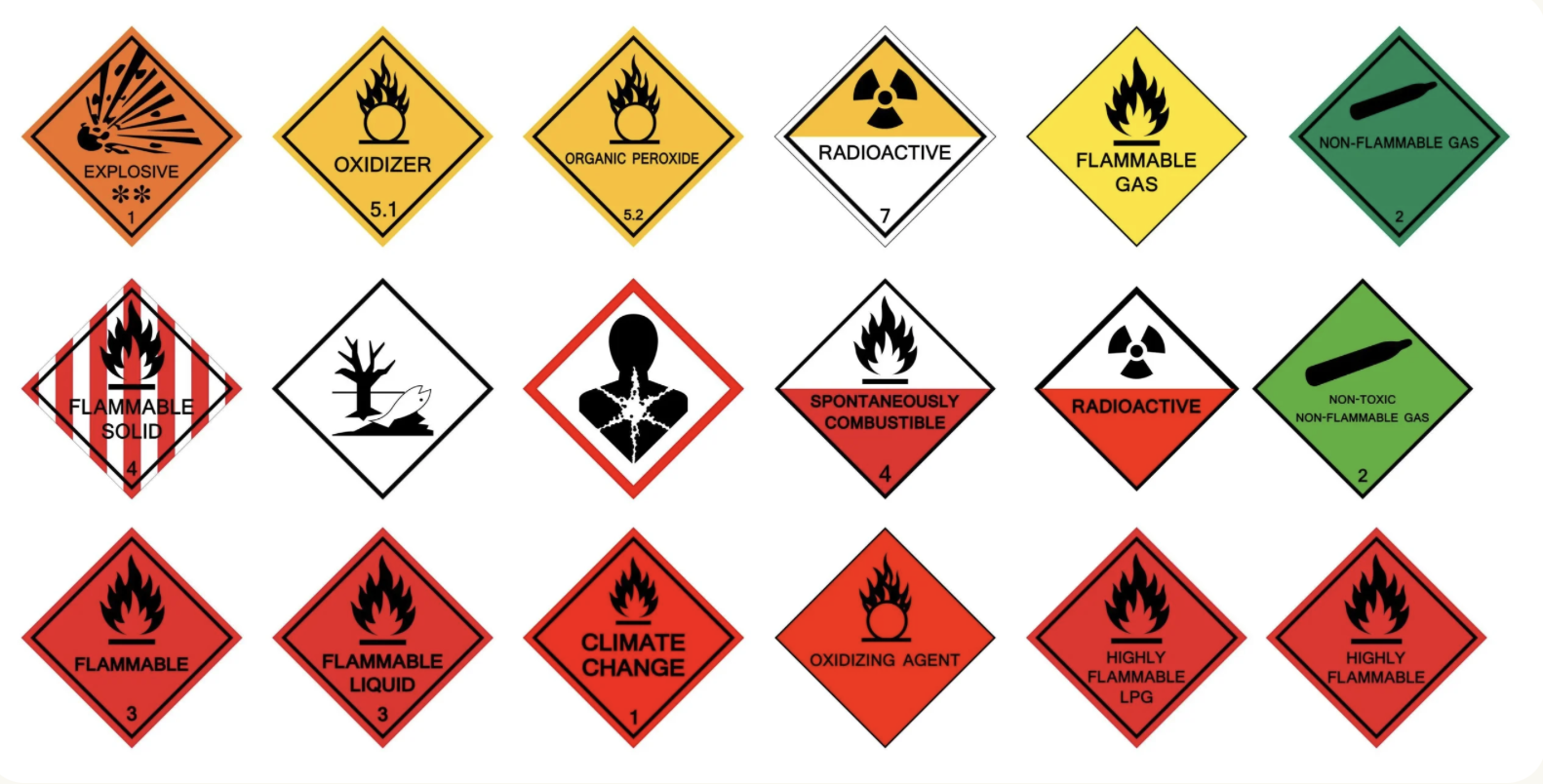
- Color Coding: Colors indicate the hazard class:
- Red: Flammable liquids and gases.
- Orange: Explosives.
- Yellow: Oxidizers.
- Green: Non-flammable gases.
- Blue: Water-reactive substances.
- White: Toxins/Poisons.
- Half Black/Half White: Corrosives.
- Nine Hazard Classes:
- Class 1: Explosives.
- Class 2: Gases (Flammable, Non-Flammable, Poison).
- Class 3: Flammable Liquids.
- Class 4: Flammable Solids, Spontaneously Combustible, Dangerous When Wet.
- Class 5: Oxidizers and Organic Peroxides.
- Class 6: Poison (Toxic) and Infectious Substances.
- Class 7: Radioactive Materials.
- Class 8: Corrosives.
- Class 9: Miscellaneous Dangerous Goods.
- not just fuel rods-everything
- dangerous for thousands of years
- nobody wants them in their state (Yucca Flats) or country
- in some cases, spent fuel rods can be used in next generation reactors:
Unmigrated media: What do new nuclear reactors mean for waste? | MIT Technology Review.pdf (application/pdf, 7.6 MB)
Special to Waimea:
- You may have seen random people walking around fields in our area planting little flags...
- These are EOD contractors, looking for unexploded ordnance (bombs, bullets, shells)
- These are known as UXO for unexploded ordnance from WWII when this was a training ground for the assault on Japanese Islands (Okinawa was the main one)
- As these weapons age, they become less stable, and can detonate with little shock
- Hikers and kids often find UXO in the streams, even above the HPA campus...
- Another local issue with solid waste is the use of DU or depleted Uranium shells in training grounds on the saddle road (Pohakaloa Training Area, or PTA for short)
- Since these shells are used for training, the possible contamination of folks in Kona by windborne Uranium dust is an issue
Mining waste:
- called "tailings" or "overburden" by miners
- heavy metals, acids
- can runoff into streams, water bodies
- classic case: Butte MT
Laws:
Superfund: created in 1980, as CERCLA
Comprehensive Environmental Response, Compensation and Liability Act
- comprehensive: covers everyone
- environmental: like is sounds
- response: they respond to environmental situations
- compensation: they pay victims
- liability: they go after the polluters
Superfund example: Love canal
Hooker chemical, toxic waste, cancer in kids
paid for by tax on chemical and other factories
Another law:
RCRA: resource conservation and recovery act
RCRA tracks solid waste, "cradle to grave" responsibility
Brownfields: behind the elab is an example, so is the train yard in Portland (e2: sense of place)
Contaminated industrial or commercial sites
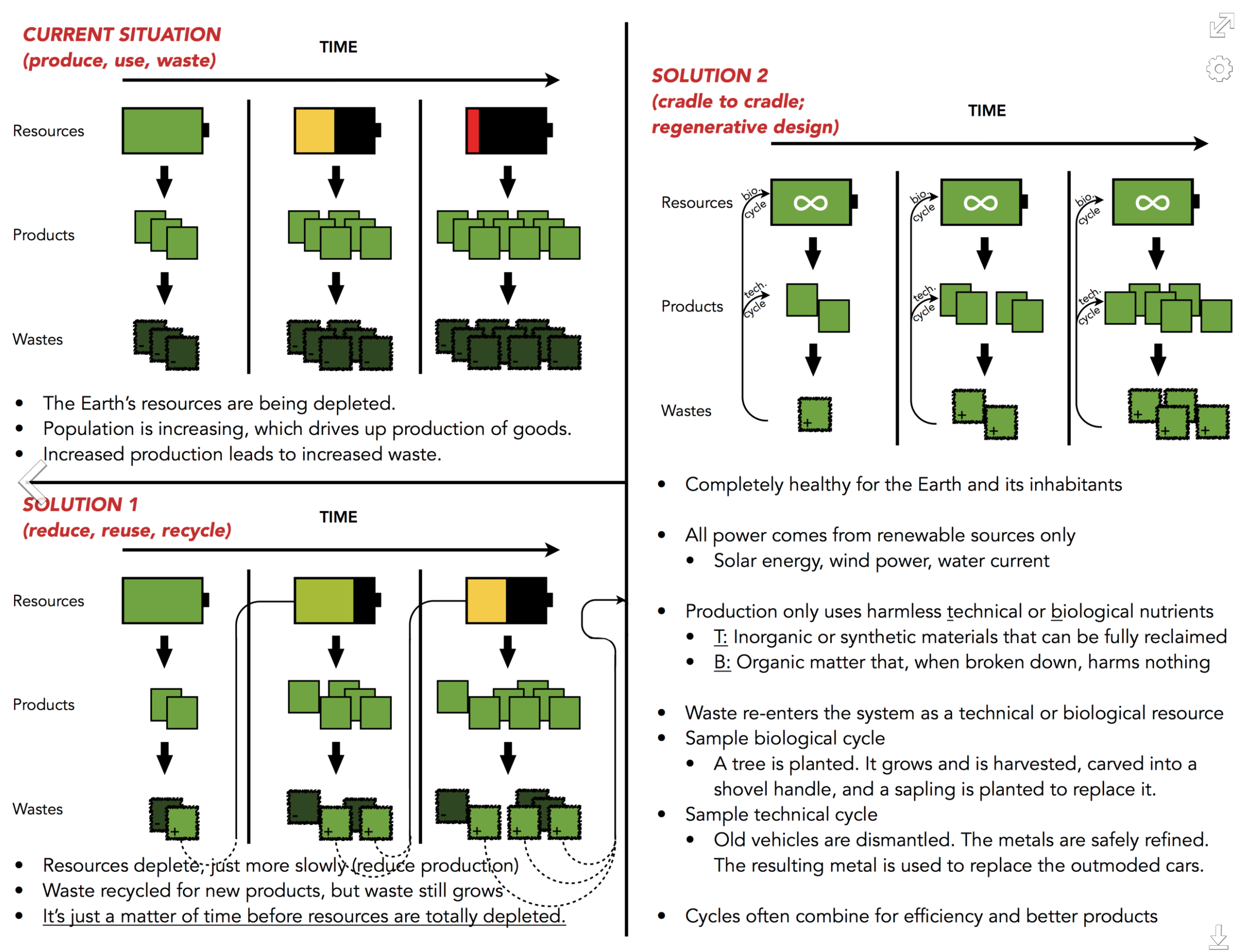
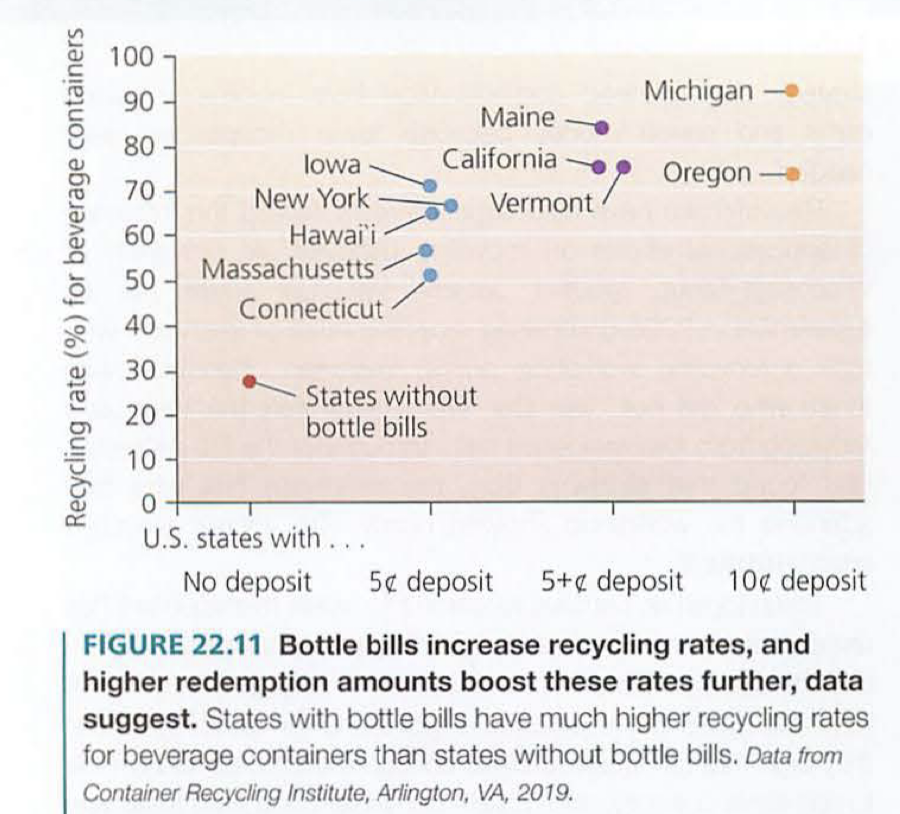
- Who pays for this?
- Who holds the money?
- Does all of it get refunded?
Migrated from Apple WikiServer Wiki. Original page T3n5u0F.ID: T3n5u0F