
Unit one: methods, tools, science review
Migration
Many of these may be familiar to you, our goal is to make sure everyone is fluent with these ideas, which will make all of our other work make sense (along with many other things).
We may break these down into smaller modules as needed, here are the main topics:
- Scientific method: replication
- Experimental setup: control, dependent, independent variables
- graphing: linear, nonlinear, is it a function?
- Measurement: accuracy vs. precision
- Units: mass, length, kilo, mega, micro, milli
- ——systems and matter
- chem-periodic table
- ions, isotopes
- radioactivity-half life
- bonds: ionic, covalent
- hydrogen bonds
- surface tension-capillary action
- bp, mp-water as solvent, mp depression, bp elevation
- acids, bases, pH
- chemical reactions
- organic vs. inorganic compounds
- living chem: CHON
- proteins, carbohydrates, fats
- lipids and lipid membranes
- -----energy
- flows and feedback
- energy units
- energy vs. power
- PE KE
- radiation-EMR
- radiation-conduction-convection
- chemical energy-electrons
- nuclear energy-neutrons
- KE and 1/2mv2
- temp vs. heat
- thermodynamics
- efficiency
- quality
- entropy
- open and closed systems
- feedback loops
- positive, negative feedback
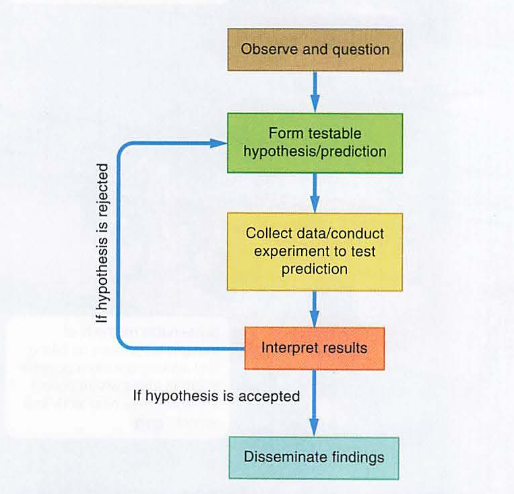
Independent variable vs. dependent variable: x and y: y is a "function" of x, you may see this as f(x)
why is a line that crosses not a function?
Like getting two results from an experiment: which do you choose?
Natural experiments are ones not planned: COVID, volcanic eruptions, etc.
You can still study them, but you do not setup the conditions
Graphing:
Always start with x units, usually zero at the axes, make sure limits are included
linear, exponential graphs: how are they different? what is exponential growth?
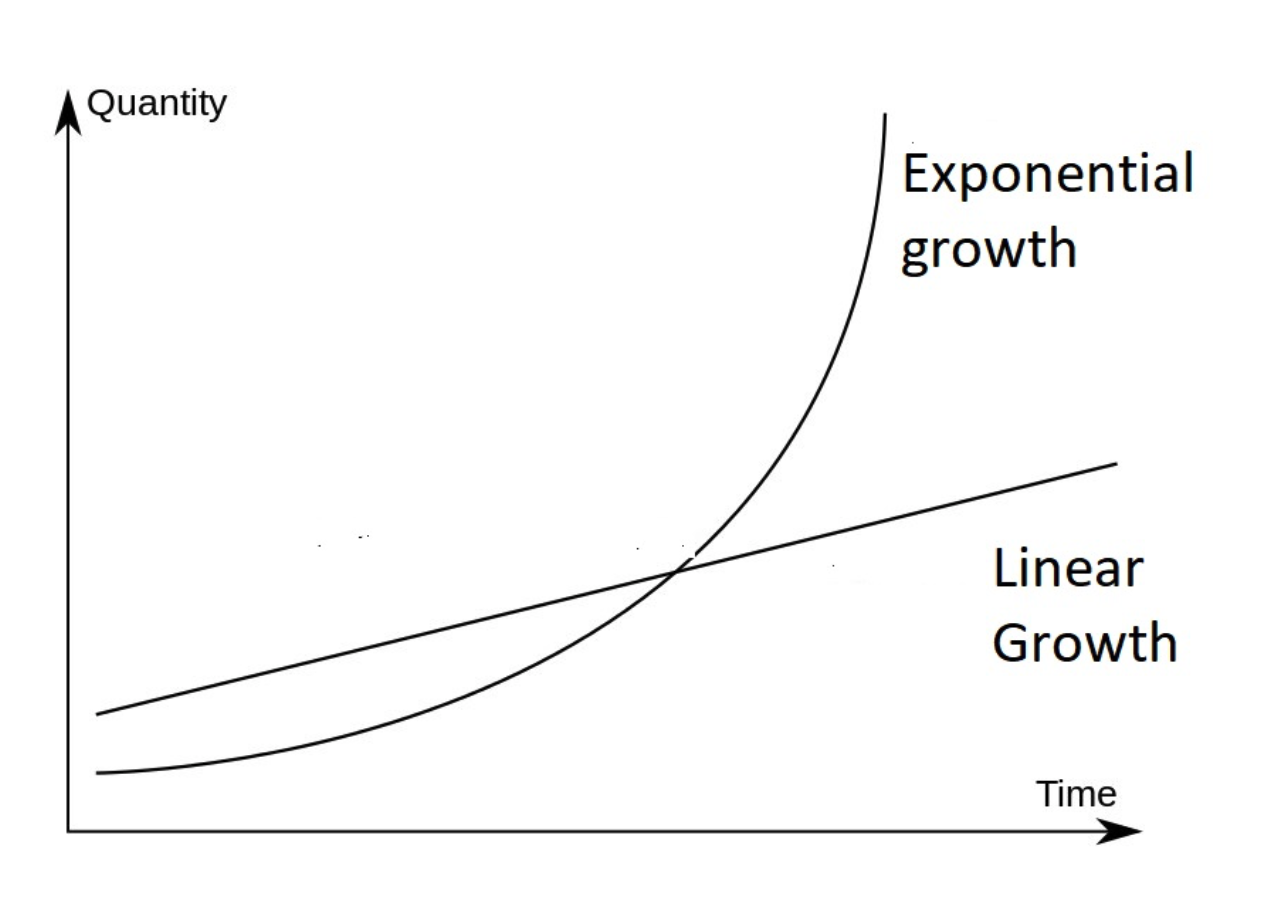
Malthus said that since food supply (farming) is linear, and population is exponential, there would be a crisis-where?
Challenge: draw a simple curve of y = 2x and another of y = x^2 where do they cross?
Units:
mks system is what we use: meters, kilograms and seconds
prefixes:
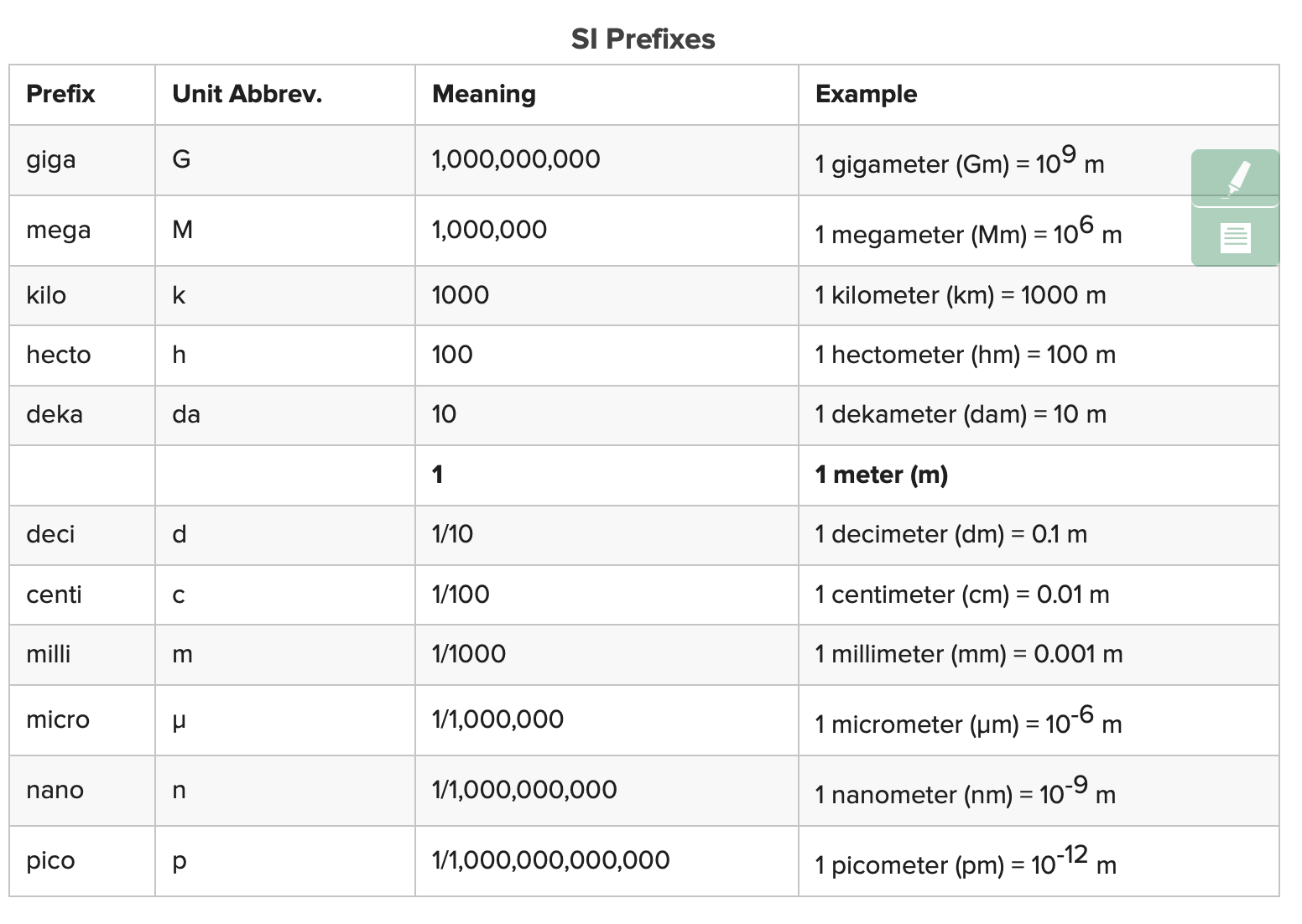
examples:
gigabit in progresscomputers, gigaton in carbon dioxide
megabit in computers, megalopolis (large city)
kilogram in mass, very useful
hectare in area (2.5 acres)
deka is hardly ever used, except for decimate, meaning 1 out of 10 survived
deciliter is a measure of liquid
centimeter is smaller than an inch (2.54= 1 inch)
millimeter is 1/10 of that
micro is very small, used to measure bacteria and viruses
nanometer is useful in measuring light waves
picograms are a measure of pollution
Challenge: how many millimeters tall are you, and how many grams is your mass?
Dimensional analysis:
Best done on the board, but if 1 inch =2.54 centimeters 2.54 cm, then 1 in/2.54cm is a fraction equal to one
If you are given 45 inches and want to know how many cm, write the equal sign first:
= _______ cm
Then make sure that the cm unit fraction is on top, so it survives to look like the answer
so, 45 in x 2.54 cm/1 in. = ______ cm
cross out whatever cancels
Challenge question: how many inches is it to Kona?
Accuracy vs. precision:
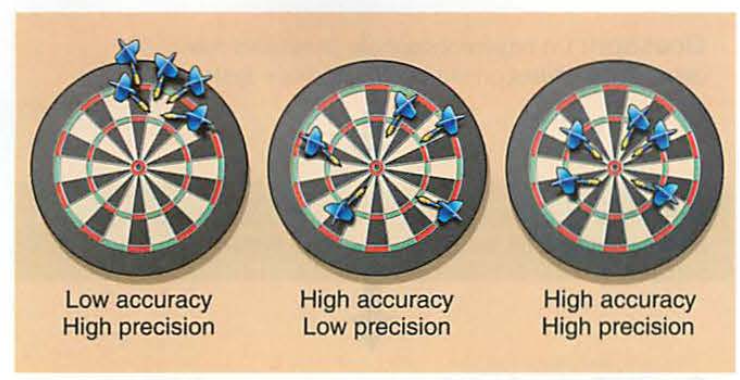
You can be precisely wrong, but you are still wrong...
Next: the periodic table (noooooooo!)
Not so bad, look:
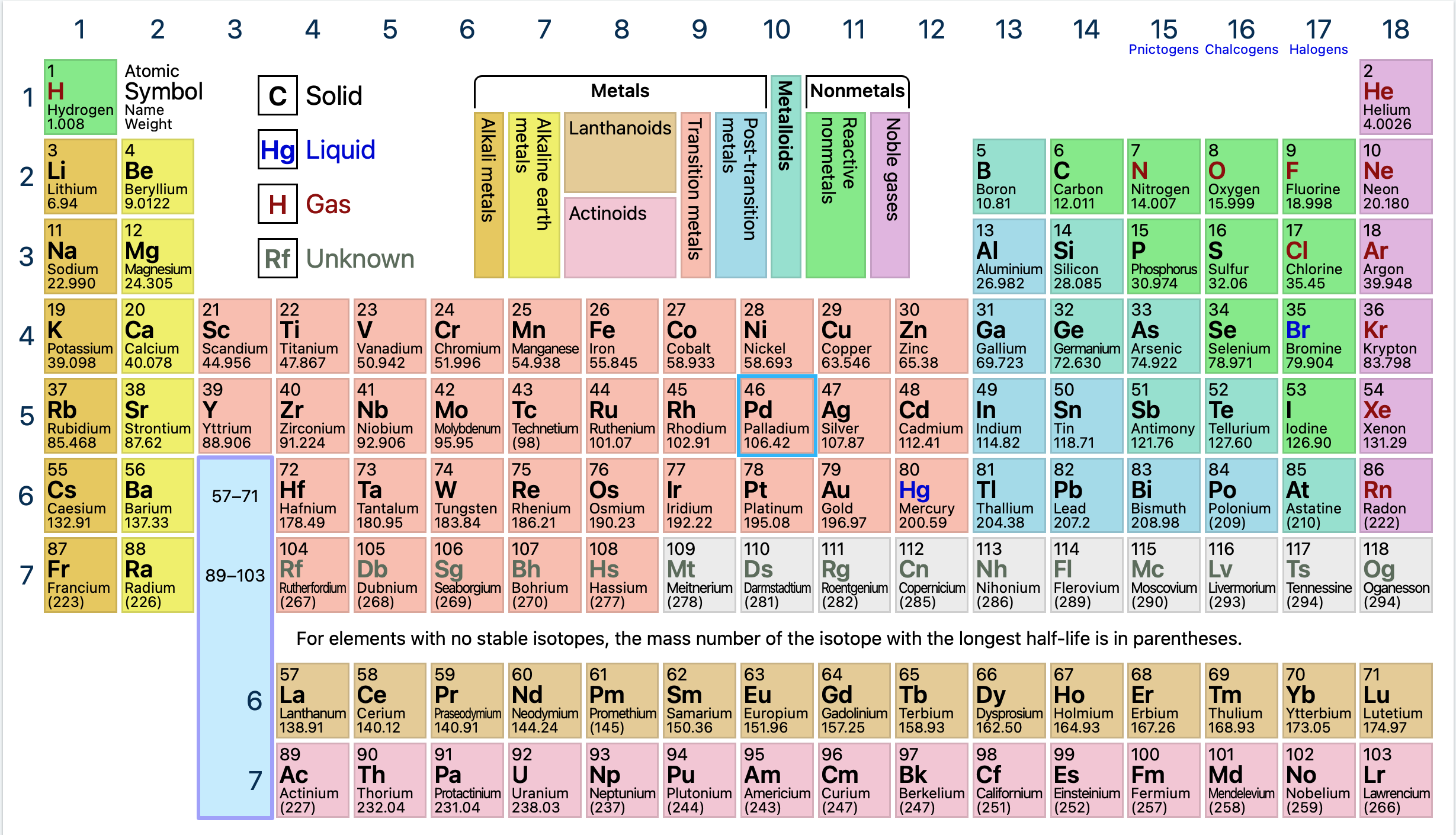
we'll print one out for you to doodle all over...
Mark + and - on the columns from left to right, ignoring the middle for now.
column 8 is the noble gases, they have a stable set of electrons (full shells)
imagine you are lithium, who do you want to look like? how?
repeat with sodium and chlorine...
Ok, that's fun, now look up and down the columns: you could poison someone with Barium (it's what they do with dead people). Where would it show up in your body?
Radioactive strontium causes what form of cancer? what about cesium from nuclear reactors?
Vertical columns are chemically similar...
Elements on the left usually give up electrons to act like noble gases, so become positive
Elements on the right usually add electrons to act like noble gases, so become negative.
If these combine like Na and Cl you get a very strong IONIC bond like salt (high melting point, always conducts electricity)
Fun fact: you cannot get electrocuted in a bath of distilled water.
Another fun fact: you CAN get shocked working on a car battery in salty board shorts (ow!)
Ok, that's all exciting what makes up elements then?
Protons determine the element: the name, how it acts, everything.
Electrons are much smaller, and give the element charge
Neutrons are about the same mass as protons, and keep the protons company in the nucleus.
Changing electrons creates ions, which is a chemical process.
Changing neutrons creates isotopes, which is a nuclear process.
Challenge: list a few ions and a few isotopes
Atomic number: just the protons
Atomic mass: all of it (we ignore the puny electrons, so p+n)
Isotope: same protons, different neutrons
Ion: same everything, just more or fewer electrons
So, if you believe all of this, then C14/6 is radioactive while C12/6 is what is inside my body?
Not so fast, they are both in your body.
If you died suddenly of an overdose of M&Ms, 5730 years from now, anthropologists could dig up your bones, and find only 1/2 of the C14/6 you ate in the candies. They would know you did this 5730 years ago. They would likely be stale by then...
Module 4, Science terms:
Main topics:
- elements: protons, neutrons, electrons
- atomic mass, isotopes
- isotopes vs. ions
- bonds: ionic and covalent
- periodic table: columns
- half lives
- pH and pOH
- melting and boiling points
- surface tension: adhesion and cohesion
- organic vs. inorganic substances
- proteins, fats, carbohydrates
Atoms and molecules:
- atom: one nucleus with protons and neutrons, electrons around the nucleus
- element: one type of atom, defined by the number of protons
- protons: positive charge, give the atom identity, found in the nucleus
- neutrons: neutral charge, gives the atom more mass, found in the nucleus
- electrons: much smaller (1/1800), negative charge, gives the atom charge, "orbits" the nucleus
Examples: see https://ptable.com/?lang=en#Properties
Helium: He, discovered in the sun (helios), 2 protons, 2 neutrons, 2 electrons
Carbon: C, 6 protons, 6 neutrons, 6 electrons
Atomic mass is the mass of all of the protons and neutrons (electrons are too light to count)
Isotopes: nuclear stuff
Wait: why does carbon have atomic mass of 12.011 instead of 12?
There are other types of carbon, called isotopes (same type)
C12/6, C13/6, C14/6
Each of these has the same number of protons (identity) but more neutrons
check: how many protons, neutrons and electrons in C14/6?
Demo: m&ms in cup
Ions and bonds: chemical stuff
so far we've been playing with the nucleus.
If you change the number of electrons from a match with protons (C6/12 has 6 electrons), we can add or take away electrons:
Na+ is Sodium missing an electron
Cl- is Chlorine with an extra electron
Why?
Look again at the periodic table: https://ptable.com/?lang=en#Properties
Everyone wants to be on the right hand column, called the noble gases
To get there, Na loses an electron to look like Neon, while Chlorine adds an electron to look like Argon (see for yourself)
To get there, Na loses an electron to look like Neon, while Chlorine adds an electron to look like Argon (see for yourself)
These sorts of bonds, where one gives up and one takes is a very strong bond, called ionic (because it involves ions)
NaCl (salt) is one example:
- Ionic bonds have high melting points
- They conduct electricity, especially in water
- examples: NaCl, KCl, MgCl2 (notice usually groups 1 or 2 and a halogen, group 7)
demo: salty fingers, lower electrical resistance
The weaker type of bond you will see is called covalent.
Think of a pilot and co-pilot: both share the duties
In a covalent bond, neither one is more positive or negative, they share an electron.
Molecular Hydrogen (H2) and molecular oxygen (O2) are good examples
so are plastics, water and other substances
Covalent bonds:
In a covalent bond, neither one is more positive or negative, they share an electron.
Molecular Hydrogen (H2) and molecular oxygen (O2) are good examples
so are plastics, water and other substances
Covalent bonds:
- Weak bonds
- Don't conduct electricity as well as ionic solutions
- low melting points (water, plastic, butter)
Periodic table classes:
The periodic table (here it is again: https://ptable.com/?lang=en#Properties) is key to solving riddles in APES around pollution, toxins, and many other things:
Example:
Strontium 90/38 is a radioactive isotope, a product of nuclear reactions (reactor meltdowns, nuclear weapons)
Look at the periodic table, find Strontium.
What is above it?
Calcium is part of your bones, so when you ingest Sr90/38, it is absorbed into your bones just like Calcium, since elements in the same column are chemically similar.
What sort of cancer would this cause?
Question: Cesium is a radioactive element, where would it go in your body?
Homework questions:
- Why is radon so potent as a carcinogen for lung cancer?
- How much more potent an acid is something with pH of 4 than one with pH of 6?
- Someone is poisoned with Strontium 90, what sort of cancer would they likely get?
- List a few other ionic compounds, with formula
- List a few other covalent compounds with formulas
Acids and Bases: pH
In aqueous (water) solutions, we often need to know if a solution is acidic or basic
Acids have more Hydrogen ions (H+) floating around
Bases have more hydroxide (OH-) ions floating around
Water is amphoteric (both) since it is really H-OH
Water has pH (potency of Hydrogen) of 7, in between 0 (acid) and 14 (totally base, dude)
Water is "mid"
First look at most solutions is a good guess:
NaOH base
HCl acid
See?
You try: KOH, HNO3, H2SO4, H3PO4
Which were acids and bases?
Clue: anything with an H alone is usually an acid, anything with an OH is usually a base
Exceptions: alcohols (see below) have an OH, but are not basic, they are organic compounds
Demo: breathing into water, pH drops
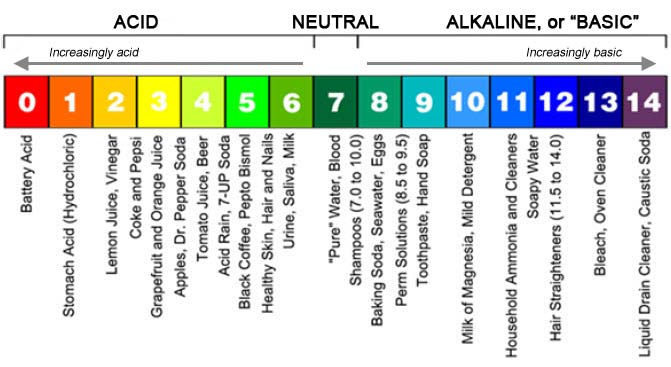
Calculating pH:
This is usually easy: a sample problem might ask what is the H+ concentration of something with a pH of 1 ee -4?
Simply take the minus sign off the exponent and you have your answer: pH = 4
Another version of this would be:
How much stronger is an acid with pH 4 than pH 6?
This is a bit trickier: since each power of ten is one pH number, 10^2 is 100, so the answer is 100.
Try this: How much more acidic is water than NaOH solution with pH 12?
Since water is pH 7, 12-7 = 5, so 10^5 is 10,000x stronger.
Weird to think of water as an acid, but there it is.
You may also see something like "what is the pOH of something with a pH of 4?"
The answer is: pOH is just 14-pH, to the answer is 10.
There is a scary looking formula for pH:
pH = -log10[H+]
not so scary: all it says is take the log to the base 10 (usually the same as the power) and throw away the minus sign
Like in radioactive decay, you may see something that is not in the form 1 ee-4, in other words, the 1 may not be a 1.
In that case, you just use the scary formula...
Radioactivity: nuclear fallout, accidents, nuclear waste
The good news is these do not hang around forever, they decay into other things, some radioactive, some not.
A half life is the amount of time it takes something radioactive to decay into half of the amount it was before.
So, If you have 128 grams of Strontium 90/38, which has a half life of about 30 years, after 30 years you will have:
64 grams
Then 30 years later it will be all gone, right?
Nope: 32 grams
Then continue: 16, 8,4,2...
It never really goes completely away
Demo: M&M's in jar
Half-life how to: caffeine, nuclear waste, drugs
If 100% of something decays exponentially, this means that after one half life (t 1/2) half of it remains.
We demonstrated this with M&Ms in class, and you saw an exponential decay graph
Why do we want to know how this works?
Easy: nuclear waste, radioactive fallout, caffeine and other drugs all follow exponential decay.
So, to find out how much is left of something, you can count the half-lives and divide each one by two over and over again:
1/2->1/4->1/8->1/16
You may also see this as percentages:
50%->25%->12.5%->6.25%
There is a simple formula for this if you want to use it:
Amount left = Amount starting (1/2)^n
At = Ao (1/2)^n. or At = Ao/2^n
where n is the number of half lives.
Example:
The half life of C14/6 is 5730 years
How much of a 200 gram sample will be left after 22,000 years?
Divide 22,000 by 5730, you get about 4
(1/2)^4 is 1/16, or 6.25% whichever you like using more
200 grams/16 = 12.5 grams left. or...
200 grams * 0.0625 =12.5 grams 12.5
This also works if you have something in between half lives, like if you repeated this problem for 18,000 years:
18,000/5730 = 3.14
(1/2)^3.14 = 1/8.8 or 0.113
0.113 * 200 = 2.26 grams left
In some rare cases, you will be see this situation in reverse:
The half life for Sr90/38 is about 30 years.
If 25 grams of a 100 gram sample remains, how old is it?
25/100 is about 1/4, 4 = (1/2)^2 so two half lives, or 60 years.
HW Radioactive decay
- Take a photo of your graph and include it below. What represents the “half life” in your demonstration?
- A sample of a radioactive isotope has a half-life of 5 years. If the initial mass of the sample is 100 grams, how much of the sample remains after 15 years?
- A radioactive isotope decays to 25% of its original amount in 10 years. What is the half-life of the isotope?
- A certain radioactive isotope has a half-life of 20 years. What fraction of the original sample will remain after 60 years?
- A fossil contains 12.5% of its original amount of Carbon-14. Given that the half-life of Carbon-14 is 5730 years, estimate the age of the fossil.
- The activity of a radioactive source is measured to be 800 disintegrations per second. If the half-life of the source is 2 hours, what will be the activity after 6 hours?
- If Caffeine has a half life in your system of 5 hours, and you have one “dose” at 7 AM, how much is in your system at noon?
- You then have another dose of caffeine at noon, how much is in your system at 5 PM?
- You then have another at 5 PM, how much is in your system at 10 PM?
- If the half life of caffeine was longer, what would happen to the amount in your system by the end of the day?
- THC (tetrahydrocannabinol) has a half life of 20-30 hours, which we can estimate to 24 hours for this question. A user has a “dose” at 6 AM, then another at the same time every day for five days. What is the level in doses after 5 days?
- THC absorbs into the fatty tissues of the nervous system, just like other fatty-soluble toxins we will study, like PCBs in Killer whales. Look this up and describe why this is important to our study of APES.
Radiation: nuclear fallout, nuclear energy, radon
There are 4 main types of radiation from radioactive substances or nuclear reactions (nuclear weapons, meltdowns, etc.)
- Alpha rays are Helium nuclei, +2 charge, very heavy, very slow, and can be stopped by skin or paper
- Beta rays are fast electrons, -1 charge, fast, light, and can be stopped by metal foil
- Gamma rays are light photons, no charge, can be stopped by lead
- Neutrons are fast neutrons, no charge, can be only stopped by lots of concrete or lead (slow ones are called "thermal" neutrons and are useful in nuclear power plants to make steam)
Health examples: Radiation, mutations, cancers
Radon gas (222/86) is very heavy, and emits alpha rays.
No problem if the gas is outside your body, your skin protects you.
If you breathe radon gas, is sits in the bottom of your lungs and alpha rays destroy your white blood cells: leukemia and other lung cancers result
Gamma rays split DNA and cause mutations, some cause cancer.
Neutron radiation dissolves membranes in animals, killing them in nasty ways...
In each of these cases, radiation is harmful, it depends on where you are exposed, for how long, and what protection you use.
Radon is the #2 cause of lung cancer in the US (!!!)
Be aware of this if your dorm room in college (or anywhere) is in the basement, and you are near the Rocky mountains.
Demo: Radon rock
Solubility of gases:
Air holding water: Humidity, condensation, rain shadows, hurricanes
We know that air can hold water vapor, this is invisible, unless it condenses (like steam or clouds)
As gases get cooler, they can hold less water, that's when it rains or condenses.
You know this: cool drinks form beads of water on the outside, since the drinks are cooler than the air.
It also means that warmer air can hold more water
Remember this: gases hold more water when warmer
This also explains why you may get a shock in cooler climates walking across a carpet: dry air is a better insulator, so can build up an electrical charge better.
It also explains why it rains on the windward side of mountains: as the moist air rises, it gets cooler, and cooler air can hold less water: "Orographic lifting"
It also explains why air coming in from the ocean is more humid: it has been warmed by the ocean.
Demo: elab humidity sensors, temp and RH
Water holding gases is the opposite: Dissolved Oxygen, DO, thermal pollution
One smart character decided to boil the water for the aquarium before dropping the fish. Even though the water was at the right temperature, by boiling the water, all of the dissolved oxygen was gone-what do you think happened to the fish?
Gases dissolve better in cooler water. Fishing folks know this, and go where the water is cooler, since fish breathe better there.
It also explains why the British are so nuts about when they boil water for tea: if you boil it too long it has no oxygen in it, and it tastes "flat".
You also know this that soda drinks lose their fizziness if you warm them up.
This is very important when we study dead zones and fish kills...
It also explains why you don't ever need to get ice in your carbonated drinks: to get the carbon dioxide to dissolve into the drinks they MUST cool the drinks down to inject the CO2.
Demo: cool soda water, warm soda water
More water stuff:
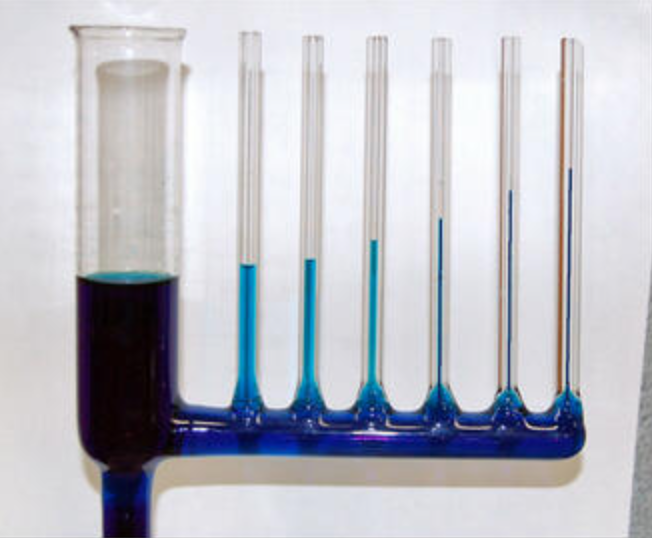
Surface tension: adhesion and cohesion: capillary action, trees and all plants
Water is very cool stuff: it likes to stick to other stuff (adhesion) as well as to other water (cohesion)
This makes for interesting phenomena when the sides of a container are very close, like in roots or thin hair:
As the water molecules climb up the sides of the roots (adhesion) they stretch out the molecules in the middle (cohesion).
This is called surface tension
This make the curve stretch and then shorten, so water moves up the column (roots, long hair).
This is called capillary action, and is very important for all plants.
Surface tension is also how water striders "sit" on the water: their feet stretch the water molecules.
Soaps destroy the cohesion, making water "wetter", also making little bugs fall into the water...
All plants rely on capillary action to bring water to their leaves, so it is not a good idea to drop soap on the roots of plants.
Think of roots: many thin fibers next to each other-perfect for capillary action.
Demo: soap in water, surface tension
Homework: radiation, dissolved gases, capillary action, melting, boiling
- Explain how tall trees and other plants carry water vertically to their leaves
- Explain why soap might impact this action
- What is the difference between adhesion and cohesion, and why should we care?
- If a body of water gets too warm, fish will die, why?
- You might feel comfortable on a very hot day in the desert, but not at the same temperature where it is humid-why?
- Why would triathletes struggle in Kona? What is different from where they have trained?
- Why would the British only boil water for their tea until just before boiling?
- Herman boils the water for his aquarium to keep it clean, then cools the water before dropping in his prized fish, which all promptly die-why?
- Why is there a desert (not a dessert) on the eastern, leeward side of the coastal mountains in Washington and Oregon?
- If you run into a person wearing a foil hat, what sort of radiation do you think they are protecting themselves from?
- What about a paper hat?
- What phase of water are ice skaters skating on?
- If it is temperature that cooks food, why would increasing the pressure make for a shorter cooking time?
- The Chesapeake bay is a "perfect storm" of pollution, shallow, slow moving water, lots of fertilizer and silt. Why is this a perfect storm for killing fish?
Melting and boiling points: colligative properties, melting ice, antifreeze/anti boil
Water is everywhere, and we study it a lot
The melting and freezing point for water is 0°C at one atmosphere (very interesting stuff happens at other pressures, like ice hockey)
The boiling and condensation point for water at one atmosphere is 100°C (again, interesting things happen at other pressures like pressure cookers and freeze dried ice cream)
It turns out that anything added to water raises the melting and boiling points.
You may have heard to add salt when cooking pasta: this raises the boiling point a bit so the pasta cooks a bit faster. (heat cooks food, not boiling)
It also explains why they add salt to ice to make ice cream, or pour salt on road to melt ice...
You can demonstrate changing pressure on melting by slowly chewing on an ice cube: pressure makes ice melt (ice hockey skates)
This also means that water boils at a lower temperature if there is less pressure, like on a mountain, or even here in Waimea, since we are at 800 meters elevation (about 3000')
Pressure melting of ice is how ice skaters move, if you look at their skates end-on, you will see an upside down U shape that traps the melted water from their weight pressing on the ice.
Heavier ice hockey players can use a thicker skate...
It also means that if the ice is too cold, this does not happen (ask Mr. McKenna about this where he skated in Canada)
Demo: pressure cooker, crushing ice, salt on ice, salt in boiling water
HW review:
- A chemist claims she can make a compound from Mg and F that she calls MgF. What is wrong with this formula?
- Another chemist claims that something that conducts electricity is covalent, what is wrong with this?
- Look up three radioactive isotopes that are present in nuclear fallout, and explain how they might impact the body.
- Look up their half lives and calculate how much would be remaining after one year
- Explain what the term amphoteric means, and why you need to understand it
- Why is water both an acid and a base?
- A substance has an [H+] of 1 ee -4, is it an acid or a base, and what is the pH and pOH?
- Look up the decay of Radon, and explain the various forms of radiation it emits
- If you wanted to ski on dry, powdery snow, where could you go in the US, and why is it dry snow there?
- Why would stream water near there have a high DO?
- For very tall trees, would the tree fibers in the trunk be thinner or thicker and why?
- Look up the process for freeze-dried coffee or ice cream, and explain how this works, using what we know so far.
9.3.25 notes:
- osmosis vs. diffusion (capillaries, healing)
- salt intrusion-crops
- organic chem
- alcohols: OH
- CHON
- proteins-malnourish vs under (famine)
- deamination
- CHO-diabetes, glycemic index
- Fats: heat and energy
- free fatty acids-fuel, marathons
- lipids-membranes
- fat soluble-bioaccumulation-orcas
- ADEK
- biomagnification: many animals: ahi Hg
Osmosis: cell walls, plant hairs, swollen toes
- You may have heard of this in your chem or bio class.
- Osmosis in simple form means that water always chases salt or other "solute"
- When a solute like salt dissolves in a solution like water, it becomes salty.
- If a membrane like skin or cell walls separate this salty solution from fresher water, the water will travel through the membrane to get to the salty solution.
- Good use of this: if you have an injury with swelling, doctors may say "soak it in warm, salty water".
- This draws the fluid from the injury, enabling healing.
- Also works for sore throats...
- Bad use of this: if you pee on plants, the Nitrogen in urine helps plants grow, but the salt in urine pulls water from the roots, killing the plant.
- This also happens in areas where well water is used to irrigate crops: the minerals (salts) in the water accumulate in the soil, killing the roots of the plant.
- EVEN MORE SCARY: As ocean levels rise, salty ocean water is penetrating into the water table in many fertile areas like the Mississippi delta, Florida and the Pearl river delta in Asia, killing crops. The Pearl river delta is where most of the rice for all of Asia is grown...
- This is called salt water intrusion
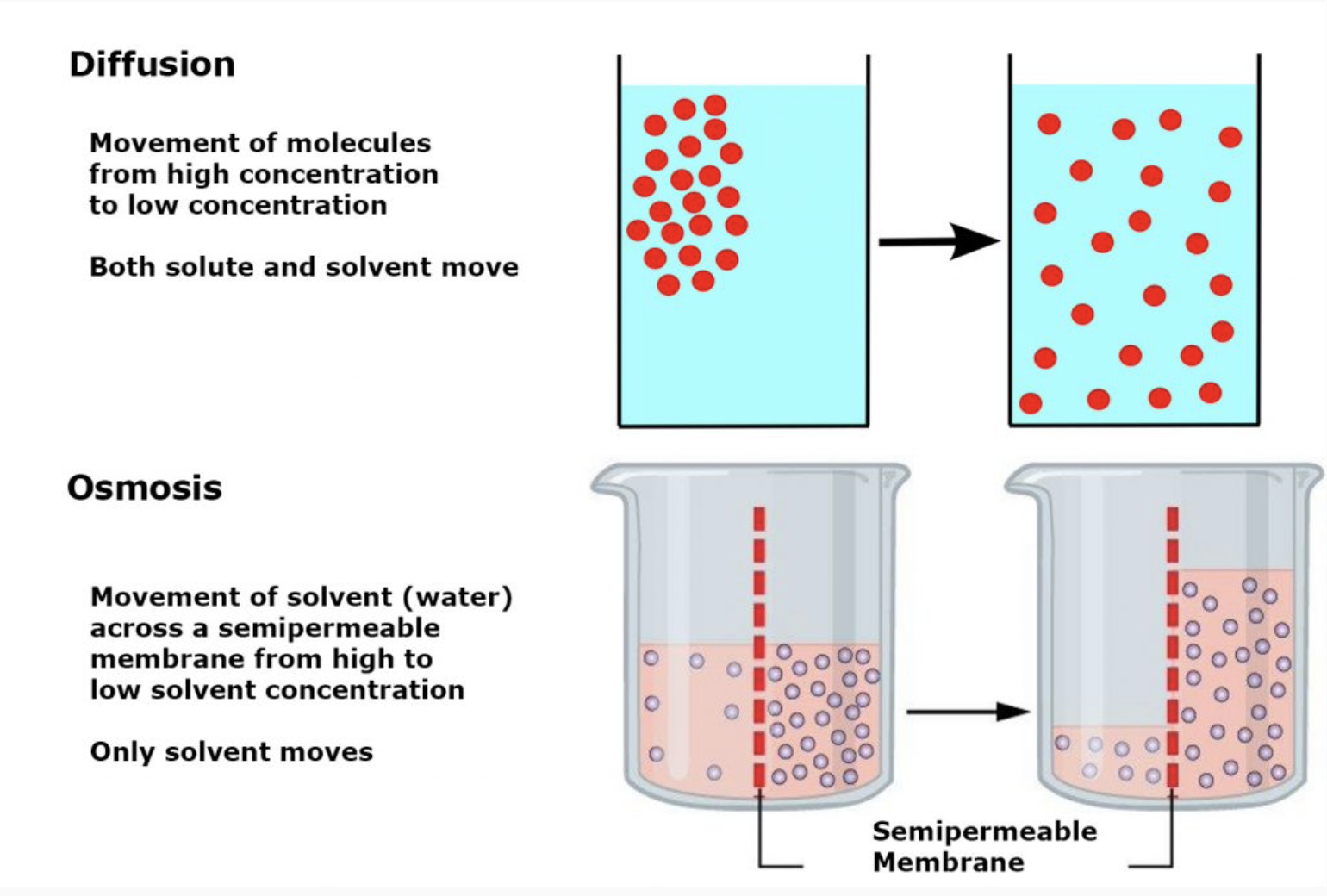
Osmosis vs. Diffusion:
- Osmosis is where water follow salt (or solute), example sore throat with hot salty water
- Diffusion is where any molecule (solvent or solute) moves from high concentration to lower, example CO2 out of the room, can be gases, liquids (even solids in some cases-how computer chips are made)
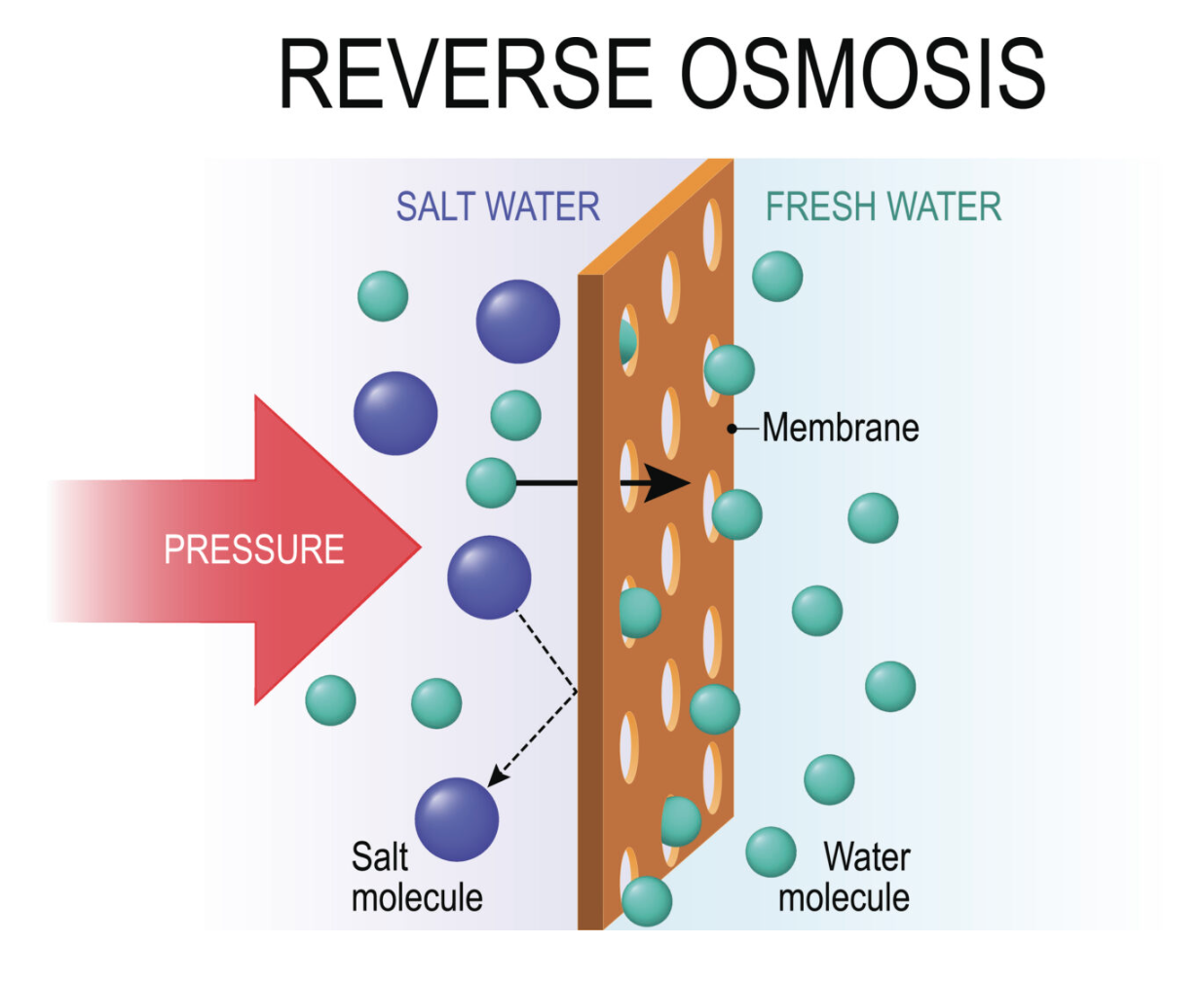
Demo: cucumber->pickles
Organic and inorganic compounds: everything based on carbon
- Anything with a carbon backbone (like you) is an organic chemical compound
- Anything without carbon is called inorganic, like salts, metals and minerals
- These could be anything from the foods you eat (more on this later) to the gasoline you might put into your car or grease (don't eat that)
- Organic compounds can be water soluble, or not.
- Hydrocarbons like gasoline and oil have only C-H bonds, so are insoluble in water (like greasy hands, or olive oil in salad dressing)
- anything ending in -ane means single bond organic compound
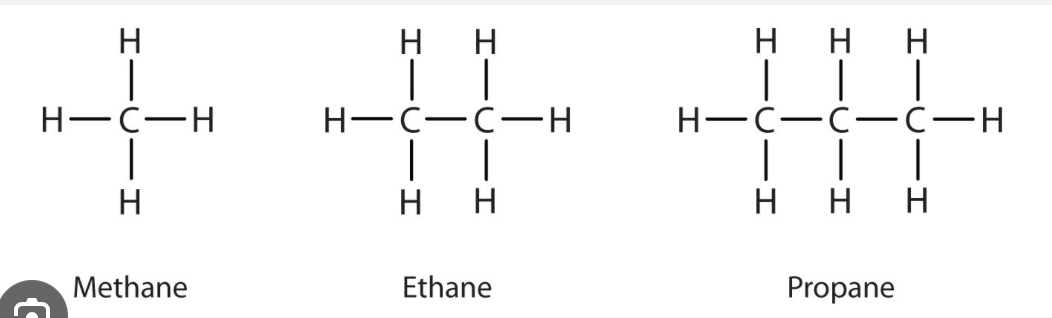
- organic compounds with an OH molecule attached, so they can dissolve oils while also dissolving in water.
- try this: use alcohol to remove grease from your hands, or your laptop
- -ol is the suffix in organic compounds that means alcohol
Some important alcohols:
- methanol CH3OH (toxic)
- ethanol C2H5OH (makes you drunk)
- propanol (C3H7OH) known as rubbing alcohol
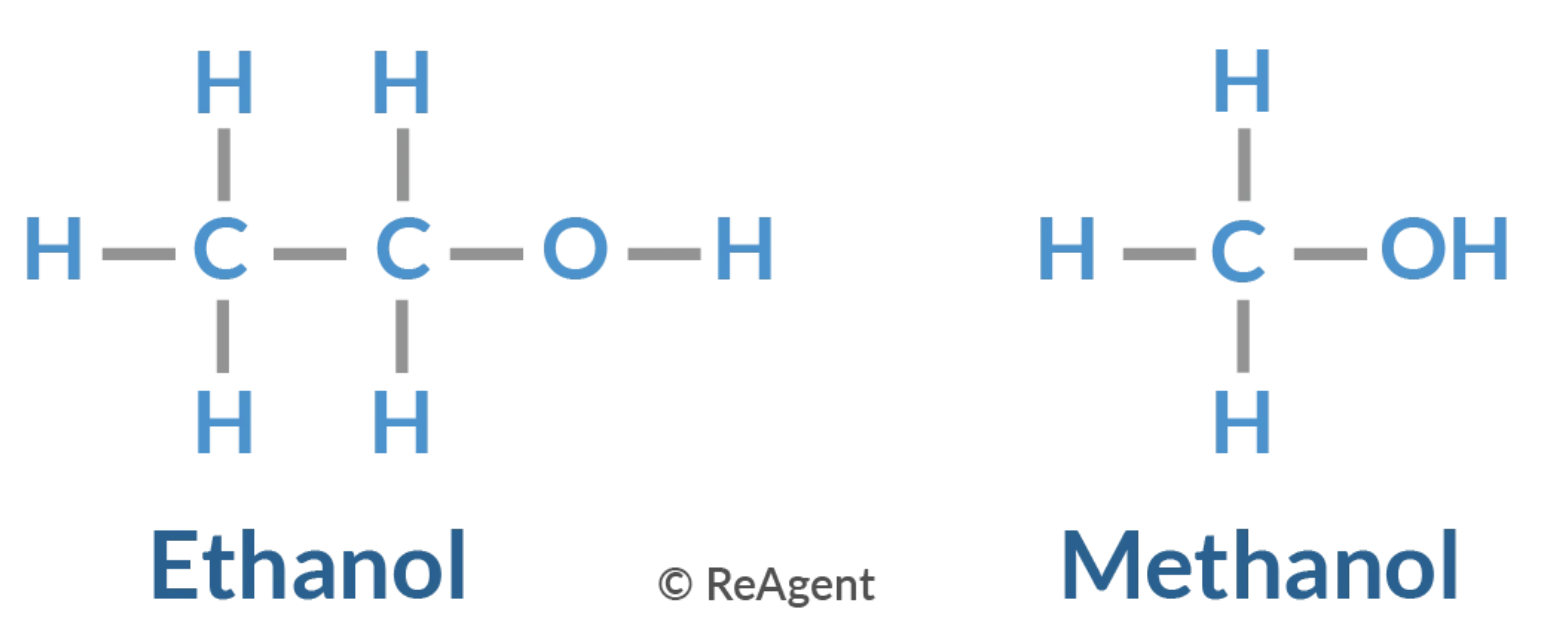
Scary stuff: if you are interested, compare the digestion and metabolism of ethanol and methanol...one of these turns into ant venom in your bloodstream!
Soaps
- are an interesting combination of organic (C-H, hydrophobic) and inorganic (ionic, hydrophilic) ends, so they can mix with oils then be carried away by water.
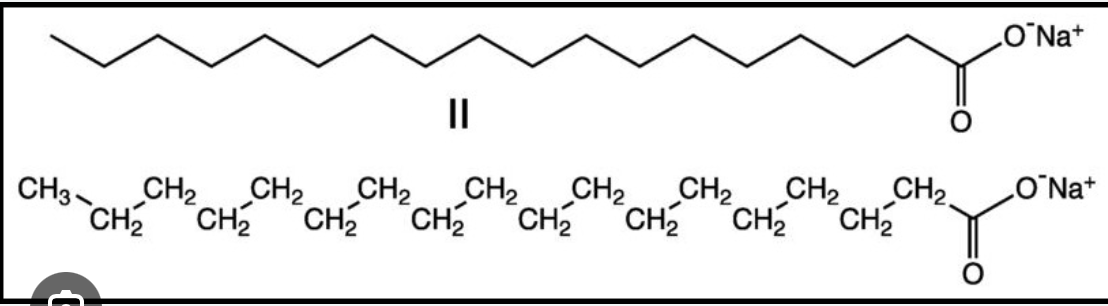
- Many organic compounds dissolve in plastics, like spaghetti sauce in plastic food containers (Vitamin E/Carotene=orange and lycopene=red)
- -ene means double bonds in an organic compound
- many fat soluble toxins can build up in fatty tissues of wildlife, like killer whales (remember?)
Demo: spaghetti sauce in plastic
Proteins, fats and carbohydrates: CHO, C-H-O and C-H-O-N
- All three of these can act as fuel in your body, as your body is really clever that way.
- Oddly, though, even your awesome body cannot repair tissues or grow new ones without proteins
- Why not?
- are the only food source with Nitrogen, since they are made up of amino acids (amines means Nitrogen)
- Proteins can be used as fuel for your body by "de-amination" meaning taking off the nitrogen
- so, could you live on just proteins alone? depends...
- Look up several amino acids, the building blocks of proteins, and find the only one that contains sulfur (very important)
- DNA is made up of proteins as are muscle and tissues (brains too)
- Fun fact: vitamins are often amines, and were thought to be vital to health: "vital amines"=vitamins (look up the formula for a vitamin of your choice)
- Another fun fact: athletes using protein supplements can "burn" their kidneys if they don't drink enough water with the proteins, as the body de-aminates the proteins into fats and carbs for fuel (drink water!)
Fats:
- Fats and carbohydrates have similar chemical formula (carbon and hydrogen), but different structures
- Fats all have a special sort of alcohol backbone, with little strands coming off made of C-H bonds (like a hydrocarbon)
- This is why most fats do not mix with water...
- "Free fatty acids" in your blood are the main fuel for athletes (not carbs, as most folks believe)
Carbohydrates:
- Carbohydrates are C-H-O bonds (anything that ends in -ate means with oxygen), so carbo=carbon, hydr=hydrogen ate=oxygen
- Carbs can be long strings, like starches, or compact little hexagons or pentagons like sugars
- Carbs are a short term fuel for athletes
- sugars can give a short term boost in blood sugar, followed by depression (insulin rebound)
- one reason caffeine is added to sugary soft drinks.
- Sugars tend to be metabolized much faster (smaller molecule) than starches
- Diabetics suffer from insulin deficiency, so starches are better for them: slower digestion
- Fun fact: sugar alcohols look like sugar to your body, but don't behave like sugars-used in drinks and candies...
Demo: food analysis
Conservation of mass, conservation of matter:
- In any chemical (not nuclear) reaction, mass is conserved
- Later we will discuss nuclear reactions, where mass actually turns into energy (and vice versa)
Reaction rates:
- Every 10°C increase in temperature doubles the speed of any reaction
- Who cares?
- When you have a fever, you burn fuel much faster
- When explosives heat up, their blast is much more violent
9.3.25 notes:
- osmosis vs. diffusion (capillaries, healing)
- organic chem
- alcohols
- CHON
- proteins-malnourish vs under (famine)
- deamination
- CHO-diabetes, glycemic index
- Fats: heat and energy
- free fatty acids-fuel, marathons
- lipids-membranes
- fat soluble-bioaccumulation-orcas
- ADEK
- biomagnification: many animals: ahi Hg
Migrated from Apple WikiServer Wiki. Original page b713b7y5.ID: b713b7y5