
Week two: Environment and scientific method
Migration
- summarize your cause and effect projects for presentation in
progressday 2 of the week - begin exploration of cause and effect
- begin readings from fr text chapter 1 (link below)
energy->water->food->culture
- With energy you can move/purify water
- With water you can grow food
- With food you can maintain a culture
What is the "environment"?
- Front of ship fell off-https://www.youtube.com/watch?v=3m5qxZm_JqM
- "we towed it out into the environment"..."you mean into another environment"
Environment: Everything around us, including us
Climate change map-try this out:
Nebraska->Alberta by 2050
Module 1 -------------
Fracking-know what it is? Why is it controversial? How has it changed how we generate electricity in our country? At what cost? Why is this politically important? Why are the solvents they use secret? What is the impact of these solvents on water?
Bio=life, so biotic means living, abiotic means not living (druids had a neat view on this)
How systems are defined enables us to create models of cause and effect (favorite topic of physicists and historians as well)
Module 2 ---------------
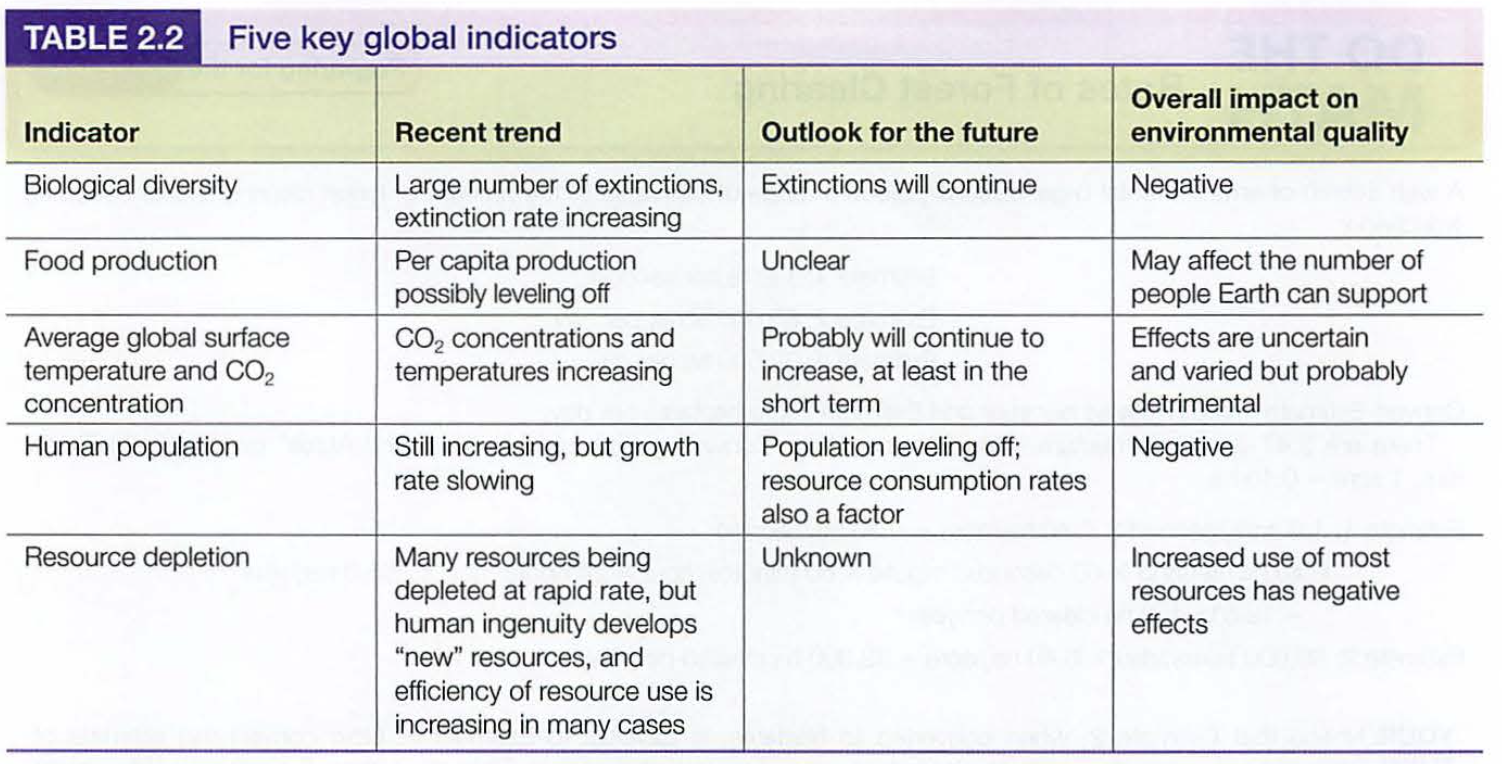
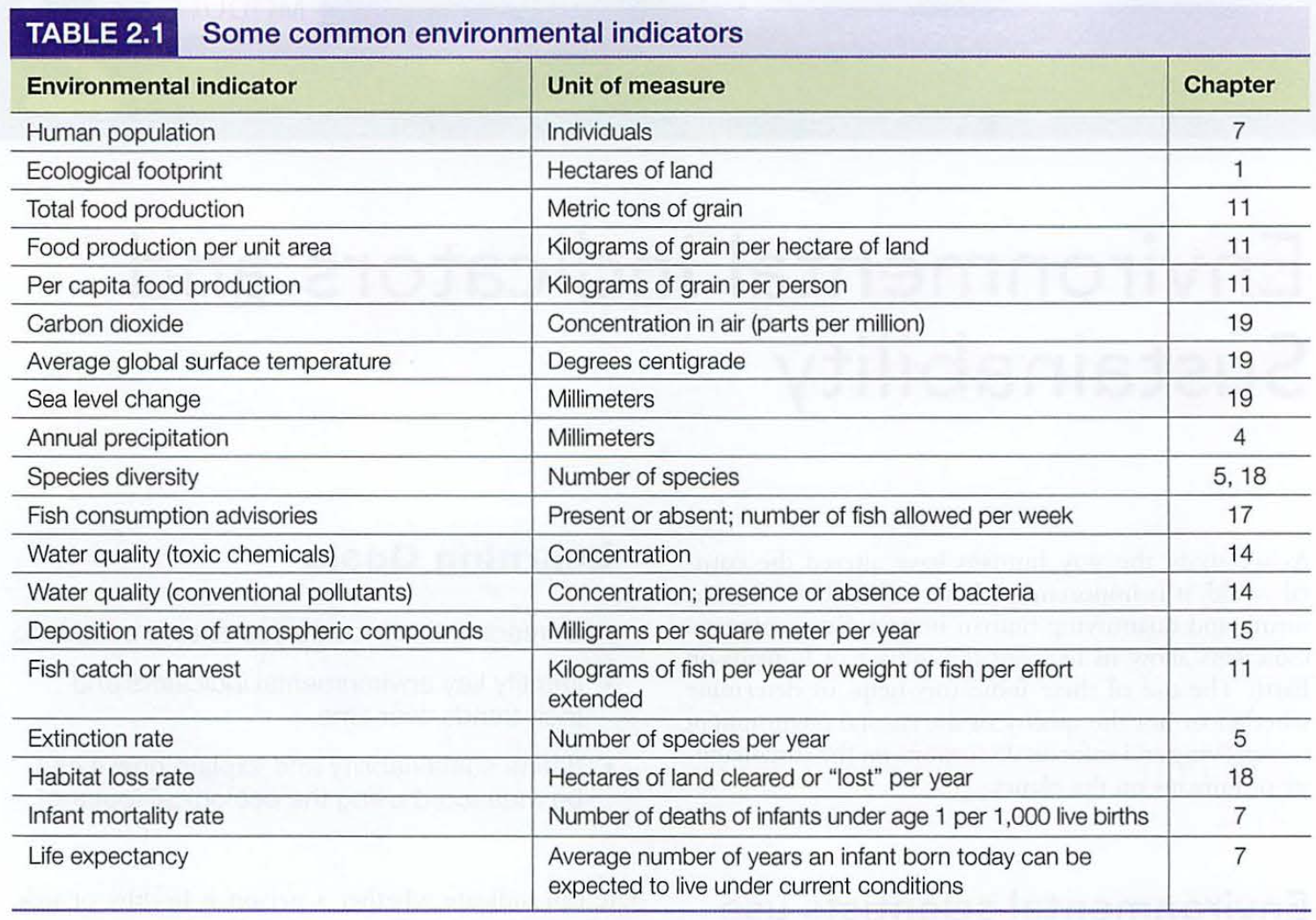
Environmental indicators: what we know and can observe that indicate the condition of a system
- Biodiversity
- Food production
- Global warming
- Human Population
- Resource depletion
Ecosystem services: can be economic, direct or cascading (fishing in the Gulf of Mexico impacted by offshore oil spills)
1. Biodiversity: biological diversity (more about this later)
- Robust systems (can be biological, racial, technological) all have strong diversity
- Genetic Diversity: genetic variation within a population (corn for example)
- Species: ducks vs. dogs
- Species diversity: variation of species in an ecosystem
- Speciation (more) vs. extinction (less)
- Background speciation rate (cosmic rays)
- Background extinction rate (before humans, much higher in the anthropocene era)
Evolution needs three things:
- some form of genetic variation
- some stress that favors this variation
- survivors have to reproduce and carry on the variation
- longer necks in some animals
- drought that kills all short neck creatures (just like in land before time)
- long neck animals survive to reproduce and carry on the variation
- There is a theory that the background rate of mutation/speciation was much higher long ago because our atmosphere was thinner, and enabled more cosmic rays to penetrate, causing much higher rates of mutation/speciation.
- In England, butterflies have adapted since 1850 to look more like soot from coal fires.
- In NYC, a species of "subway mosquitoes" have been found that feed on humans in a dark, cool place
- Huh.
Extinction is the opposite of speciation, where species die off (except in the film Jurassic Park)
There is such a thing as a "background rate of extinction", which we have surpassed by many times
Diversity is good: think of monoculture food crops: one pest kills everything
- grain variation and monoculture
- regional grain production (e.g. Pearl river delta)
- vegetarian vs. carnivores
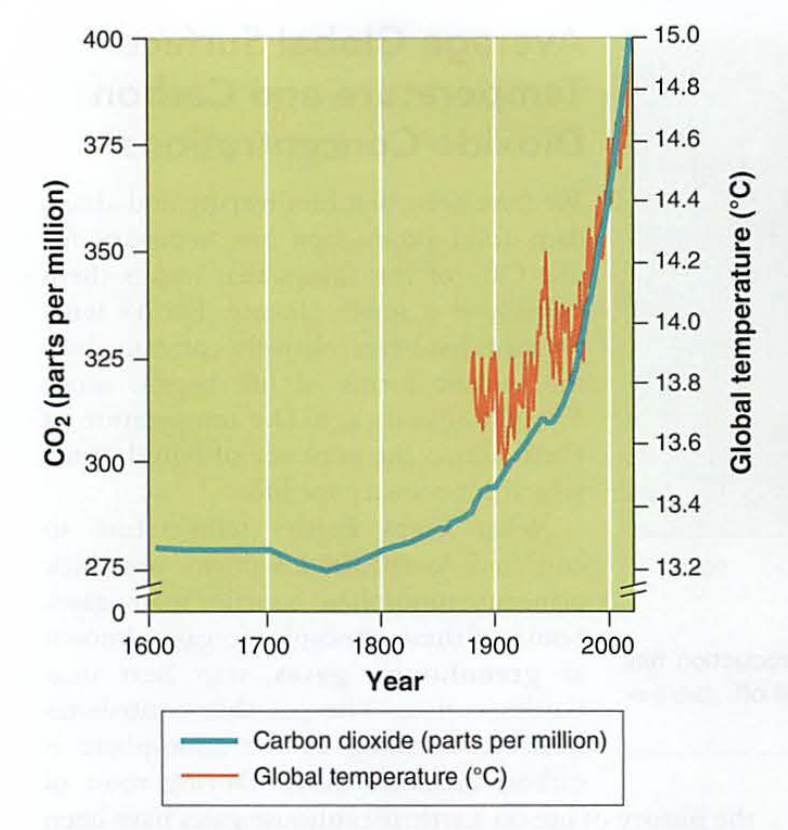
3. Global Warming
Man made, from burning fossil fuels (anything that was living, decayed capturing atmospheric carbon)
carbon dioxide was in the air, then captured as plants and animals
we burn their carbon with oxygen to make carbon dioxide
greenhouse gases: trap infrared radiation, warming the planet (cause and effect)
Not too many people know we need some CO2 to keep water above freezing-think of this as we search for exoplanets...
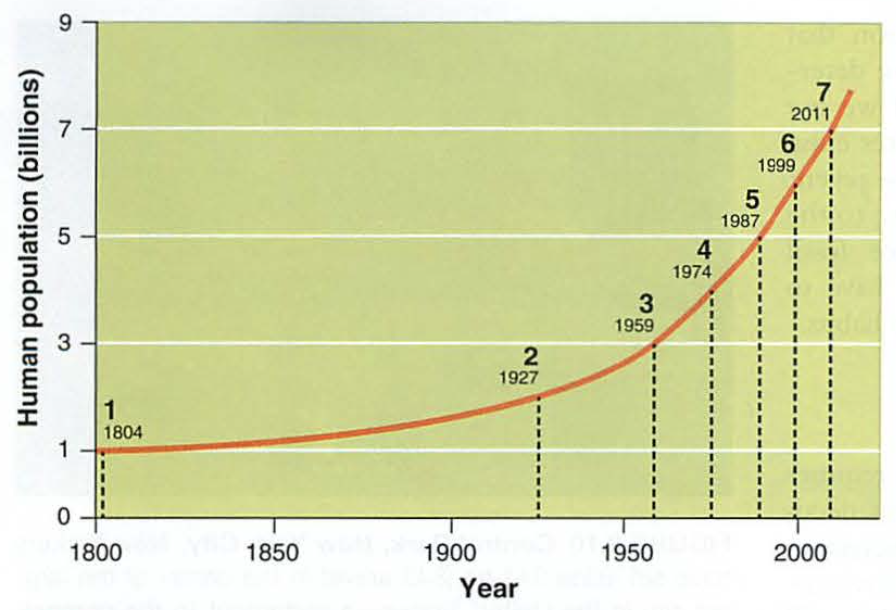
4. Human population
- growth rates
- dispersion
- access to water
- Why was China’s one child policy eventually a problem for China?
- education, reproductive rights and religion
- water is first
- Resource depletion is hard to grasp, but resource constraints are easier:
- If we had a major tsunami here that closed airports (all near the shore) and ports, how long would we have electricity?
- water? (pumped by electricity)
- food?
Ecological footprint: what you calculated
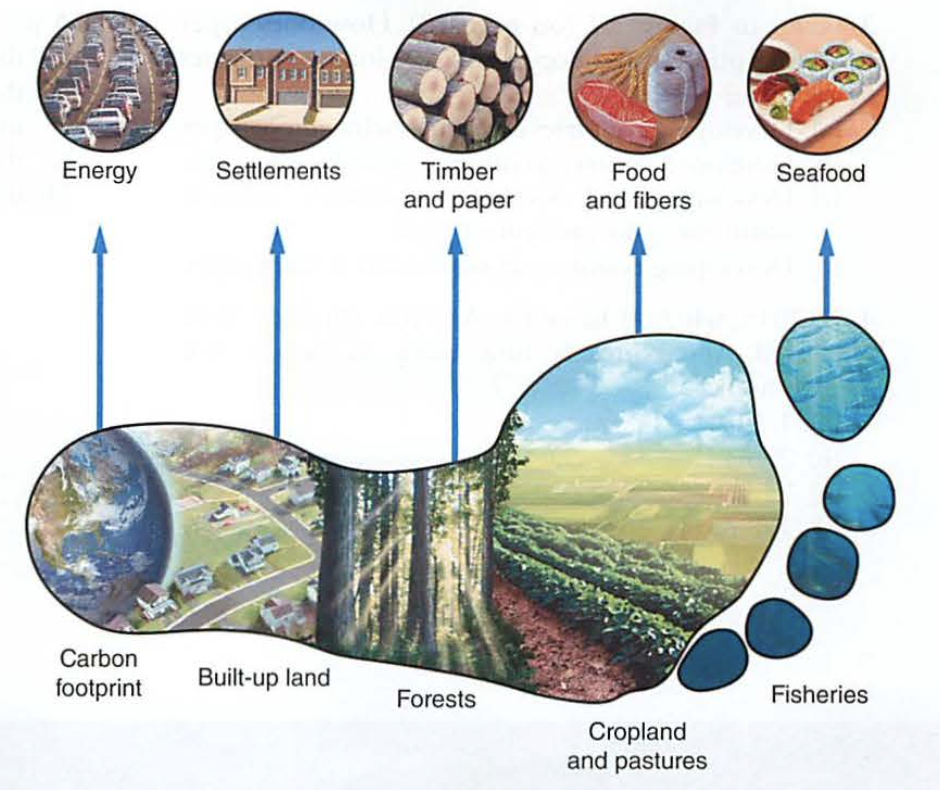
- Can you follow cause and effect?
- What is their logical path?
- Why do folks associate fossil fuels with global heating?
- Who might be against this line of reasoning and why?
- Fact: in ancient times, women were thrown into ponds to determine if they were witches. If the water "rejected them" they were possessed by the devil and therefore witches. If not, they just drowned. It is a wonder we made it this far.
- Another example: cold fusion (look this up) Ponds and Fleishmann claimed they could replicate the processes in the sun (1 million degrees C) in a cooler on a table.
- Science is built on replication: if a process cannot be replicated, it cannot become part of the scientific "pyramid" of understanding. No bad blocks allowed.
- Also key is taking notes (must be in pen, not pencil). Alfred Nobel invented dynamite. His brother's last words in his lab notebook, in pen were "I'm now going to compress the dynamite"
- Why is there no Nobel prize for Mathematics?
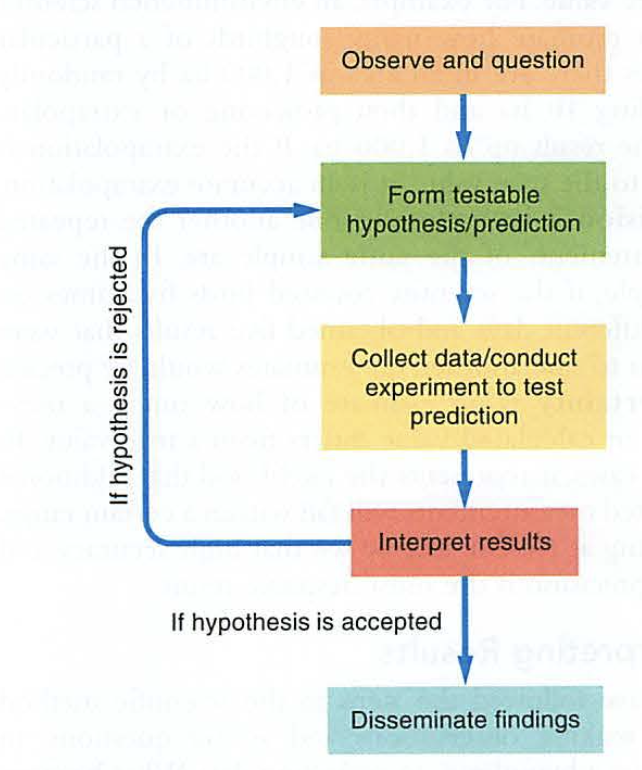
See also Korean claims of cloning humans (not sheep, we already did that-her name was Dolly)
Key idea: even wrong experiments are valuable: Edison: "I learned 800 ways not to make a light bulb"
- Variable: any difference, in a planned or "natural" experiment
- Independent variable: the part that does not change (like x in a graph)
- Dependent variable: the part that changes-or not
- Null hypothesis: proving something is NOT cause and effect (can sheep's bladders be used to predict earthquakes)
- Replication: everybody must be able to get the same results, using the same materials
- Sample size (n): must be large enough to be accurate
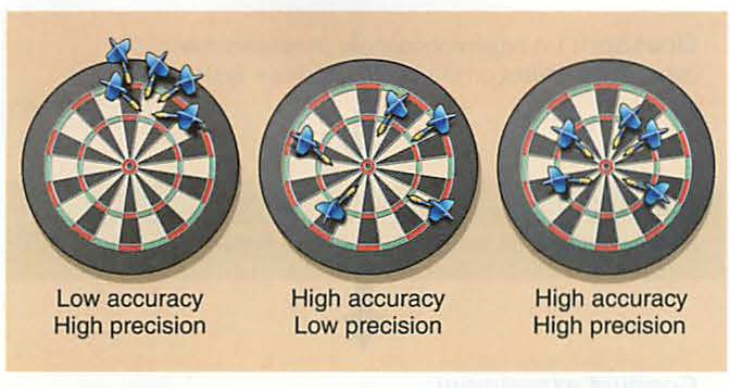
- Accuracy: close to truth or true value
- Precision: how close your results are to each other (gas pump is in 0.01liters, but your odometer is only in miles)
- Control group: those you DON'T mess with in the experiment (think of some drug test)
Natural experiment: variation not planned (Lahaina, COVID, Mount Pinatubo and cooling of the planet, etc.)
Renewable vs. non-renewable resources (one politician recently tried to get nuclear energy classified as a renewable resource-it takes billions of years)
Renewable can be a forest, if used at a sustainable rate, otherwise not
Malthus again, Norman Borlaug again, and a new name: Paul Erlich (1968) "The Population Bomb"
In short: famine and conflict will arise from population growth.
In reality, it is much more complex, involving politics (e.g. Syria), economics (e.g. refugees from sub-Saharan Africa) and water rights (e.g. Palestine).
Jurgen Randers told me during the Elab opening that he thought in the next 50 years, China would invade Mongolia to the north, stating as a cause "religious instability" but the real cause would be access to water there.
If the Himalayan snowpack ceases to be a seasonal flow for the rivers of Asia, most of Western China would be in a drought, unable to produce food.
Ecological Footprint again:
Garrett Hardin, UCSB (look this up)
Migrated from Apple WikiServer Wiki. Original page Y9g6h204U.ID: Y9g6h204U