
Lab 06b: navigation: calculate longitude
Migration
Calculating longitude ("long lines")
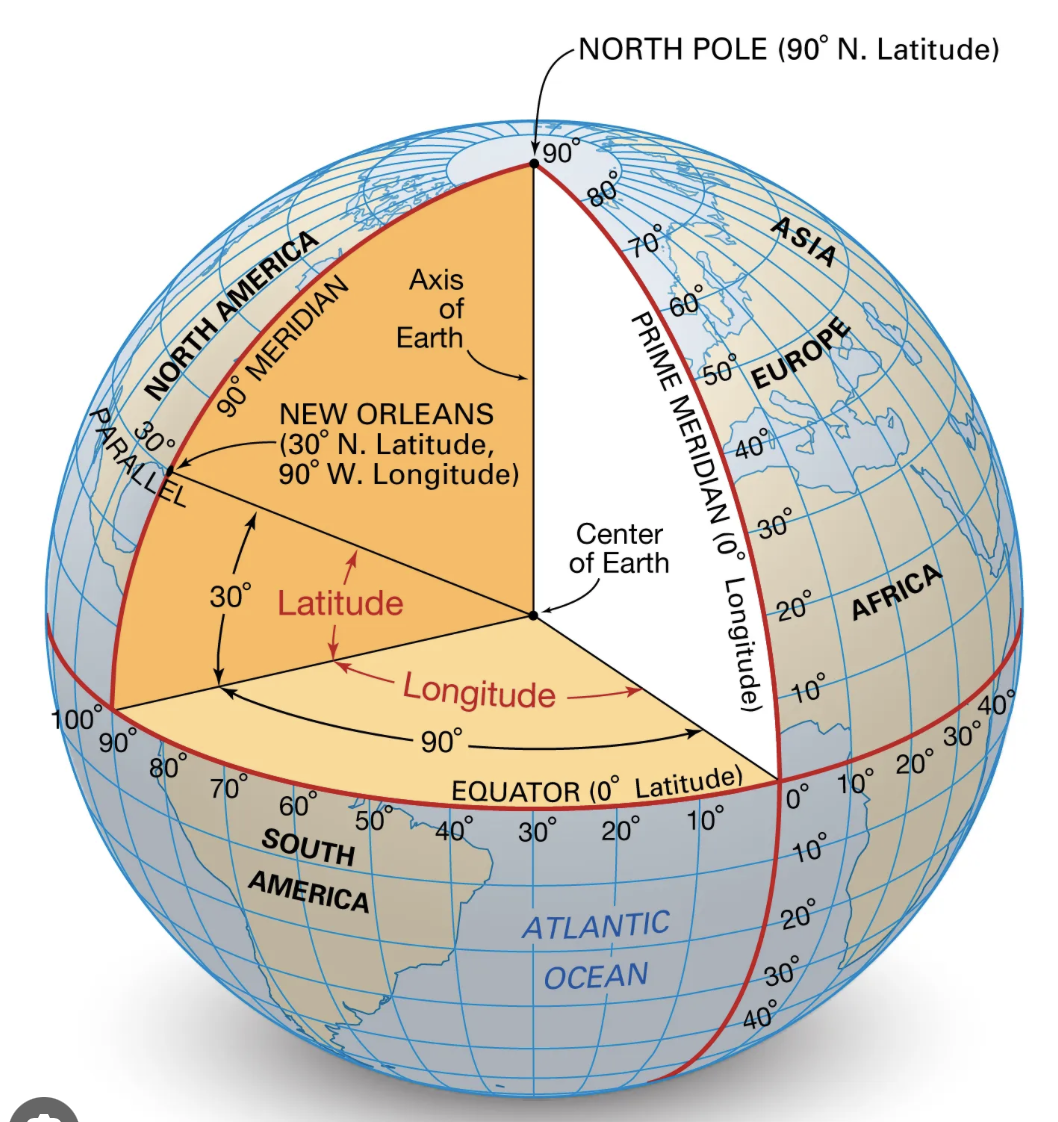
First we have to understand a bit about astronomy, and why there is a famous telescope at a place called Greenwich near London...
- on a globe, find London
- notice the longitude of London
- find the longitude of where you are from and record this
- if every 15° of latitude is one hour, calculate how many degrees away from London your home is exactly
- the telescope at Greenwich near London calculated noon exactly. If you had a clock with you, wherever you were on the planet, if you knew what time "local noon" was, you could calculate your latitude.
- Local noon was found at sea by tracking the sun as it rose, and noting the time it was the highest, "local noon"
- Interestingly, dawn in
progressWaimea is a bit earlier than dawn on Oahu, you can check this by talking to someone in the morning there, or even more fun, time our sunset with theirs-who will be later? - there are a set of radio stations around the world that now broadcast this time signal on the radio, so ships and lost students can determine their latitude if they know local noon.
- on a radio, listen for WWV or WWVH (Hawaii version) on 10 MHz shortwave here: https://wwv.mcodes.org/
- notice that when the chirps make a long beep, your phone, your computer and any device changes the minute-EXACTLY
- notice that the time on the radio or online is UTC, so everyone on the planet can use it
- why do you care? if your computer or phone is on the wrong time even by a few minutes your web browser, email and everything on the internet will not work-why?
- Since our class does not meet at exactly noon, you can look up local noon on the web for this location
- calculate our longitude from this number
- since you can look on your super-fancy big island map, label our latitude and longitude if you have not already
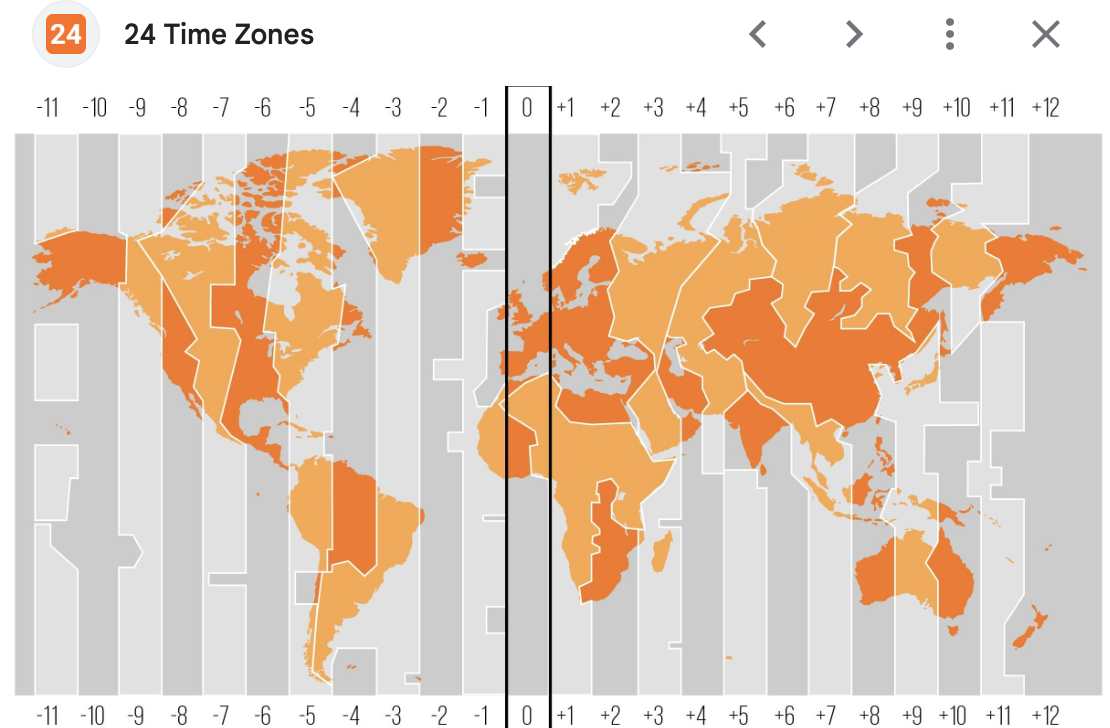
- how many hours and minutes should we be from GMT (Greenwich Mean Time)?
- China has one time zone-how does this impact life there?
- Look at these time zones-we are always at -10h
Putting it all together:
You now know how to find your latitude using an astrolabe, and your longitude using an astrolabe and a good clock
Look up how to do this with your hands if you are lost in the wilderness or at sea...
Look up how to do this with your hands if you are lost in the wilderness or at sea...
Questions:
- Why would having a really accurate clock aboard a shop enable you to navigate better?
- China has one time zone for the entire country-how does this impact life there?
- We are at 155°W, so is our solar noon earlier or later than GMT? Explain
Migrated from Apple WikiServer Wiki. Original page _6i0i388_.ID: _6i0i388_