
Solar notes
Migration
Assumes 5 solar hours per day at 20° latitude
Panel options:
- <1W RAK IP66 case
- 3W RAK case, flex panel
- 6W Flex usb and soshine 6V panel
- 40W flex panel
Case options:
- RAK prebuilt case (3W or 1W)
- IP66 plastic case
- screw on j-box (not recommended, except where tampering is possible)
Issues:
- Regulated power is critical
- Solar charge controller on RAK19007 can be overloaded (5.5V max)
- USB charging on ESP32 devices works most of the time, if regulated
- If USB charging is not regulated, will cause reboots
- If RAK solar charging is not regulated, unit burns out
- Cooling of CPU unit is important, build under panel where possible
- antenna connections must be sealed, and preferably not on the top
- N type antenna mounts tend to flex, breaking the seal, allowing water entry
Antennas:
- dipole stick is best
- N type 9 dB is strongest
- stubby is minimally effective, but good for stealth
Batteries:
- Lipo with charge protection:
- 1100mAh is minimal
- 3000mAh is basic
- 8000mAh is extreme
Using 18650 batteries is great, but they need a charging module like the waveshare charging module, 9900 mAh max so far
Rates:
- At 5 solar hours, 6W panel is 30Wh
- A 3000mAH 3.7V battery is 11 Wh
- A 9900mAh 3.7V battery is 36Wh
- So…
- a single 3000mAh battery can be charged by a 2W panel
- a single 9900mAh battery can b charged by a 6W panel
- A 40W panel will charge a 50Ah battery at 3.7V
- A 40W panel at 5 hours per day is 200Wh, at 12V this is 16Ah battery
- To run overnight, loads are needed, average for RAK 19007 is about 1 mA
- 20 hours of non-solar means 20 mAh, more if GPS is activated
- More if the unit is a repeater or router, less if in
progressclientformute mode - ESP32 models use more, about 60mA with bursts, higher if wifi is enabled (120 mA)
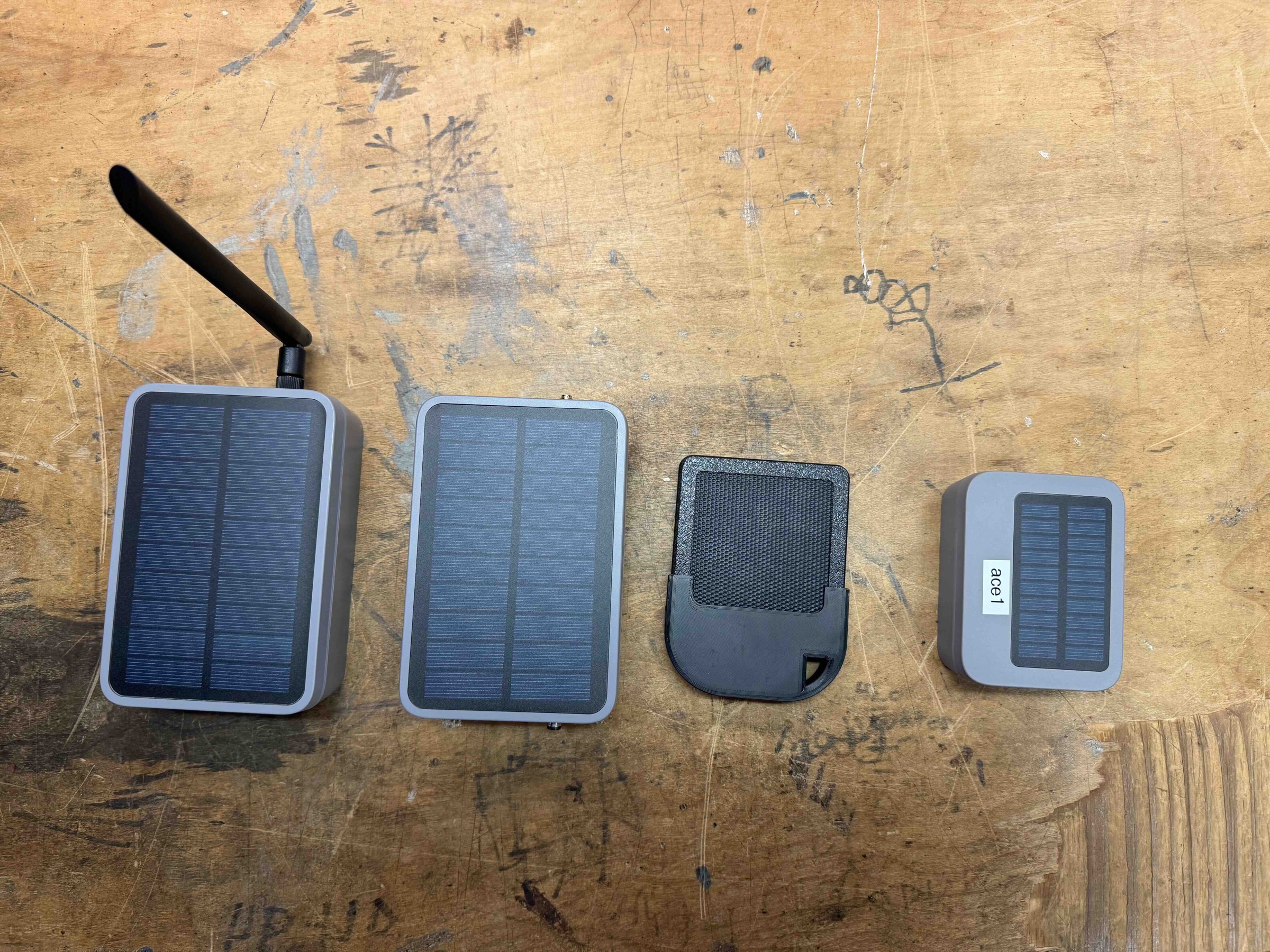
Pre-built Solar nodes:
Migrated from Apple WikiServer Wiki. Original page v87853S.ID: v87853S