
Ch. W19: Fossil fuels
Energy Background:
Big bang:
- Hydrogen->fusion -> Helium ->iron stars (red giants)
- Giant red giants ->supernova->all elements beyond iron (including Uranium)
- Hydrogen, Helium and other elements->our sun
Sun: Hydrogen fusion->helium (helios means sun in greek)
Solar energy:
- Sun is source of photosynthesis: light + CO2 + water->sugar (carbon based fuel)
- Sun can also be direct radiant energy (solar thermal, photovoltaic-PV)
Solar energy storage: photosynthesis
- Biomass is a form of this stored, renewable fuel (wood, sugarcane->ethanol)
- Fossil fuels are slow legacy non-renewable solar energy: dead plants and animals stored from eons ago (oil, coal, natural gas)
Solar energy release:
- Burning: biomass + oxygen -> energy (e.g wood)
- Combustion: fossil fuels + oxygen -> energy (e.g. burning coal)
Solar radiant energy:
- Solar thermal: capturing radiation, turn to heat, store this thermal energy (e.g. hot water)
- Solar photovoltaic: capture radiation, move electrons, create direct current electricity (plus and minus, just like batteries)
- Wind energy: from solar radiation heating air, moves across the surface, moves blades, turbine, electricity
Gravitational energy: Tidal energy: caused by gravity from the sun (and moon) pulling on water, moving it through turbines, electricity
Non-solar energy:
Uranium from those supernova is in the earth core:
- Slow nuclear energy: geothermal (actually geo-nuclear-thermal) energy
- Fast nuclear energy: dig up Uranium, create heat, make steam, move turbines, create alternating current electricity (like in your house)
Future energy: Use Hydrogen isotopes to create fusion: H + H ->He (like the sun)
Issues: 1 million degrees, hard to ignite (pressure and temp like in the sun core)
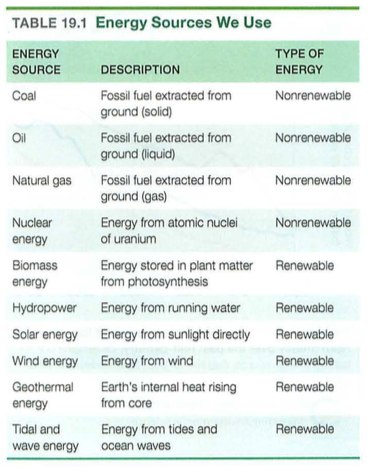
Energy sources (from Withgott 7e):
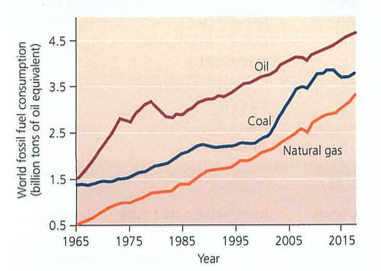
Things are changing: Note increase in natural gas, decrease in coal (why?)
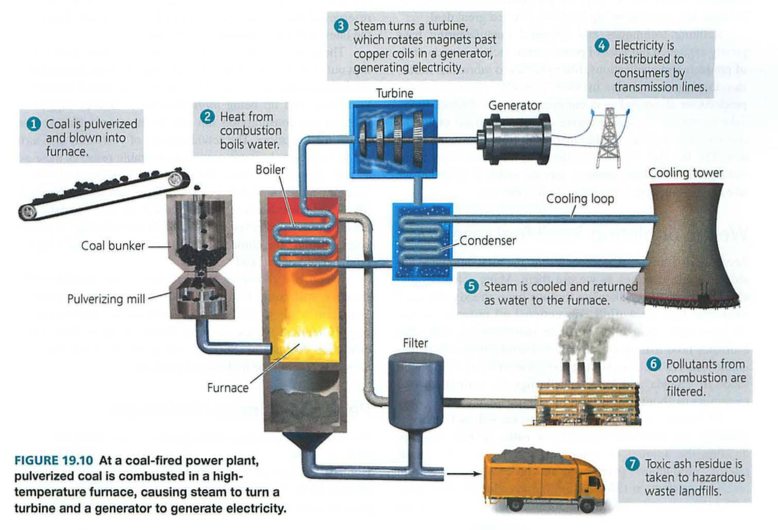
Most energy production in our civilization is based on dopey steam technology from the 1800's:
- heat water
- make steam
- steam blows over spinning turbines (like fans)
- spinning generators generate electricity
(If this were on a ship, it would be connected to a propellor)
So,
Oil is burned, coal is burned, nuclear energy heats water into steam (old tech)
Natural gas can be used for this as well, but can also be used in a direct turbine (no steam, just like a jet engine)
So?
If we are moving towards renewable energy sources like wind and solar, sudden changes in the energy grid require fast response, like a "jet engine" powered by natural gas.
It is also much cleaner than oil or coal (less sulfur, no heavy metals)
Fun fact: one reason so many US Navy ships were sunk in the Pearl Harbor attack was it took hours to heat the water in their boilers into steam to turn the propellors on these ships...
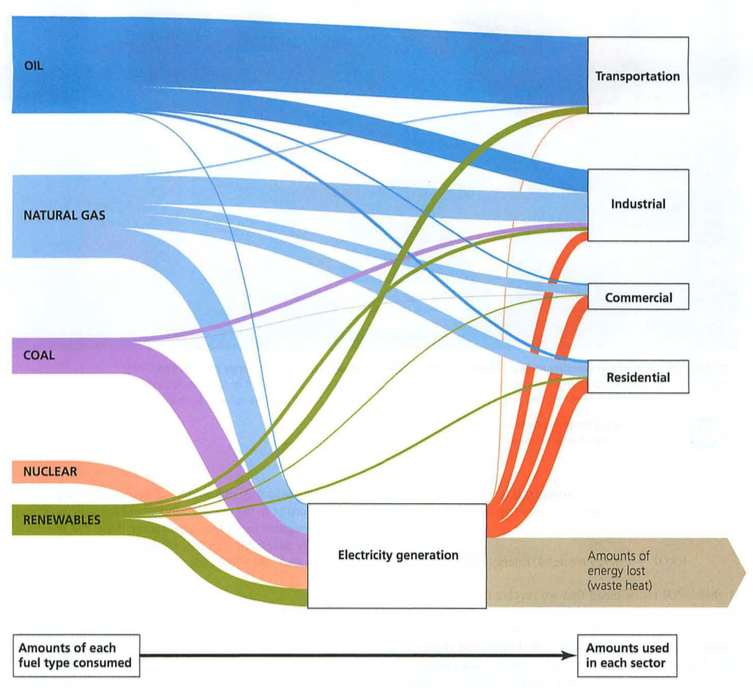
Notice about 1/3 transportation, 1/3 electrical, and 1/3 industrial/residential (like in the audio clip from Jim Woolsey)
How will electric vehicles (EV) change this?
How will energy storage change this?
How are fossil fuels formed?
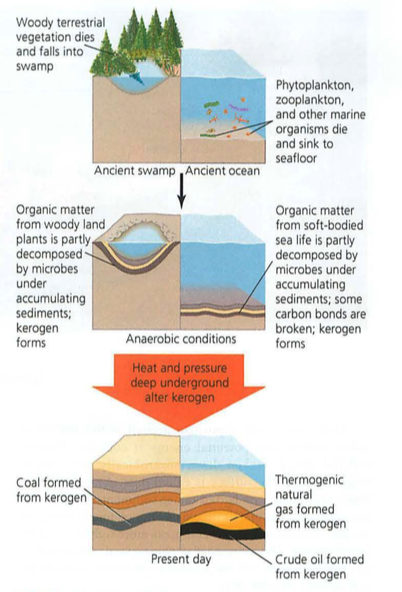
Fun fact: UK sold most of their high quality anthracite after WWII to pay debts, so lower quality highly toxic coal was used, causing the London Fog Disaster, killing thousands. UK debt to GDP ratio then was 250%
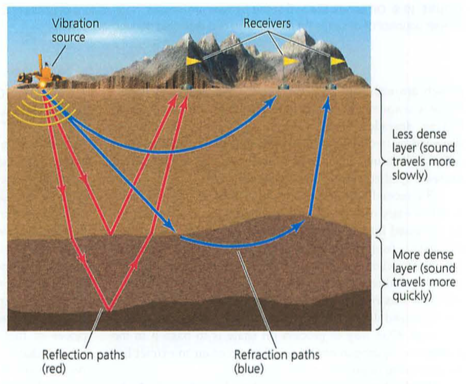
How is oil found?
Believe it or not, satellites with sensitive gravity meters are one way...
also this:
Important bit about distillation: make sure you understand this, it shows up on AP exams...
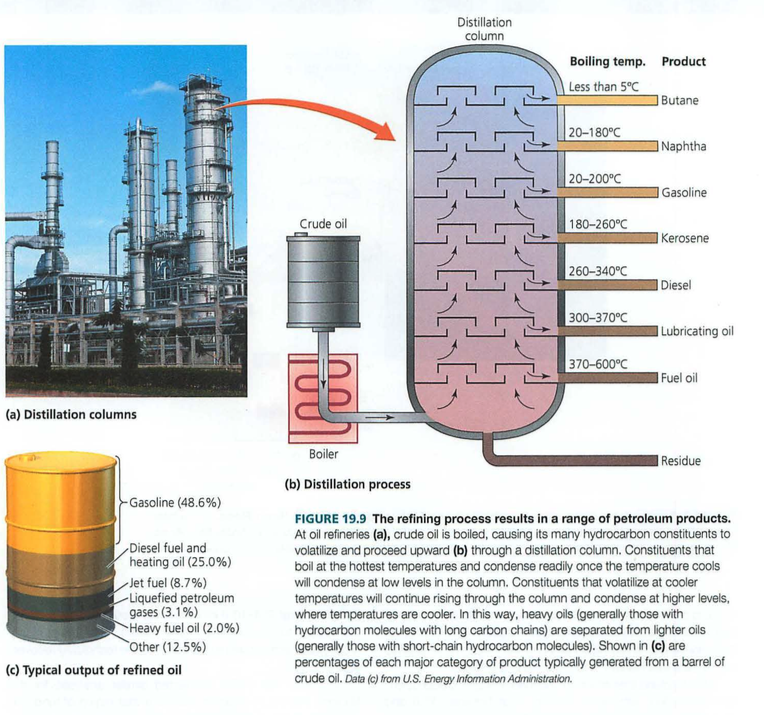
Not-so-fun fact: one reason gasoline is so expensive in Hawaii, is crude oil is refined into aviation fuel (kerosene) because all airplanes that land here are empty and need to fill up to get elsewhere.
Dopey way we get electricity (remember steam comments above): make sure you understand this, another AP exam favorite:
Petroleum products are everywhere: recall the HW question about "plastics"...
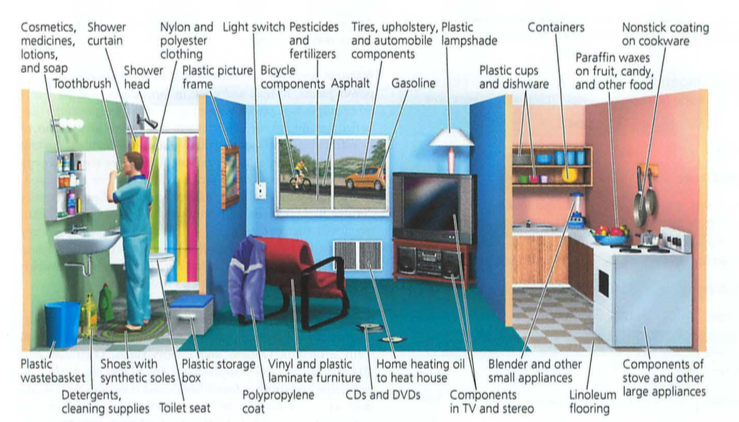
Consider this: as we reach Peak Oil, and beyond, oil will be too expensive to use for just fuel, it will be reserved for these things.
Peak Oil:
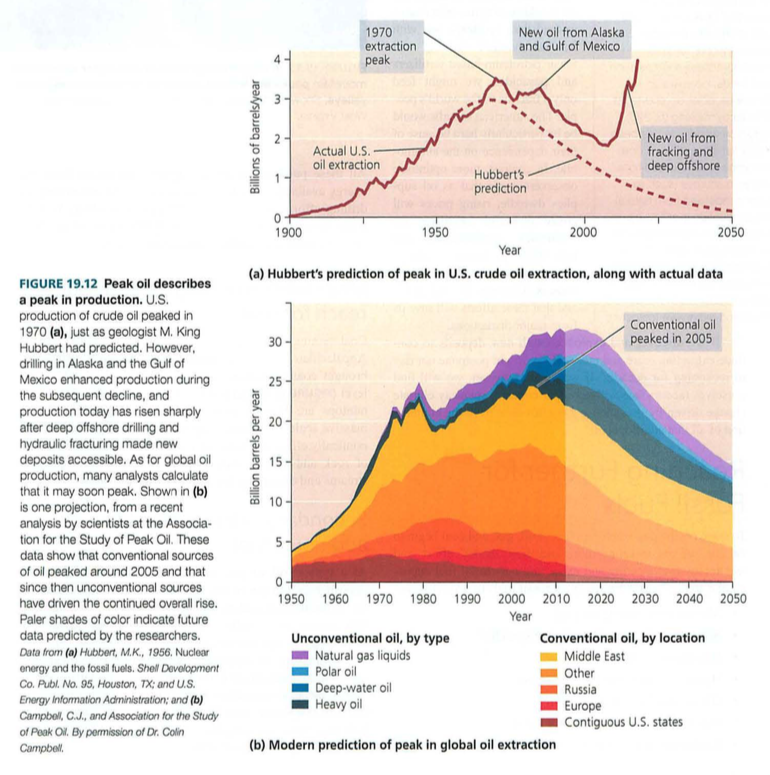
Fracking is Hydraulic Fracturing using toxic solvents forced through older oil and gas formations
Good thing: cheaper natural gas
Bad thing: toxic pollution, earthquakes, gas leaks (methane s 44x as harmful as a greenhouse gas)
Political issues: why go to war for energy?
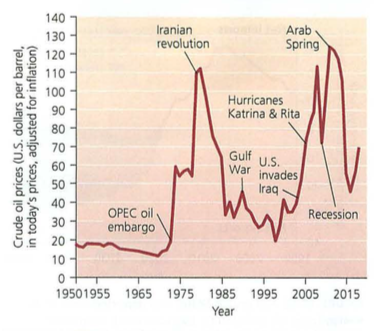
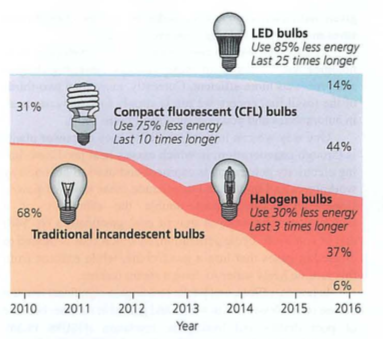
Conservation: 8x as efficient as installing new energy sources (solar thermal, PV)
One example: LED lighting:
Even more effective: insulation (look up R values)
Double glazed windows, like in your dream house!
Migrated from Apple Server Wiki. Original page ID: w2G8J9L