
Unit 9: Global Change: 4.59: Biodiversity
Definitions:
- Native: lives within historical range (many, many years)
- Invasive: outside the historical range
Important: Invasive species have fewer predators and/or can adapt much faster than native species, often r-selected species with fast growth
Plant philosophy: faster ones survive to get nutrients and solar radiation
Equilibrium: equal freedom or balance: equi= equal, librium=freedom
Classic case: Zebra mussels in the great lakes-carried in along with water ballast from Asia
Zebra mussels are an invasive, fingernail-sized mollusk that is native to fresh waters in Eurasia. Their name comes from the dark, zig-zagged stripes on each shell.
Zebra mussels:
- Probably arrived in the Great Lakes in the 1980s via ballast water that was discharged by large ships from Europe.
- They have spread rapidly throughout the Great Lakes region and into the large rivers of the eastern Mississippi drainage.
- They have also been found in Texas, Colorado, Utah, Nevada, and California.
- Zebra mussels negatively impact ecosystems in many ways, filtering out algae that native species need for food and they attach to--and incapacitate--native mussels.
- Power plants must also spend millions of dollars removing zebra mussels from clogged water intakes.
Other mistakes:
- Mongoose in Hawaii-kills birds (eats the eggs),
- Cane toads in Australia
- Kudzu vine from Asia, grows 1 foot per DAY
- Silver carp in great lakes (40#) Look up video!
Endangered species: likely to go extinct in the near future
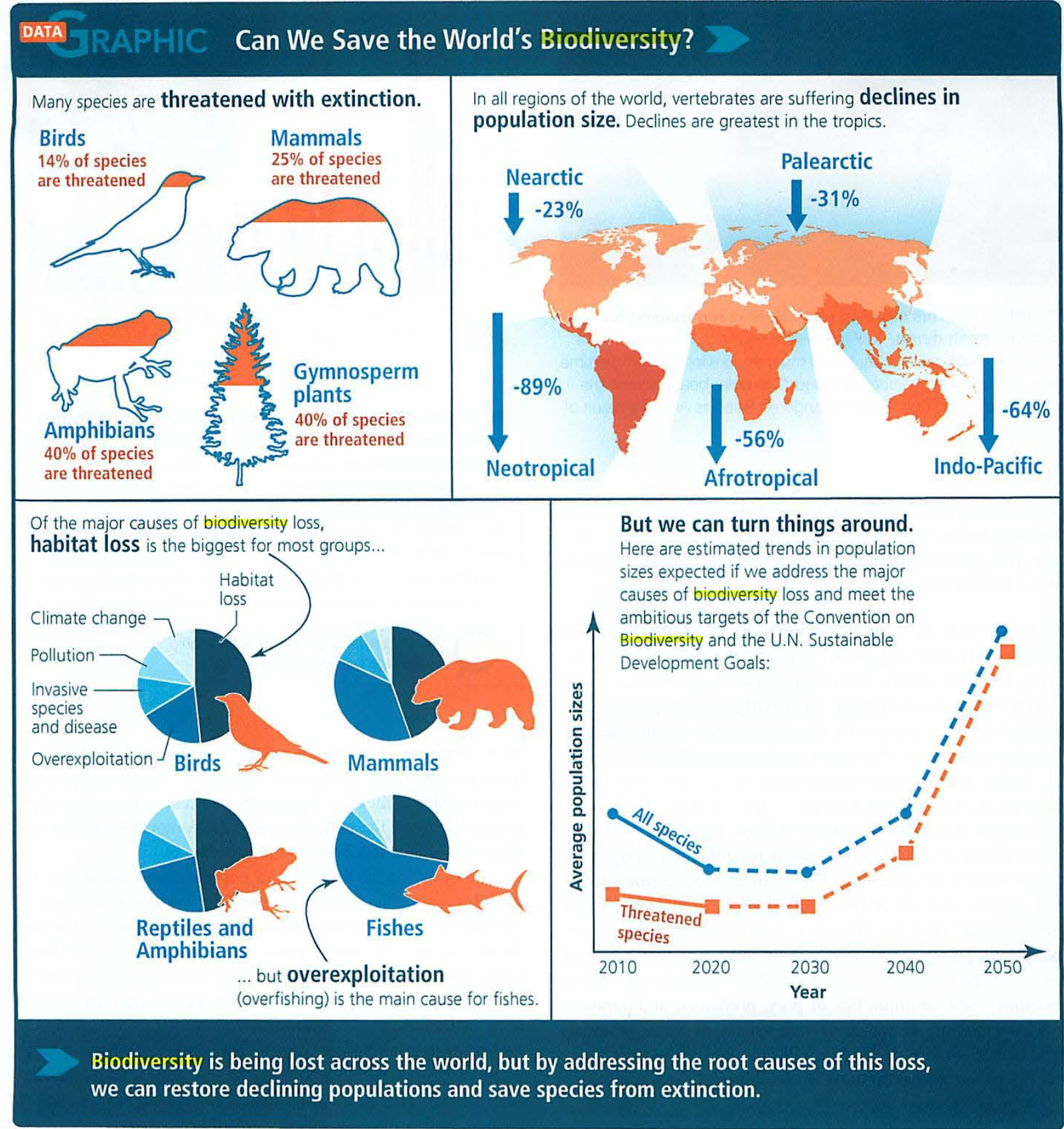
- Habitat destruction
- Migration disruption
- Invasive species competition
- Disruption of food supplies (e.g. predator-prey)
Biodiversity: genetic diversity and genetic bottlenecks (recall the humpback whale)
Please watch this Bozeman Science video:
HICOP: mnemonic
- Habitat loss
- Invasive species
- Climate change
- Overfishing
- Pollution
Look up IUCN
List of threats: HIPPCO another mnemonic
- Habitat destruction
- Invasive species
- Population growth-human
- Pollution
- Climate change
- Overexploitation
Laws to know:
- Marine mammal protection act: prohibits killing of marine mammals in the US
- Lacey Act: prohibits interstate shipping of illegally harvested plants and animals (big in Hawaii)
- Endangered species act (ESA): 1973 protects endangered species in US
- CITES: international law, Convention on international trade in endangered species, 1973
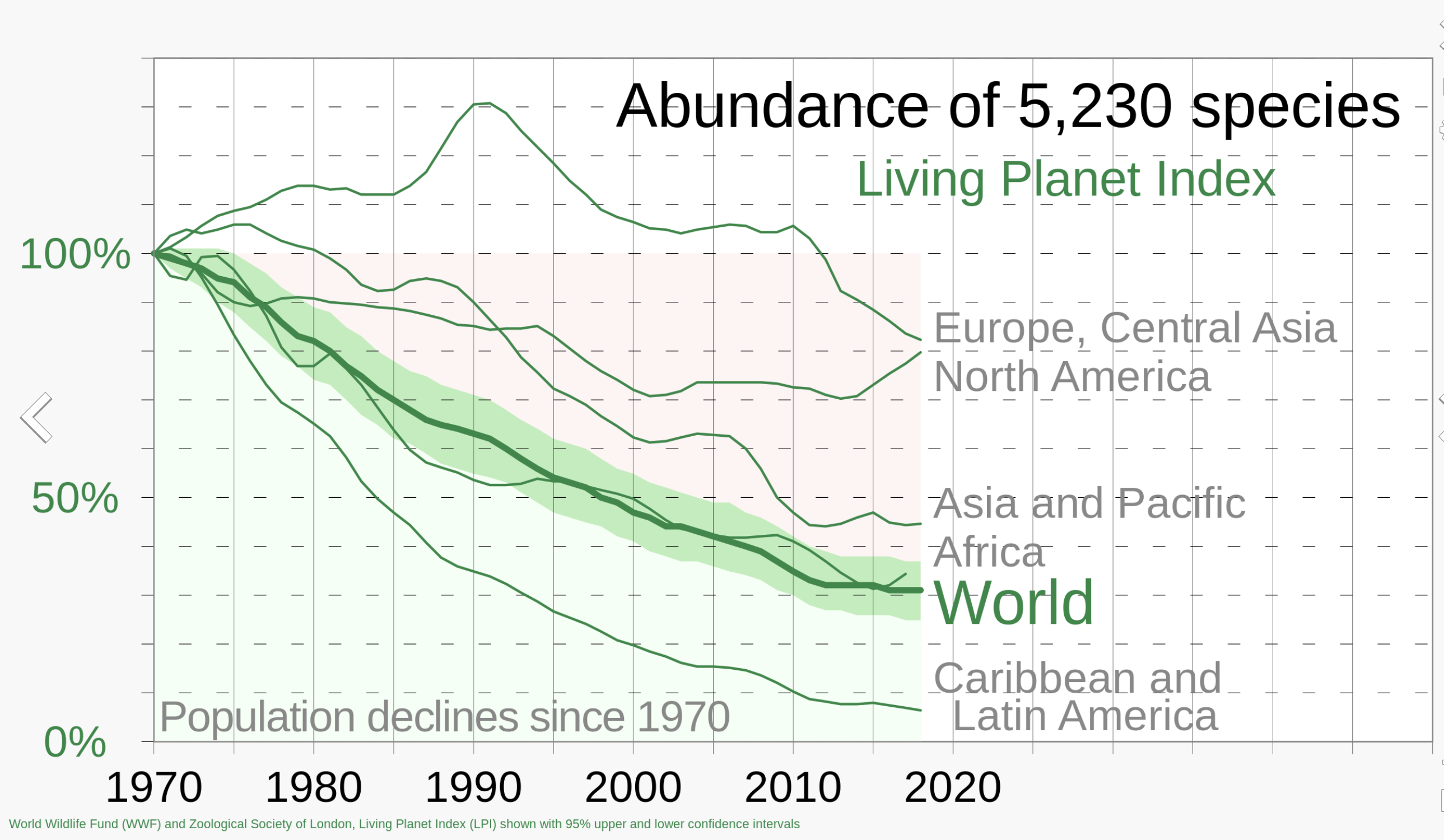
The World Wildlife Fund's Living Planet Report 2022 found that wildlife populations declined by an average 69% since 1970
Global biodiversity hot spots:
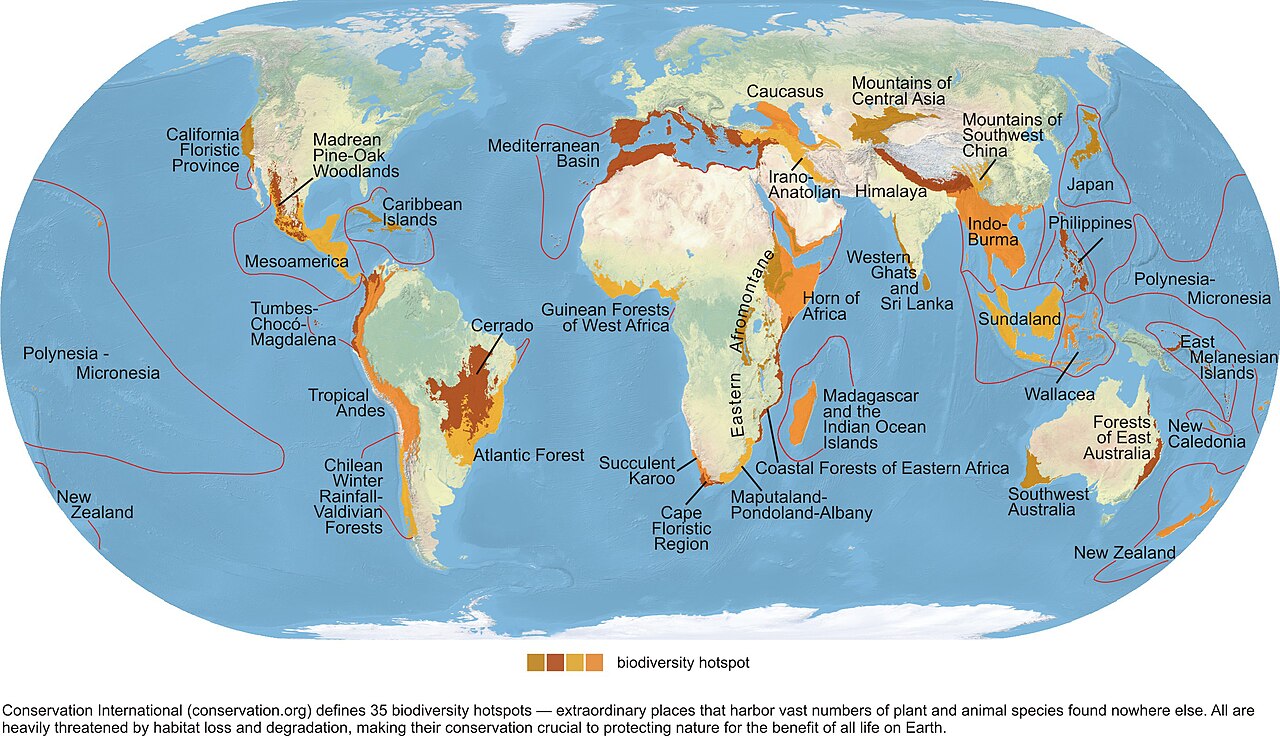
Finally, look up our island on the biodiversity maps...why?
Migrated from Apple Server Wiki. Original page ID: _4j487S