
Module 17: Niches, extinction
All individuals have an ecological tolerance
Their best place is called a fundamental niche: a place where they not only survive, or survive and grow, but can reproduce:
- You can also see this as a "goldilocks zone" (same concept used to discover exoplanets that may host life)
- The actual place they live is a realized niche
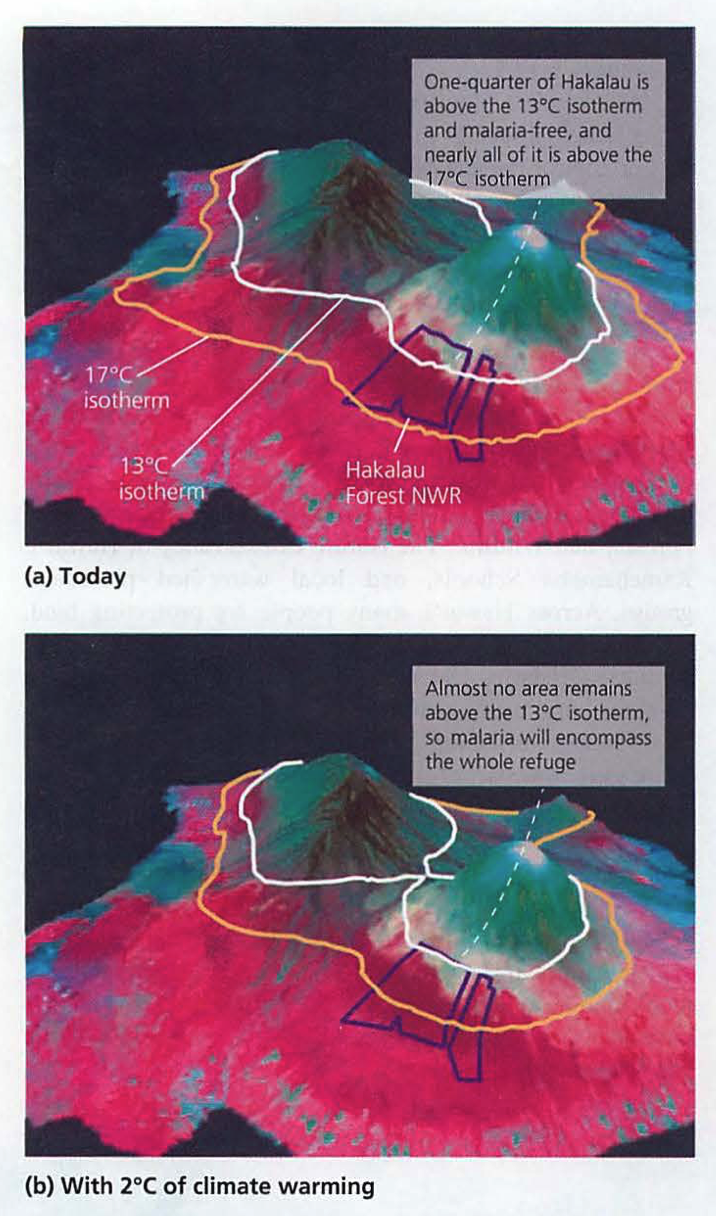
- Climate change is causing animals which can migrate to meet their fundamental niche away from the equator
- This happens in plants, but since they cannot migrate this happens slower through favorable seed survival:
Changes beyond the organism tolerance can cause extinction (e.g. if they cannot migrate)
- Biggest was the Permian extinction about 250 my ago (see graph) likely caused by the Siberian Traps
- Next biggest was the K-T extinction about 65 my ago (dead dinos) caused by an asteroid the size of mount Everest hitting the Yucatan area
- Sixth mass extinction is the Anthropocene (human caused)
- PBS video: https://www.pbs.org/wgbh/nova/video/ancient-earth-humans/
Three varieties of ecosystem disruptions (non human)
- Periodic: cycles of day, month, year
- Episodic: 100 year floods, sunspot cycles
- Random: Hurricanes, volcanic eruptions
- Resistance: the ability to resist change in a stress (energy, matter, etc.)
- Resilience: the ability to recover after a stress: Stability
Implications of climate change:
Positive feedback: increased temp melts sea ice, reduces albedo, increased warming
Evolution: Natural selection (vs. artificial selection)
Needs three things, in order:
- genetic variation (e.g. longer neck giraffes)
- some stress that favors that variation (e.g. drought)
- survivors reproduce to carry on the new variation (longer necks)
- dogs, other pets for certain traits
- food crops, for greater yield, resistance to pests (GMO crops)
- humans in the future (?) also known as eugenics (Nazis played with this idea)
Gene flow is the combination of genetic traits by populations mixing
Genetic drift is the eventual random dissipation of some traits (higher where there is stress or mutagens)
Genetic Bottleneck: restriction of the genetic diversity after large decrease in population (e.g. whales)
Founder effect: migration of a subset of a species then proliferates, the resulting population has a smaller gene pool made up solely from the founders.
Allopatric speciation: allo=other patric=father: physical separation leads to genetic difference (can be island or a road separating populations)
Sympatric speciation: "same father", no physical separation, just genetic drift making a population diverse
GMO (genetically modified organisms) example: Round-up ready soybeans: genetically altered soy beans that can withstand the herbicide round-up (a carcinogen)
Primary Succession example: drive up from the coast: lava->fountain grass->small bushes->large shrubs->small trees->large trees->forest canopy
- Note that bare lava (or other rock) can only support lichens and mosses
- In our case, dust from wind and fires lodges in crevasses in the lava
- Moisture collects there, enabling seeds to survive (fountain grass)
- As the fountain grass dies, burns, or other cycle, biomass builds in the cracks, holding water through a season
- Small bushes can then survive through a drought
Pioneer species: lichens, molds onto bare rock (or lava)
Secondary succession: disturbed areas that have soil (post-forest fire)
Climax community: tree canopy forest or mature pond with sediment
Keystone species: impact is far greater than their fraction of the population
-----------------
A keystone species is a species that has a disproportionately large impact on its ecosystem relative to its abundance. These species play a critical role in maintaining the structure, diversity, and health of an ecosystem. If a keystone species is removed, the ecosystem can experience drastic changes, often leading to a collapse in ecological balance, loss of biodiversity, or even extinction of other species.
Types of Keystone Species
Predator Keystone Species: These are top predators that control the population of other species in the ecosystem, preventing any one species from dominating. By controlling prey populations, they help maintain biodiversity. For example:
- Wolves in Yellowstone National Park: When wolves were reintroduced, they controlled populations of deer and elk, which allowed vegetation to recover, benefiting many other species and altering river courses due to stabilized vegetation.
Ecosystem Engineer Keystone Species: These species physically modify the environment, creating habitats for other organisms. Their actions shape the ecosystem in a way that benefits other species.
- Beavers: By building dams, beavers create ponds and wetlands that support a diverse range of aquatic and terrestrial species, making beavers essential to their ecosystems.
Mutualist Keystone Species: These species have a mutually beneficial relationship with other organisms, which is crucial to the survival of several species in the ecosystem.
- Honeybees: Bees pollinate plants, which is essential for the reproduction of many flowering plants. The plants, in turn, provide food and habitat for various organisms. Without bees, these ecosystems would collapse due to lack of pollination.
Plant Keystone Species: Some plants are keystone species because they provide essential resources such as food, habitat, or protection to many other species.
- Mangrove Trees: Mangroves in coastal areas protect shorelines from erosion, provide nursery habitats for fish, and support diverse communities of organisms, including fish, crabs, and birds.
Importance of Keystone Species
- Maintaining Biodiversity: Keystone species prevent the dominance of one species, allowing multiple species to coexist and promoting a rich diversity of life.
- Balancing Ecosystems: By controlling populations, keystone species prevent overgrazing, overpopulation, and resource depletion, helping to maintain a stable and sustainable ecosystem.
- Supporting Other Species: Keystone species create or sustain habitats, provide food resources, and facilitate reproduction for other species, contributing to overall ecosystem health.
Consequences of Losing a Keystone Species
If a keystone species is removed, it can trigger a series of cascading effects within the ecosystem:
- Trophic Cascade: The removal of a top predator, for instance, can lead to overpopulation of prey species, which may overgraze or overuse resources, leading to habitat degradation and loss of other species.
- Reduced Biodiversity: Without the regulating influence of a keystone species, competition and predation may favor a few dominant species, reducing biodiversity.
- Ecosystem Collapse: In extreme cases, the removal of a keystone species can cause the ecosystem to collapse, as it may become unable to support the balance and needs of the remaining organisms.
Key Takeaways
- Keystone species play a critical role in their ecosystem and are essential for maintaining biodiversity, balance, and structure.
- Their impact on the ecosystem is much greater than what would be expected based on their population size alone.
- Loss of a keystone species can lead to significant ecological changes, threatening the stability and health of the ecosystem and often resulting in a decrease in biodiversity.
Indicator species: impact of changes show up first in these, demonstrating impact of change (e.g. frogs in the Potomac River)
Indicator species are organisms used as a measure of environmental conditions in an ecosystem. These species are particularly sensitive to specific environmental changes, so their presence, absence, or well-being can provide valuable information about the health of an ecosystem. By monitoring indicator species, scientists can often detect pollution, climate change, habitat degradation, or other ecological shifts that may not be immediately obvious.
Characteristics of Indicator Species
- Sensitivity to Environmental Changes: Indicator species respond quickly to changes in their environment, making them effective for early detection of ecological disturbances.
- Specific Habitat Requirements: Many indicator species have narrow habitat requirements and specific ecological niches, so any deviation from their needs (like pollution or habitat loss) is quickly reflected in their health or behavior.
- Predictable Response: Indicator species exhibit consistent responses to particular environmental conditions, making it easier to correlate their status with specific ecological factors.
Types of Indicator Species
Pollution Indicators: These species are sensitive to pollutants and can reveal the presence of contaminants in an environment.
- Lichens: Because they absorb water and nutrients directly from the air, lichens are highly sensitive to air pollution. A decline in lichen populations often indicates increased air pollution levels, especially sulfur dioxide.
Water Quality Indicators: Certain species indicate the health of freshwater ecosystems, such as rivers, lakes, and streams.
- Macroinvertebrates (like stoneflies and mayflies): These aquatic insects are sensitive to changes in water quality, such as oxygen levels and pollution. Their presence indicates clean, oxygen-rich water, while their absence can signal pollution.
Climate Change Indicators: Some species respond to changes in temperature, precipitation, or seasonality, making them valuable for studying climate change.
- Coral Reefs: Coral is highly sensitive to temperature changes and ocean acidification. Coral bleaching is a stress response to rising water temperatures and can signal the broader impacts of climate change on marine ecosystems.
Ecosystem Health Indicators: These species indicate the overall health of their ecosystem, often reflecting factors like habitat quality and biodiversity.
- Amphibians (like frogs and salamanders): Amphibians have permeable skin and are exposed to both water and land conditions, making them sensitive to pollutants, temperature changes, and habitat degradation. Declining amphibian populations often indicate environmental distress.
Importance of Indicator Species
- Early Warning System: Indicator species provide an early warning of environmental problems, allowing scientists and conservationists to address issues before they become severe.
- Targeted Conservation Efforts: By focusing on the health of indicator species, conservation efforts can be more efficient, targeting specific threats to protect the ecosystem.
- Environmental Monitoring: Indicator species help scientists monitor and assess ecosystem changes over time, allowing for long-term tracking of environmental trends.
Examples of Indicator Species in Action
- Canary in a Coal Mine: Historically, miners took canaries into coal mines because the birds were highly sensitive to toxic gases. If the canaries showed distress or died, it signaled dangerous levels of gases, alerting miners to evacuate. They also breathe much more rapidly than humans, so the impact is faster.
- Freshwater Mussels: Mussels filter water and can accumulate toxins in their tissues, reflecting water quality. Their health and populations are used to monitor pollution levels in rivers and streams.
Key Takeaways
- Indicator species provide insight into the health of an environment, often serving as early warning signs of ecological problems.
- They respond predictably to specific environmental conditions, which allows scientists to monitor pollution, water quality, climate change, and habitat health.
- Monitoring indicator species can guide conservation efforts, help assess ecosystem resilience, and inform policies to protect biodiversity and ecosystem integrity.
Review:
- Generalists can survive in a wide range of conditions
- Specialists exist in a narrow range
- Niche refers to this range where they can exist and reproduce
Migrated from Apple Server Wiki. Original page ID: S8s1P8_