
Ch. W20: Conventional energy alternatives
You may notice that the Withgott 7e text divides energy into three main categories:
- Chapter 19: Fossil fuels
- Chapter 20: Conventional energy alternatives (nuclear, biofuels, hydropower)
- Chapter 21: Emerging renewable energy (solar, wind, geothermal, ocean, hydrogen storage)
Bozeman Science:
http://www.bozemanscience.com/ap-es-025-nuclear-energy
http://www.bozemanscience.com/ap-es-026-hydroelectric-power
This makes a great deal of sense, so below you will find notes from Chapter 20 (I may add notes from 19 later)
Chapter 20: Conventional energy alternatives (nuclear, biofuels, hydropower)
n.b. the text seems to refer to energy policies in Sweden quite a bit: why do you think?
Part I: Nuclear Power:
Fission for now:
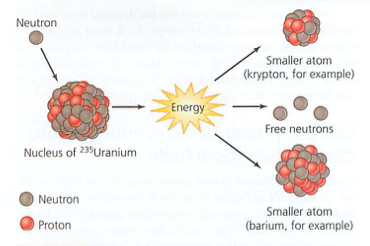
You may also hear about "enriched Uranium in the news about countries like Iran and N. Korea, where enriched Uranium can be used for nuclear weapons, as well as fuel for energy reactors
Make sure you understand each of these elements, but more, how are they similar and different from a coal fired power plant?
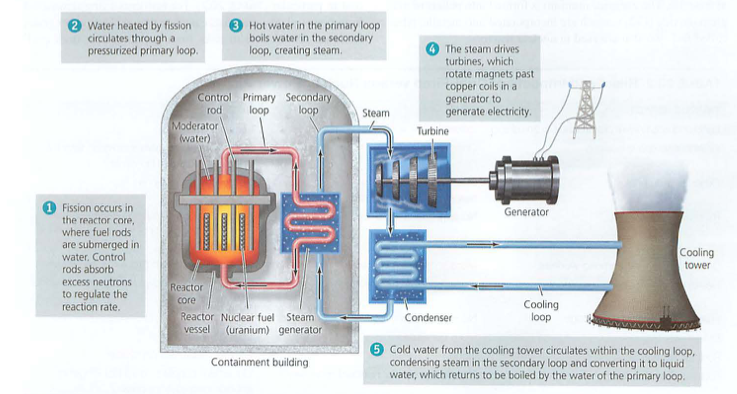
You may also hear about a PWR "heavy water" reactor, which uses depleted fuels to create Plutonium for weapons...
Good to know for the AP exam:
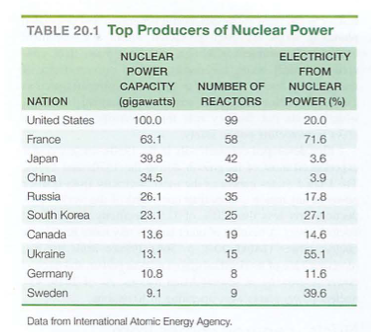
You should also know the term "mill tailings" which are radioactive and toxic leftovers from mining and refining Uranium.
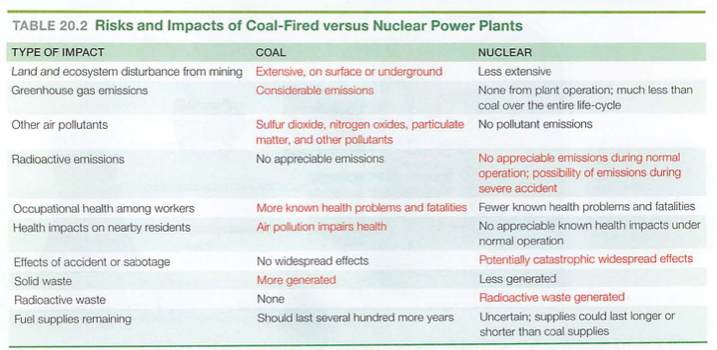
From your e2 video "coal vs. nuclear" you should be able to list a few of these:
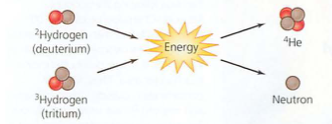
The text refers to Fusion as a "dream" but you know that recently (January 2023) Fusion achieved "break even" meaning it had an EROEI of 1:1 for the first time EVER. They've been working on this since 1950, so this is a very big deal.
Here's the reaction:
Three main accidents covered in the text:
Three Mile Island: Pennsylvania, 1979
- partial meltdown
- still toxic
- some radioactive gas released
- no stats on health impact or death
- caused by human error
Chernobyl: Ukraine (was USSR), 1986
- human error
- bad design
- poor response
- some killed directly
- many millions impacted, early cancers (thyroid, others)
- 100+ tons of radioactive material released
- still toxic for 20 miles around
- top 2m of topsoil was removed, buried deep underground
Fukushima: Japan, 2011
- tsunami, flooded electrical generators
- full meltdown 3x, partial another 3x
- still very radioactive, releasing radioactive water into the sea
Next big issue: nuclear waste:
- dangerous to store
- dangerous to move to storage sites
- can be used for "dirty bombs" (conventional explosives + radioactive waste)
- melts containers, can get into ground water
- radioactive for thousands of years
Reactor design:
Gen 1 reactors: Submarines, early shore reactors
Gen 2 reactors: most present reactors
Gen 3 reactors: better recent design, some using heat convection like the SMR modular reactor
Gen 4 reactors: pebble bed reactor, liquid sodium reactor, molten salt reactor
Part II: Bioenergy
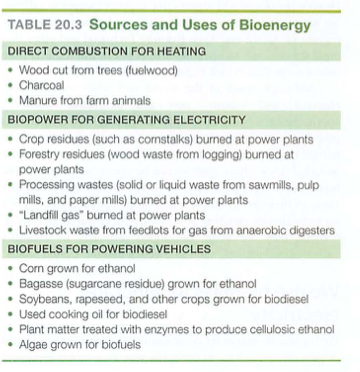
Basically anything that was living, used as fuel for energy
Examples:
Issues:
- Diversion of food
- Impact on erosion, soil health, nutrients
- EROEI less than 1.0 for corn ethanol in the US (very political)
Main versions:
1. Direct burning: wood, manure, bagasse
2. Fermentation: corn, sugar cane or other sugar crop grown, fermented to make ethanol (alcohol)
3. Cellulosic ethanol: using non-food crops (waste, grasses) with bacteria and yeast to create ethanol
4. Biodiesel: from oily crops (rapeseed)
5. Algal biodiesel: from algae
EROEI (energy return on energy invested)
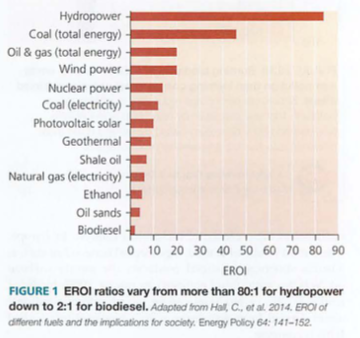
Note that EROEI for ethanol depends on where it is grown: corn (US) vs. sugarcane (Brazil)
Part III: Hydropower
Three main topics:
1. Hydroelectric dams (PE of water behind dam becomes KE of water through turbine)
2. Run of the river hydropower (KE of water flowing through turbines, no dam)
3. PSH: pumped storage hydro (essentially creating a dam or pond as hydropower storage)
- Very high EROEI (80:1)
- Finite lifespan for dams
- Dams impact downstream life as well as upstream dislocation
- Only available where there is consistent flow of water, and location for dam
- Different from tidal or ocean energy, as all dams are freshwater
Migrated from Apple Server Wiki. Original page ID: 93G3M0