
Unit 8: Pollution: module 4.53 toxicity and LD50
FR4e reference: https://elab.hpa.edu/apes/texts/fr4e/unit%208%20water%20pollution.pdf
Bozeman Science:
https://elab.local/apes/videos/bozeman_science/Health%20Impacts%20of%20Pollution.mp4
https://elab.hpa.edu/apes/videos/bozeman_science/Health%20Impacts%20of%20Pollution.mp4
Module 53: LD50: lethal dose to 50% of the population
- Dose-response curve: can be bad (e.g. toxins) or good (e.g. antibiotics)
- acute=sudden
- chronic=long term
- when using animals or organisms as study, mortality is the metric (% dead) sorry...
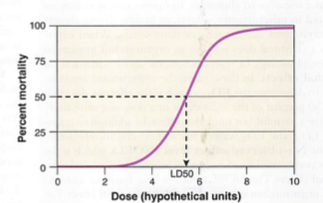
- Look carefully: this is not linear (rarely are) and it shows that at a certain dose (x axis) 50% of the organisms are dead
- This is known as LD50, or lethal dose for 50% of the population
- There is another metric, the ED50, or effective dose for 50% of the population for non-lethal impacts (often used to describe effectiveness of drugs)
- NOEL means no observed effect level-under lab conditions with present sensors we cannot determine any impact
- NOEL is dangerous, as we don't have very sensitive gear for many toxins
TOSCA:
- Toxic Substances Control Act-regulates levels of chemicals (except food, cosmetics, pesticides)...also an opera
- Rat studies: x/10 then x/10 again, but still assumes similar metabolism
- See West Va. study on sleep aids in aged-made them psychotic: liver and kidneys less effective at clearing drugs
- Also: not based on weight, but should be (they do it for horses and dogs...)
Environmental hazard: anything causing harm
Risk assessment is science, but psychology is important: smokers will not drive, drivers without seatbelts afraid to fly...
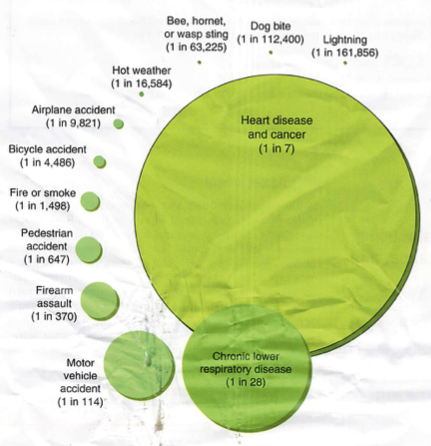
Risk assessment:
Probability of exposure x Probability of harm
Think of sharks, lightning, driving without seatbelts, flying...
Two approaches to regulating drugs and chemicals:
- Innocent until proven guilty: businesses like this
- Tobacco industry used this tactic for decades: "sure smokers get cancer, but not from smoking
- Precautionary: test before release, better for society
Stockholm convention of 2001:
Dirty dozen: PCB, certain pesticides, DDT, PFAS
General overview for your review:
The dirty dozen: click on each and notice the structure
- aldrin: insecticide
- chlordane: insecticide
- DDT: silent spring!
- Dieldrin: termites
- Endrin: insecticide
- Heptachlor: ant killer, found in mother's milk on Oahu, 1980's, used "green chop" from pineapple to feed dairy cows (!)
- Hexachlorobenzene: fungicide
- Mirex: fire ants
- Toxaphene: mites on animals
- PCB: poly chlorinated biphenyls: insulators, electrical
- PCDD: burning medical waste
- PCDF: burning plastic waste
Migrated from Apple Server Wiki. Original page ID: m019t3