
Module 33: Sustainable food production
Mod 33: Sustainable agriculture (fishing too)
- Desertification (see above)
- intercropping vs. monocropping, see "the three sisters"
- Contour cropping: saves space, reduces runoff, preserves top soil (e.g. our garden, most of Asia)
- No-till ag: same idea, retains organic material in topsoil, reduces erosion by wind and water
- IPM: integrated pest management (see Lalamilo Farmers)
- Organic agriculture (also mentioned in Portlandia and Colin the Chicken)More than just N-P-K, also micronutrients, slower release time, low salinity
- CAFO: concentrated animal feed operation (e.g. chickens, pigs, cattle)Usually inorganic feed (purines), hormones and other drugs
- Methyl xanthines: caffeine, theobromine, theophyllineevolved plant poisons for insects:
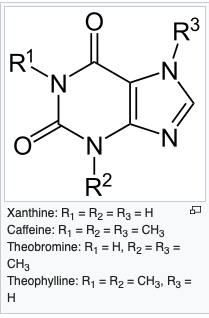
- Xanthine: group name
- Caffeine: energy drinks, coffee, soft drinks (to offset drowsiness from insulin spike)
- Theobromine: chocolate
- Theophylline: tea (also a bronchodilator-helps breathing)
- nicotine: tobacco
- caffeine: coffee, tea
- cocaine: coca plants
e2: Food miles 2022
- Look up Michael Pollan: what books has he written?
- What is the fossil fuel to food ratio he cites?
- Why is this so high?
- What did it used to be?
- What does he mean by “sustainable agriculture”?
- Why did WWII give us a new form of agriculture?
- Look this up: in 1895, what portion of our workforce in our country was farmers? What is it today?
- Look up Lancaster PA, and who lives there?
- Local farmers may not be able to sell to Foodland and other grocery stores because of guarantees of supply. Where can the farmers then sell their produce, and what does this imply?
- When you go into Foodland and see the sandwiches and other wrapped foods, where were these prepared? Why? Why is this so nasty?
- Starbucks baked goods used to be baked here in Waimea (Mamane Bakery, behind the Montessori school). They are now baked on the mainland and shipped here frozen. Why does this make sense for Starbucks, and what impact does this have on you?
- McDonalds gets their food products from the mainland in huge truck and air shipments. Why do they do this?
- In the video, why is a restaurant that buys local food better than the examples above?
- Do you know of a restaurant here in Waimea that does this? What about our cafeteria?
- Why would Amish farmers be more sustainable farmers than other modern farmers?
- How many miles does the average food item travel in the video? Add 2500 miles for us, what is the new total?
- Why would they fly salmon to China and back?
- Local farmers can supply “food baskets” also known as a “CSA”. What are these and why are they more sustainable? https://en.wikipedia.org/wiki/Community-supported_agriculture
- Is “eating local” always a good thing? What are these folks known as?
- What is the difference between a solar and a fossil fuel food supply?
- What percentage of our income do we spend on our food? Is this the same in Hawaii? In Waimea? Why?
- Where does most of the cost of food go?
- Why do you think folks do not cook the way Pollan suggests?
- Contrast the amount of each dollar going to a farmer in the past and now. How does localization change this?
- Ok, now think of your home. What could you do differently?
Migrated from Apple Server Wiki. Original page ID: q7S481S91