
Module 26: Water availability
Recall:
Water: key points: What is it, where is it:
- freshwater
- saltwater
- how it moves
- aquifers and reservoirs
- impact of climate change
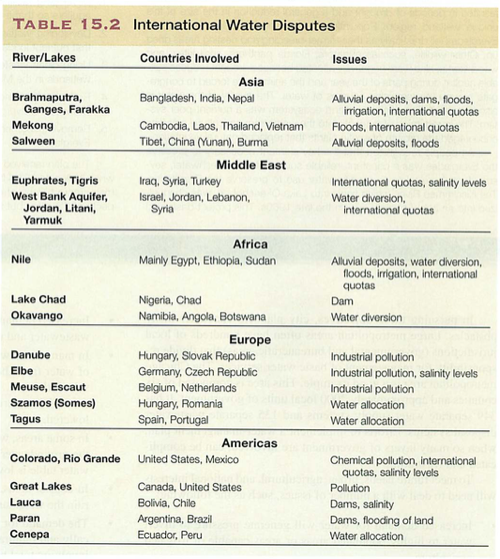
- water wars
What is it, where is it?
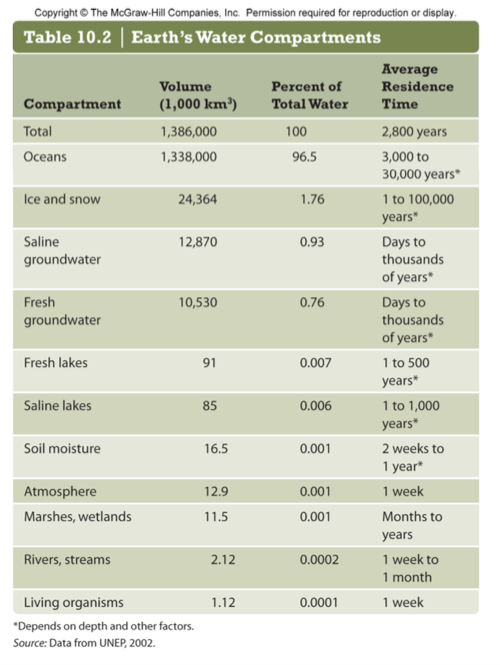
Where is the water? Note: 97% salt water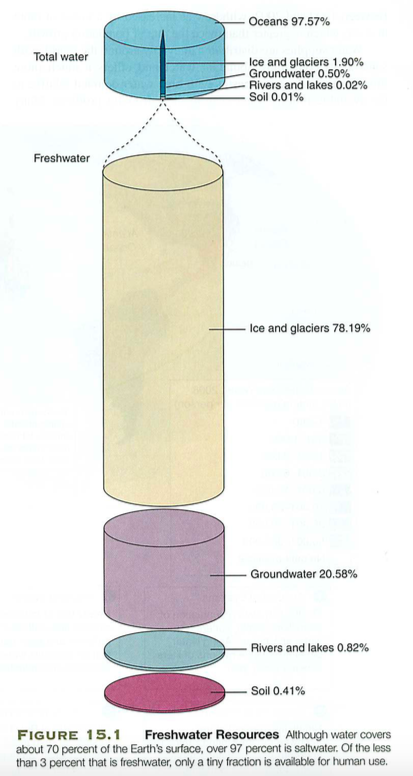
Recall from your soils lab the relationship between soil size (e.g. sand) and speed of water passage:
- Slowest: clay soils-high nutrient content, slow percolation, poor aeration
- Medium: silty soils-medium nutrient content, faster percolation, better aeration
- Fast: sandy soils-lowest nutrient content (washed out), fast percolation, good aeration
- Fastest: impervious surfaces (concrete, asphalt), very fast transit time to rivers, streams, ocean, no flitration
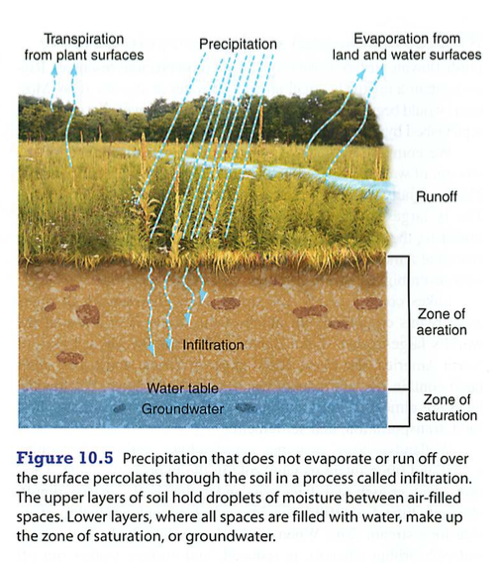
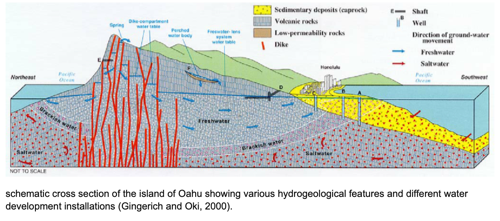
Aquifers: open or closed ("captive")

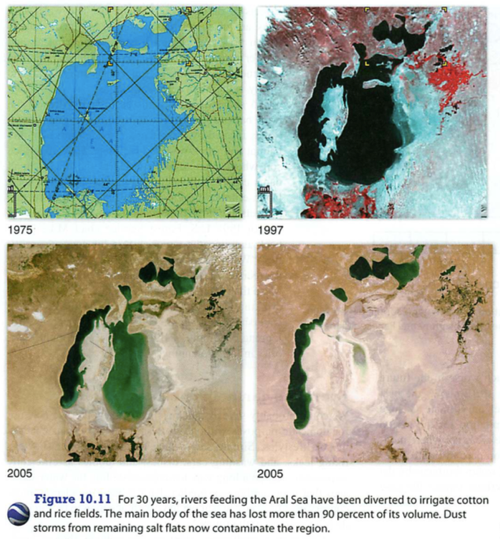
Huge Ogallala aquifer-note recharge time is in centuries, pesticides in Nebraska, cancer rates there are very high...


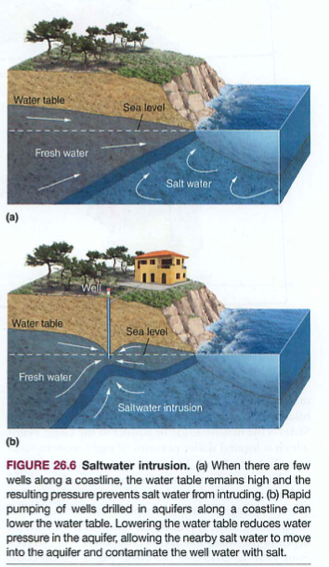
- Pearl river delta and salt intrusion (sea level rise): gradual slope, so 1 meter of sea-level rise is many km of salt intrusion, so no more rice farming in that area
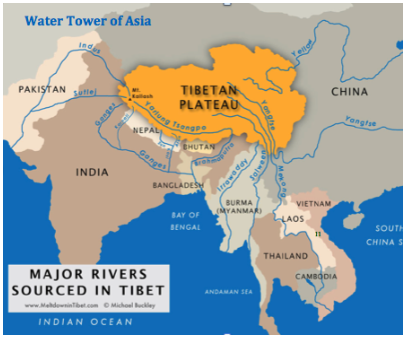
- Vanishing Himalayan Glaciers: no farming in western China, no annual flow through their two main rivers
Glaciers are the "water towers" for all of Asia...Rivers impacted:Ganges, Yangtze, Yellow, Mekong, Brahmaputra, Irrawaddy, Indu, Salween,
Cone of depression (not a psychological term):
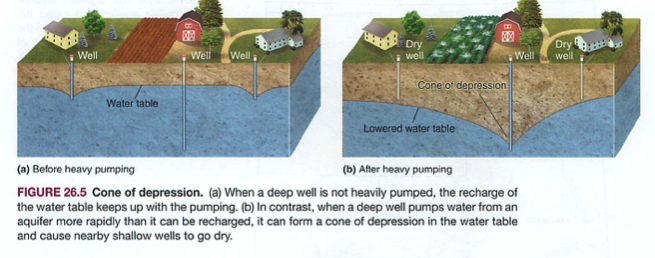
This is why all wells in Hawaii are owned by the board of water supply: so deep wells don't take all of the water from neighbors
Saltwater intrusion: with sea level rise, arable (farmable) land will disappear, particularly where slope of the land is most gradual, like the Nile river valley, most of Bangladesh, the Mississippi river delta, and the Pearl river delta in Asia where most of the rice for Asia is grown:
Migrated from Apple Server Wiki. Original page ID: Y8Q4V2