
Unit 8: Pollution: module 4.52 sewage treatment
Sewage is anything coming from humans' (or animals') digestive system:
- urine (Nitrogen, salts)
- feces (nutrients and bacteria)
Bozeman Science:
https://elab.local/apes/videos/bozeman_science/
Water Pollution video:
http://www.bozemanscience.com/ap-es-030-water-pollution
Reference: FR4e Unit 8:
https://elab.hpa.edu/apes/texts/fr4e/unit%208%20water%20pollution.pdf
BOD: biochemical oxygen demand: the demand on the dissolved oxygen in water needed to biodegrade the nutrients
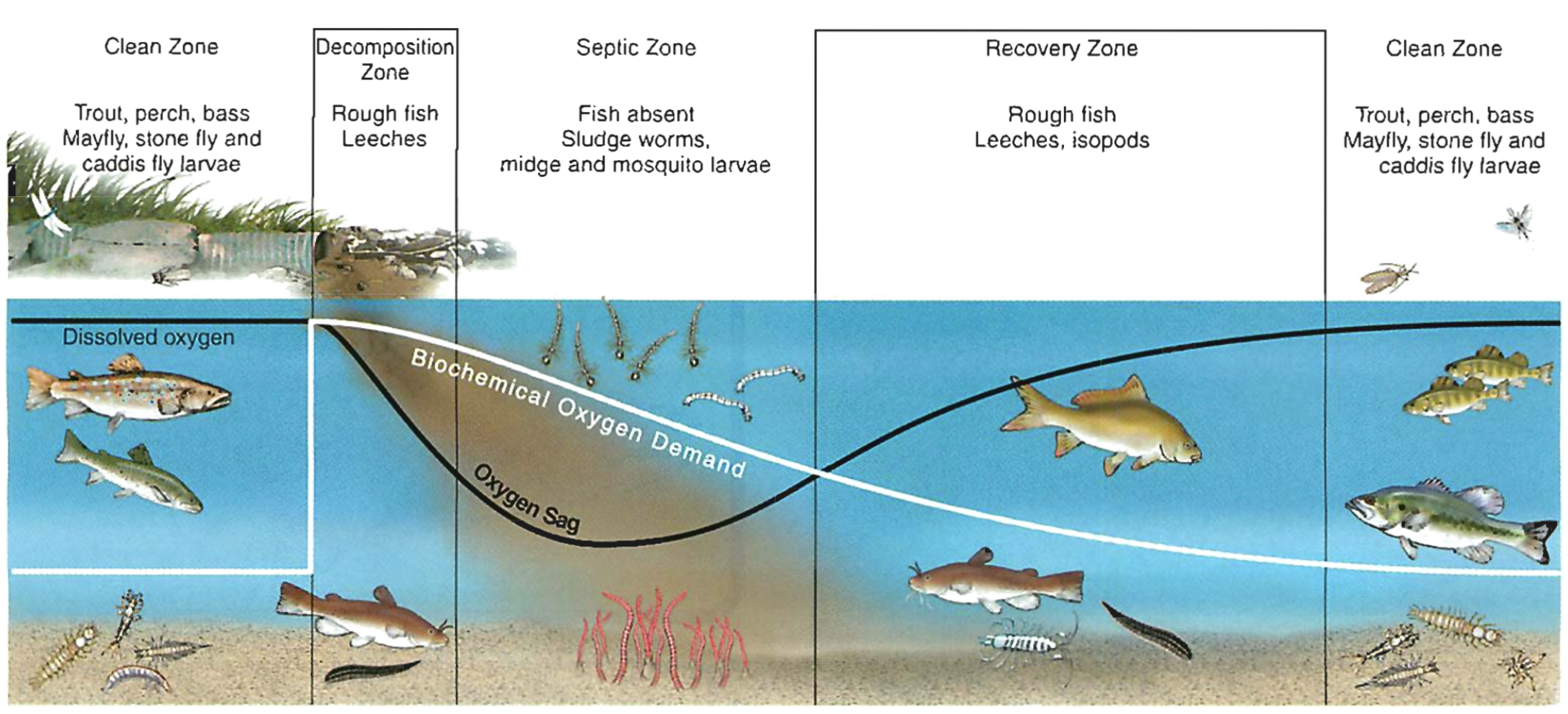
Test for BOD: (white line on the graph above)
- take a sample from water
- measure DO (dissolved oxygen)
- store in dark place overnight (no photosynthesis)
- re-measure DO: if it drops, there were nutrients that needed to be biodegraded
- If BOD is high, with no agitation or photosynthesis, it produces Dead Zones with very low DO
- Why no agitation or photosynthesis?
- Warm water or water with suspended solids make this worse (e.g. Chesapeake Bay)
Chesapeake Bay: Perfect storm of cultural eutrophication and dead zone
- Phosphates from chicken manure: eutrophication, algal bloom
- Nitrogen from fertilizer runoff and CAFO (concentrated animal feed operations): algal bloom
- Silt from rivers: blocks photosynthesis, low DO
- No agitation: low DO
- Shallow and warm: low DO
- High BOD from sewage: low DO
Disease organisms in sewage:
- Cholera: simple bacteria, if you can remain hydrated, your immune system will cure you in a few days
- Hepatitis: damages liver, can be fatal, several varieties (A, B, C) all contagious
- Typhoid fever: waterborne, then airborne
- Viruses: only killed by ozone treatment, not chlorine (!)
- Fecal coliform: gut bacteria, harmless in your gut, toxic when on food or in water
- Fecal coliform (FC) is an indicator of polluted water (see brown water alerts in Hawaii)
Sewage treatment: septic systems vs. cesspools
- Septic system: tank for settling, leach field for absorption into soil, plants use the nutrients (e.g. elab)
- Puako issue: septic systems are not in place, they have cesspools, essentially a concrete tank with holes, which leak raw sewage into the ocean near the shore when the tide comes in. Cesspools are now illegal in Hawaii.
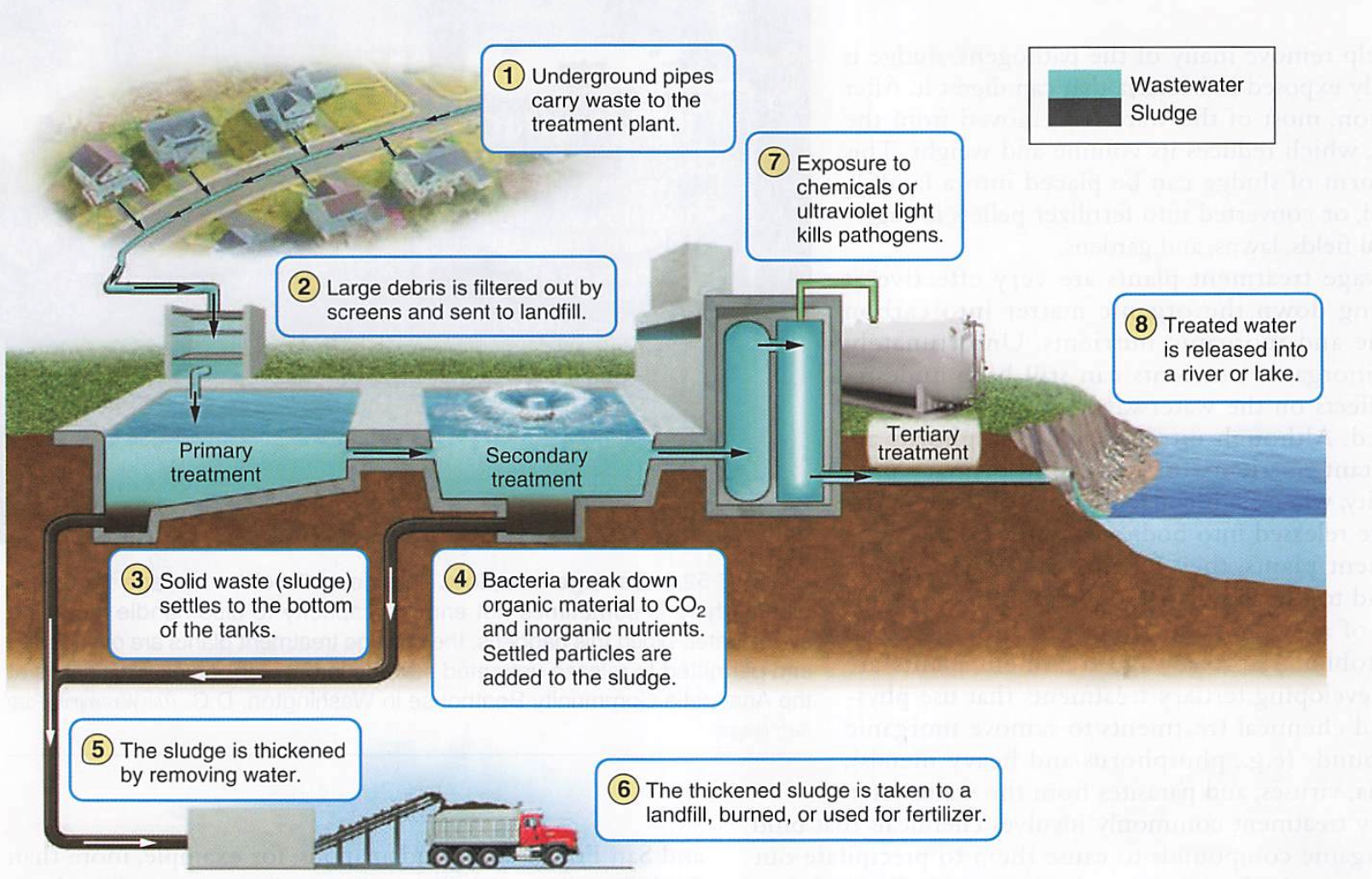
Sewage treatment plants:
- Primary treatment: physical: settling, liquid separated
- Secondary treatment: biological: aerobic bacteria with aeration (e.g. paddles)
- Tertiary treatment: chemical: kill the bacteria and any pathogens
Human health and LD50:
Migrated from Apple Server Wiki. Original page ID: z952U2