
Unit 8: Pollution: module 4.49: POPs, biomagnification, bioaccumulation
Main topics:
- Persistent organic pollutants (POPs)
- BioAccumulation (A single creature, e.g. killer whales)
- BioMagnification (MANY creatures, up the food chain)
Important Pathways:
- water soluble or fat soluble?
- ingested, absorbed through skin or lungs?
- cleared from the body or not?
- examples:
- vitamin C: water soluble, cannot overdose, cleared by urine
- vitamin D: fat soluble, can overdose (vitamins A D E K are fat soluble)
Recall carcinogens, teratogens, mutagens and neurotoxins: exposure dependent
- carcinogens: cause cancer
- teratogens: cause birth defects
- mutagens: cause mutations (cancers, others)
- neurotoxins: paralysis, death
Persistent=staying in the environment long enough to have impact on life
Dependent on:
- temp?
- pH?
- water or soil?
- can it decompose or be degraded by microbes?
Just like radioactive substance, we use half life:
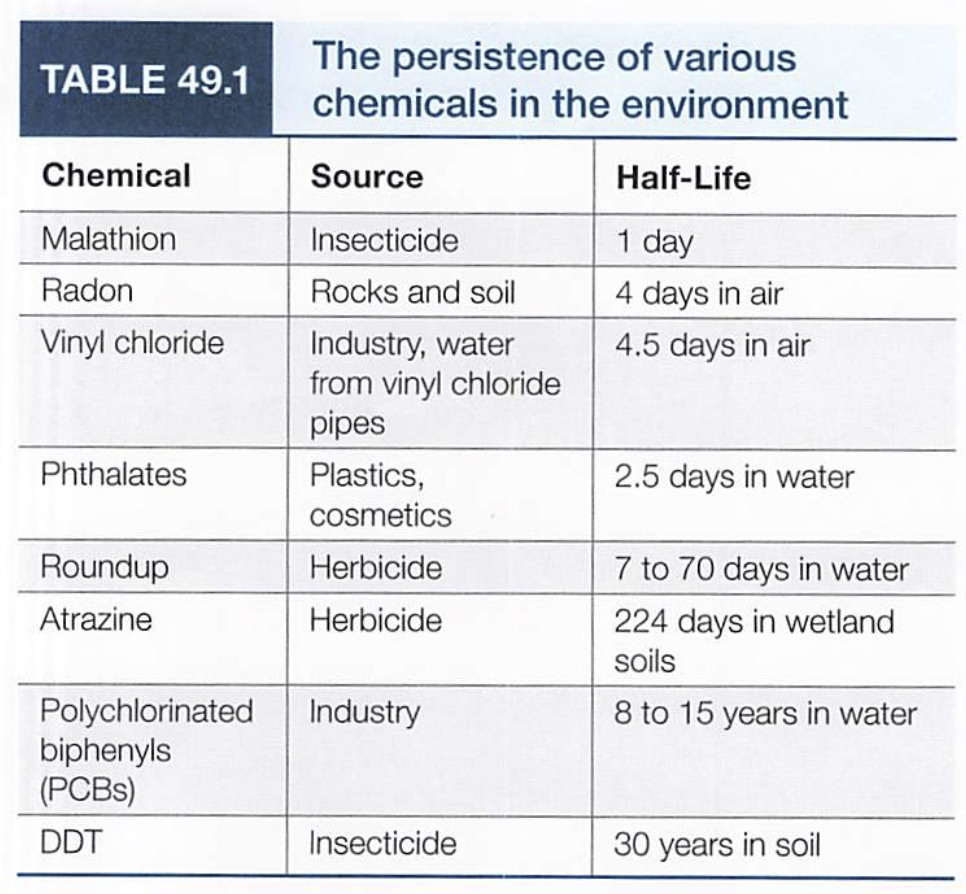
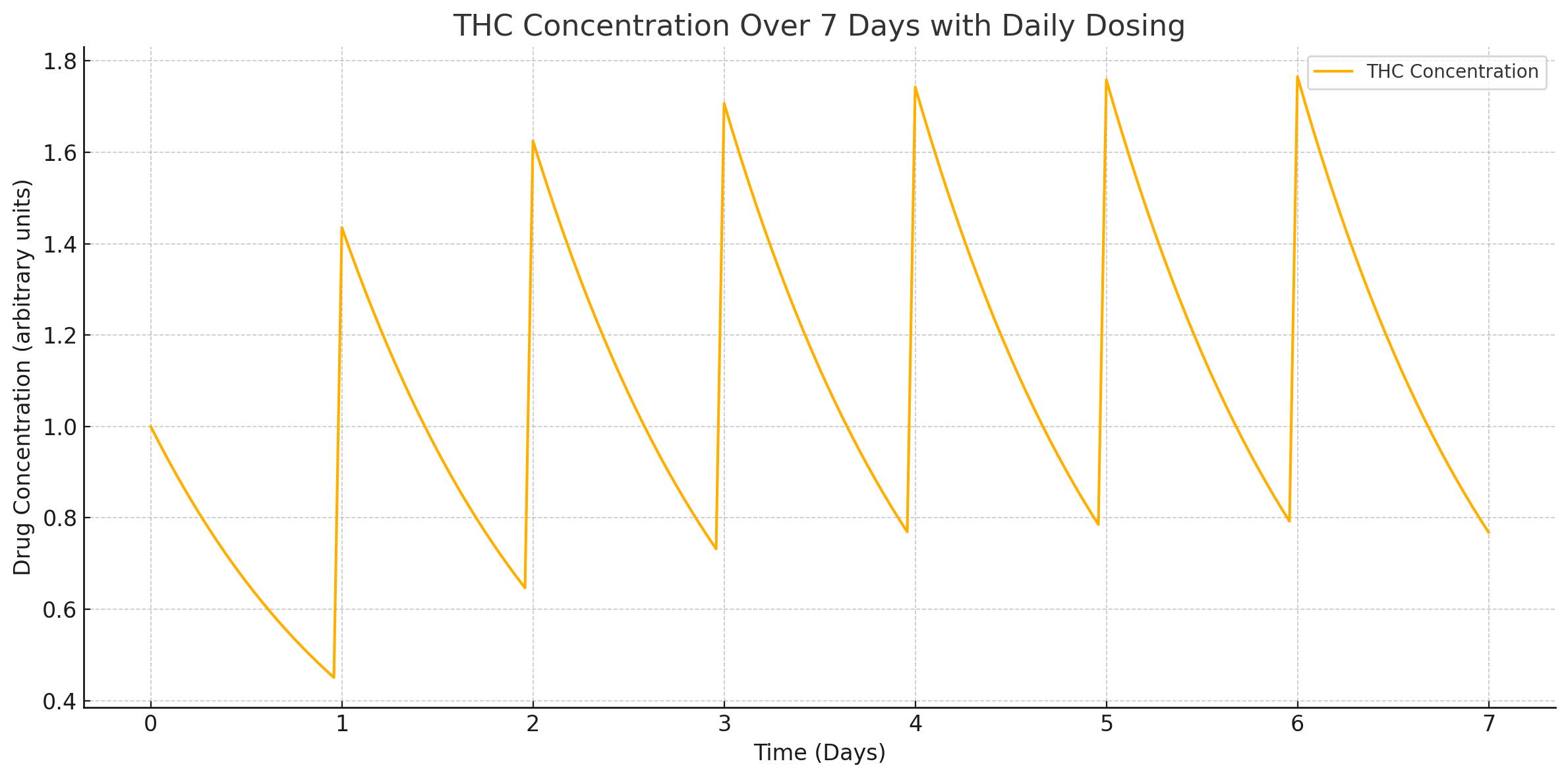
Here's one for caffeine: Caffeine has a half life of 5 hours. below is a graph through a 24 hour period for 3 doses of caffeine at 8 AM, 1 dose at noon, and another at 3 pm:
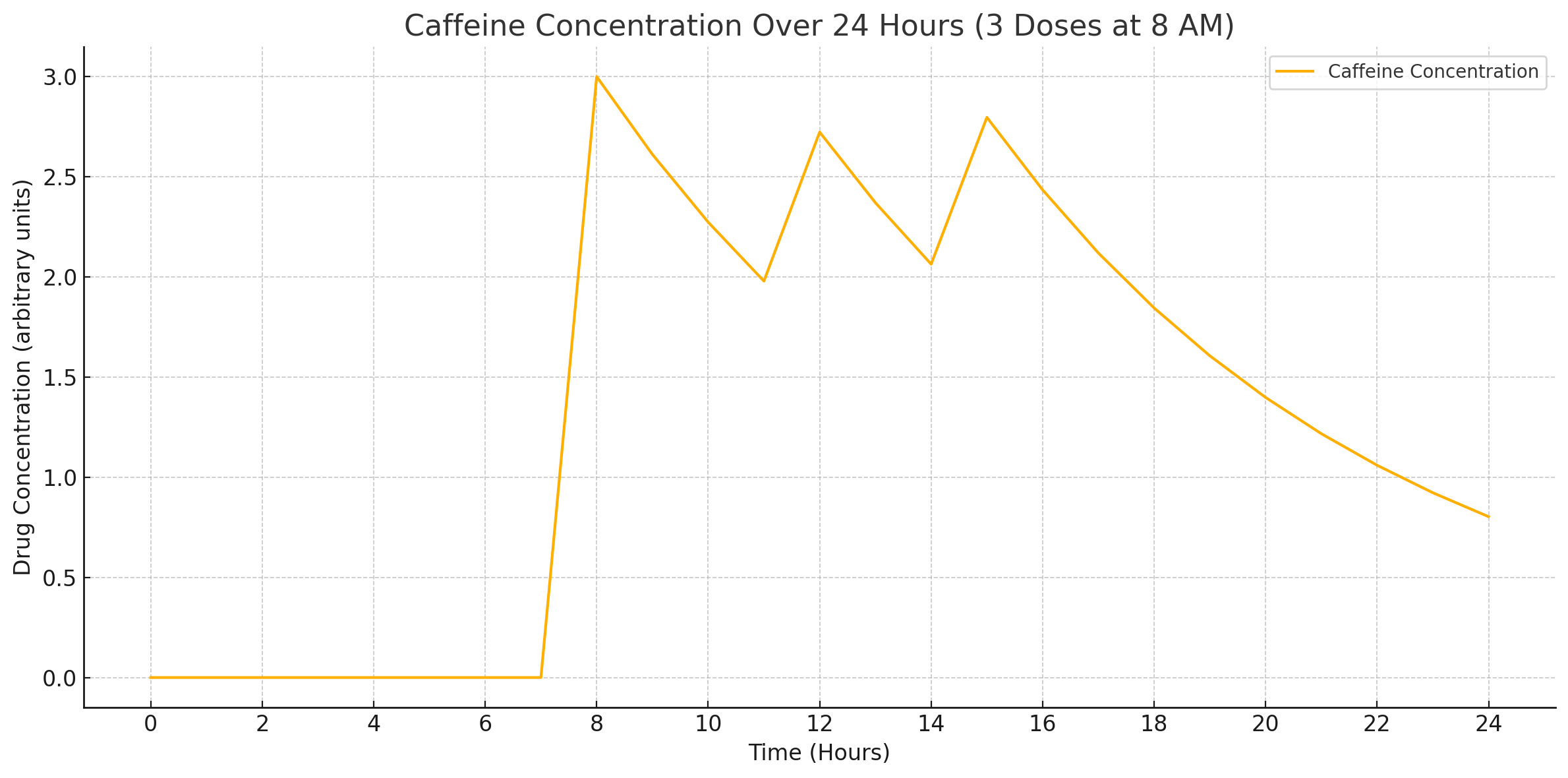
Imagine trying to go to sleep at 10 PM (22h on the graph)
So, POP:
Persistent=around for a long time
Organic=carbon based, so assimilates into living carbon based life
Pollutant=something man made (anthropogenic)
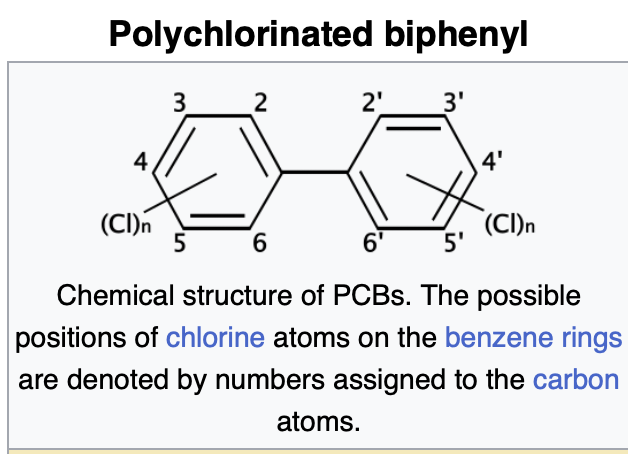
Example: PCB: Poly chlorinated biphenyl: one form of dioxin
Look:
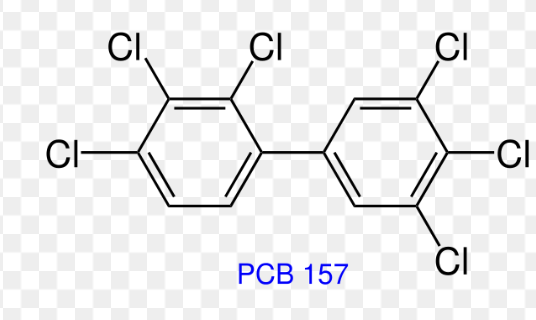
- The hex shaped rings are phenyl rings, made of carbon, so they interact with carbon based life, and are stored in fat cells in creatures (like fat soluble vitamins) see the poisoned water video about orcas (killer whales)
- There are two rings together, so they are called "biphenyl"
- The chlorines mutate cells (they are known as oxidizers)
- Every corner is a carbon atom...
Bioaccumulation in Orcas:
cold water = fatty animal insulation, where PCBs concentrate
Look here:
Look here:
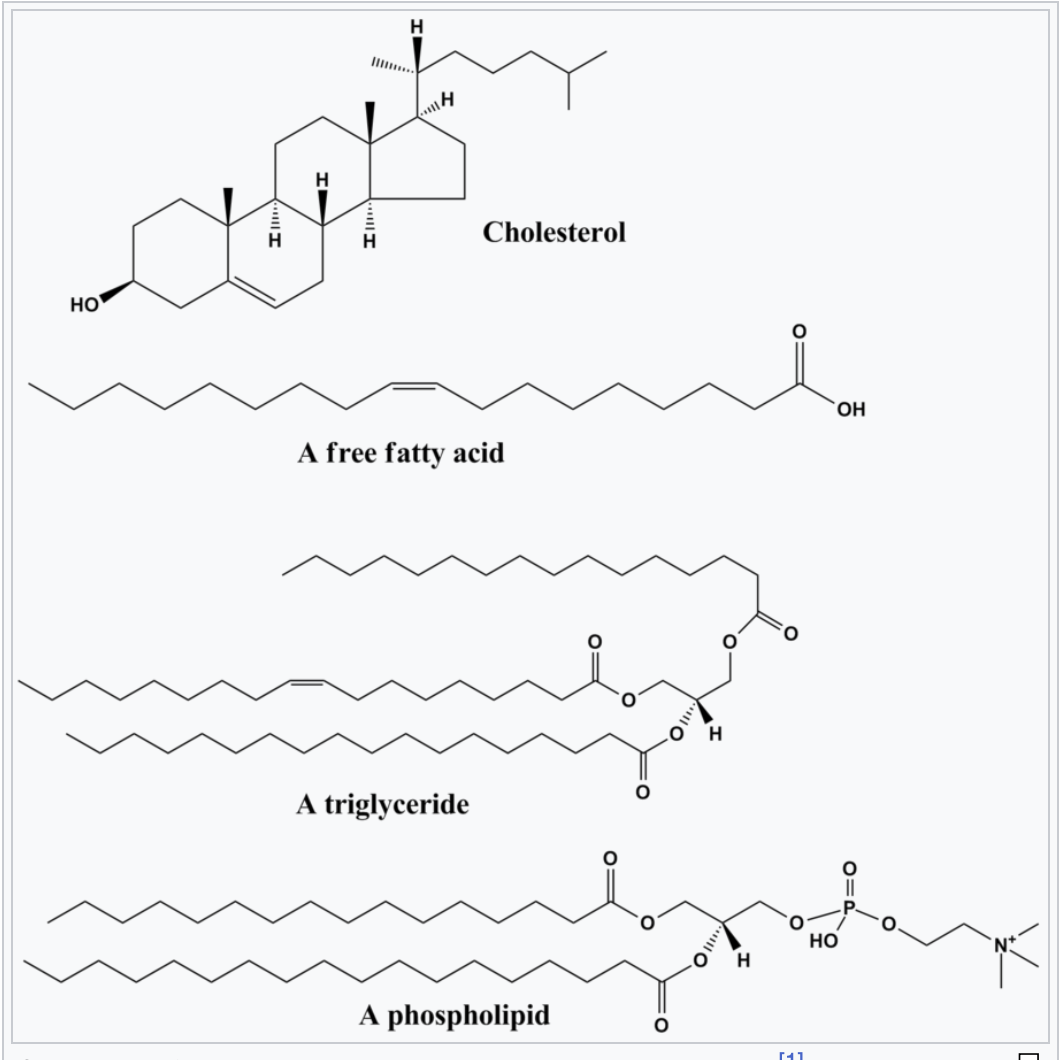
All of these apexes is a carbon too...
See how one can dissolve in the other?
Now look at vitamin A, D, E or K:
Now look at vitamin A, D, E or K:
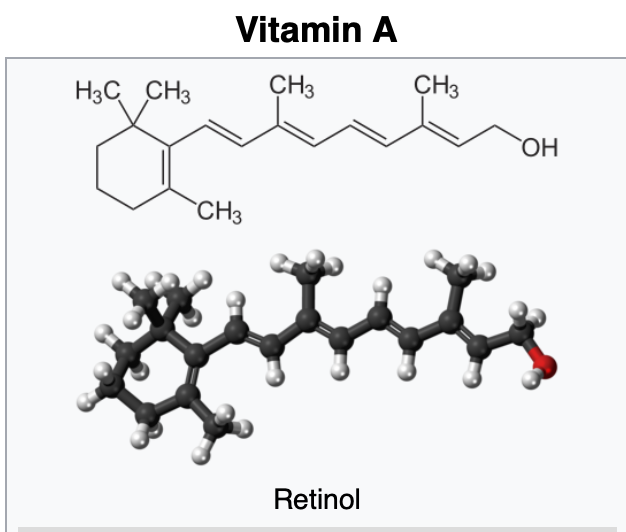
Teflon and Gore-tex:
PFAS are another issue: they degrade so slowly their half life is measured in thousands of years
They impact reproduction, immune system response, and are carcinogens
They are in Gore-tex and teflon for example
Look these up, notice what chemicals make them up
Routes of exposure:
- soil-pesticides
- food-pesticides, hormones
- air-pollution, coal, heavy metals
- water-pollution, hormones
- fetal contamination: through the placenta
Solubility:
- water based pollutants are found in surface waters and aquifers
- fat soluble pollutants are found in deep soils or sediments (why beauticians use clay on the face)
Bioaccumulation: A single animal, fat soluble chemicals build up in fatty tissues (orca)
BioMagnification: Many animals, up the food chain, with increasing levels in apex predators (ahi, eagles)
Bioaccumulation examples: Building up in your body
- Fat soluble PCB in killer whales (fat used as insulation)
- Dioxin in humans
- Many insecticides concentrate in fatty tissues (DBCP, Malathion, heptachlor used in sugar cane)
- Heptachlor ant poison was found in mother's milk on Oahu ca. 1983 from feeding hepachlor coated sugar can green waste ("green-chop") to cows: milk is mostly fat
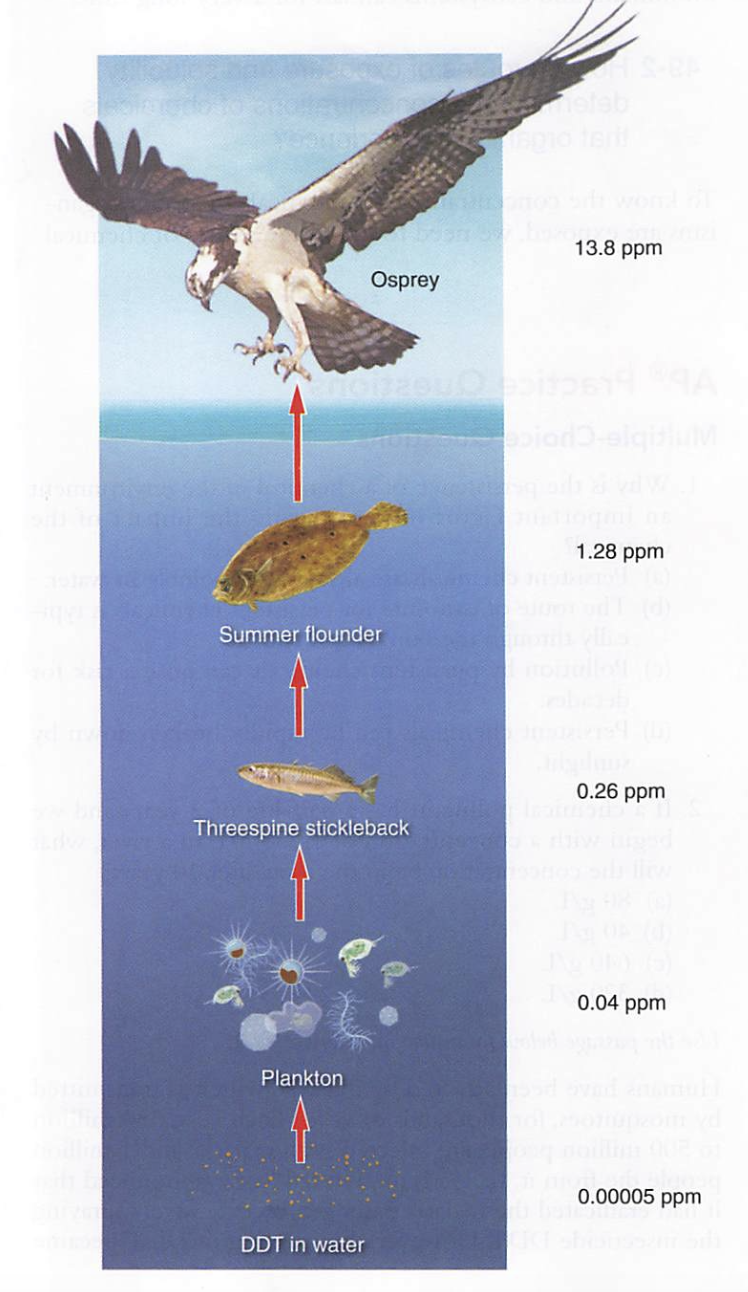
Biomagnification: Building up in your food:
- DDT (fat soluble) ->algae->zooplankton->fish->birds
- Concentration increases with each trophic level
- DDT in birds 276,000x water level
- Methyl mercury in fish (apex predators have highest levels)
- DDT in birds (makes their shells weak, crushing chicks)
Love Canal:
You will certainly see this on an AP exam: (why?)
Hooker chemical (no, I'm not making this up) dumped dioxin on land, then sold it to young families for homes:
Leukemia in kids, first superfund site
MAKE SURE YOU KNOW WHAT A SUPERFUND SITE IS
Runoff and transit time:
Impervious surfaces prevent filtration from the soil
Faster "transit time" means grease, gasoline, oil and others from roads run directly into streams
German autobahns filter runoff instead of letting it flow into streams and fields:
Fun fact: it is illegal to run out of gas on the autobahn in Germany:
It is illegal to run out of gas on the Autobahn; it's seen as a preventable circumstance and it leads to stopping, which is illegal. Entering and exiting is only allowed on the marked interchanges. Pulling over onto the shoulder is prohibited, unless your car breaks down. It is seen as "poor planning".
Migrated from Apple Server Wiki. Original page ID: 21P0p0L2T