
Module 30: Public lands
Public Lands
In the US, we classify public lands as
- Rangelands-open range, enables some ranching with leases
- National forests-old growth and new growth, limited forestry
- National parks-national treasures, limits on visitors, infrastructure (e.g. Denali)
- National wildlife refuges-usually associated with an endangered species or transit/migration path (e.g. wolves)
- Wilderness areas-no development, often noise abatement as well (think of helicopters in Waipio or Haleakala)
We have several of these here in Hawaii:
- Kilauea Volcano (Madame Pele)
- Haleakala ("House of the sun")
- Pearl Harbor
- Pu'u Kohola (Whale Heiau)
- Papa hanau moku a kea-Northwest Hawai'ian Islands NWHI
Federal lands: owned by the people, but can be leased to individuals
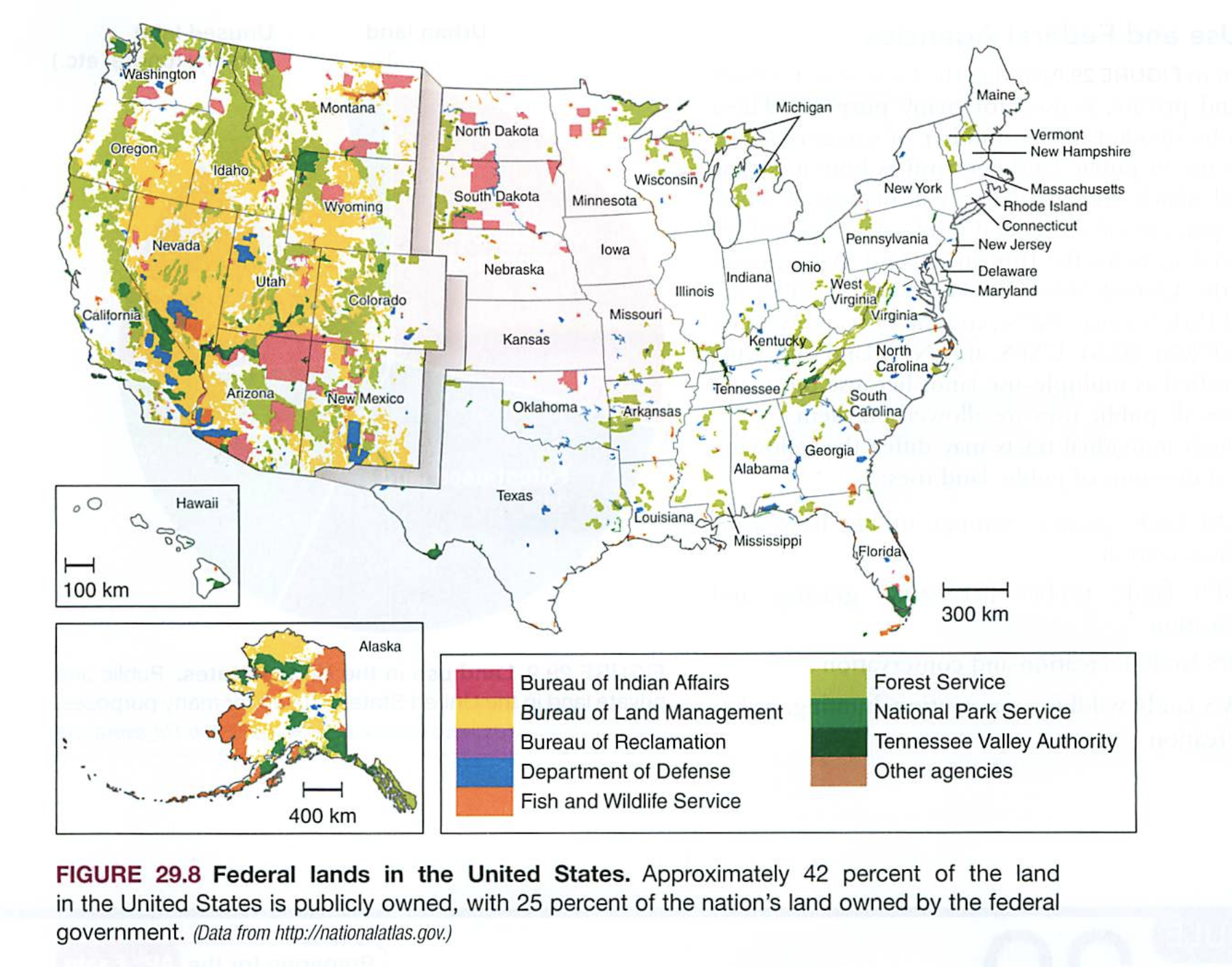
- Resource conservation ethic-maximum use based on greatest good for everyone, usually preservation
- Multiple use lands-designated lands for grazing, timber, minerals, leased to individuals or companies for profit
Land Management in the US:
BLM: Bureau of land management
Grazing, ranching, monitors rangeland health, erosion
USFS: Us Forest Service
Manges timber harvesting, where, how, what trees
Old growth vs. new growth, replanting, clear cut?
Forests: clear cut vs. selective cut, FSC is a good example:
FSC: Forest stewardship council:
FSC certification:
- no clear cut
- no damage to land
- replanting
- selective cutting
- underbrush considerations
HUGE debate over underbrush:
- USFS (US Forest Service) believes in regular forest fires to deplete the amount of underbrush (as in nature)
- See also California and Australia wildfires: drought, no regular fires, buildup of underbrush
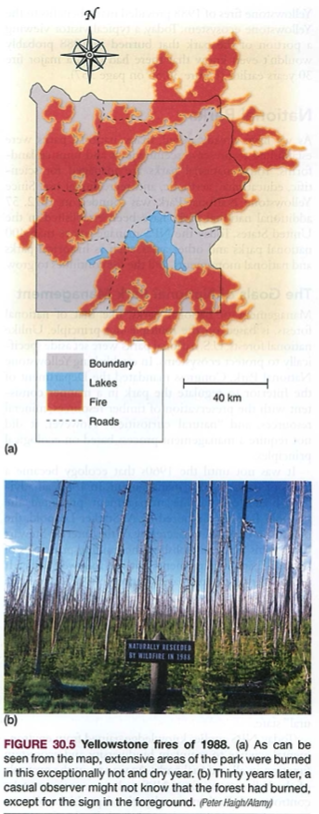
- See Yellowstone fire of 1988-result of overgrowth of underbrush
- https://www.northcountrypublicradio.org/news/npr/94114095/series-overview-yellowstone-s-evolution
NPS: National park service
Manages parks for recreation, multiple use ethic, preservation of timber, minerals and "natural curiosities"
Also significant native peoples monuments (see above)
FWS: Fish and wildlife service
Manages fishing and hunting on all public lands
Know these:
- BLM: Bureau of Land Management
- USFS: US Forest Service
- NPS: National Park Service
- FWS: Fish and Wildlife Service
NEPA: National Environmental Policy Act 1969 (why then?)
- Mandates an EIS for all development
- EIS (environmental impact statements) are new standard for any project
- ESA endangered species act-often brought in where development could impact ES
Urban development--------------------------
Urban sprawl:
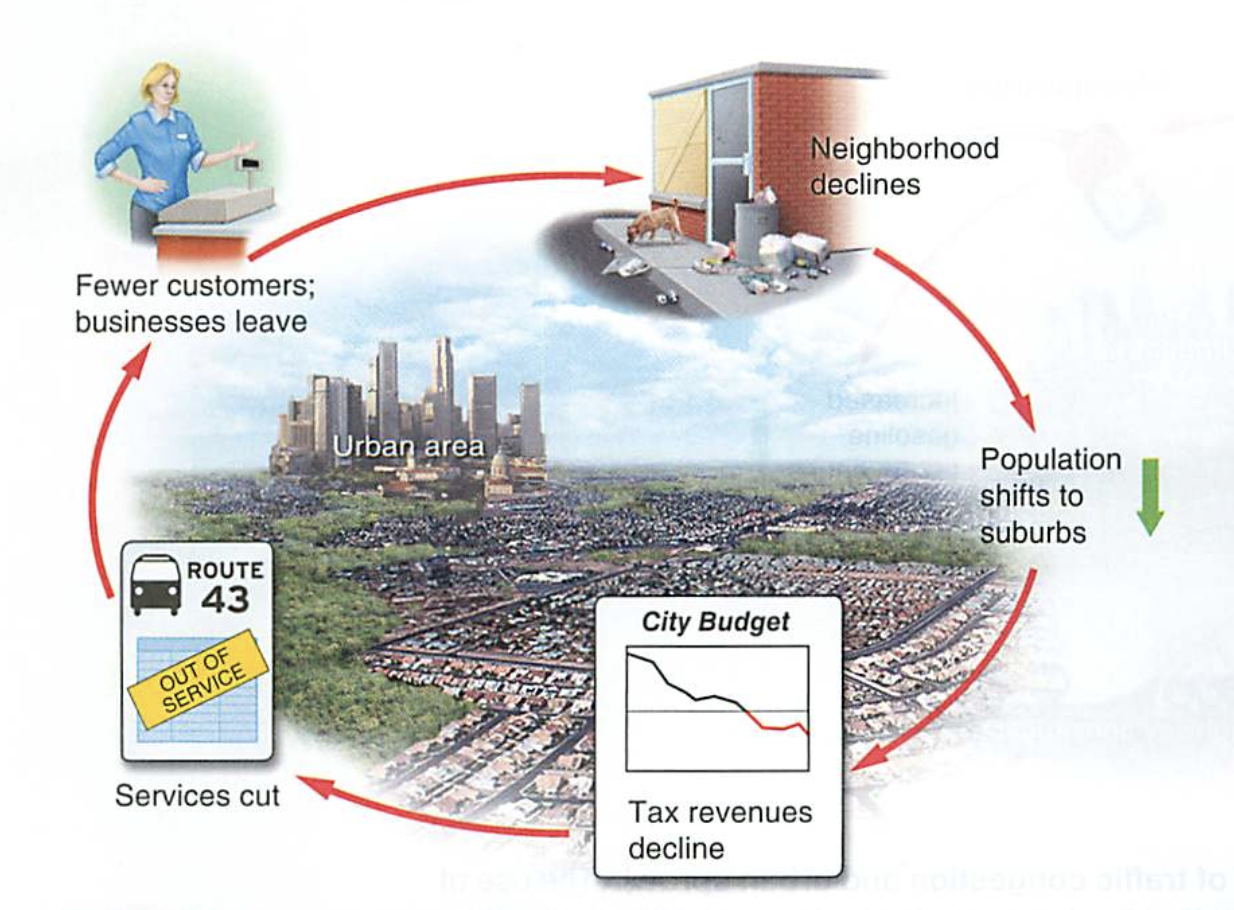
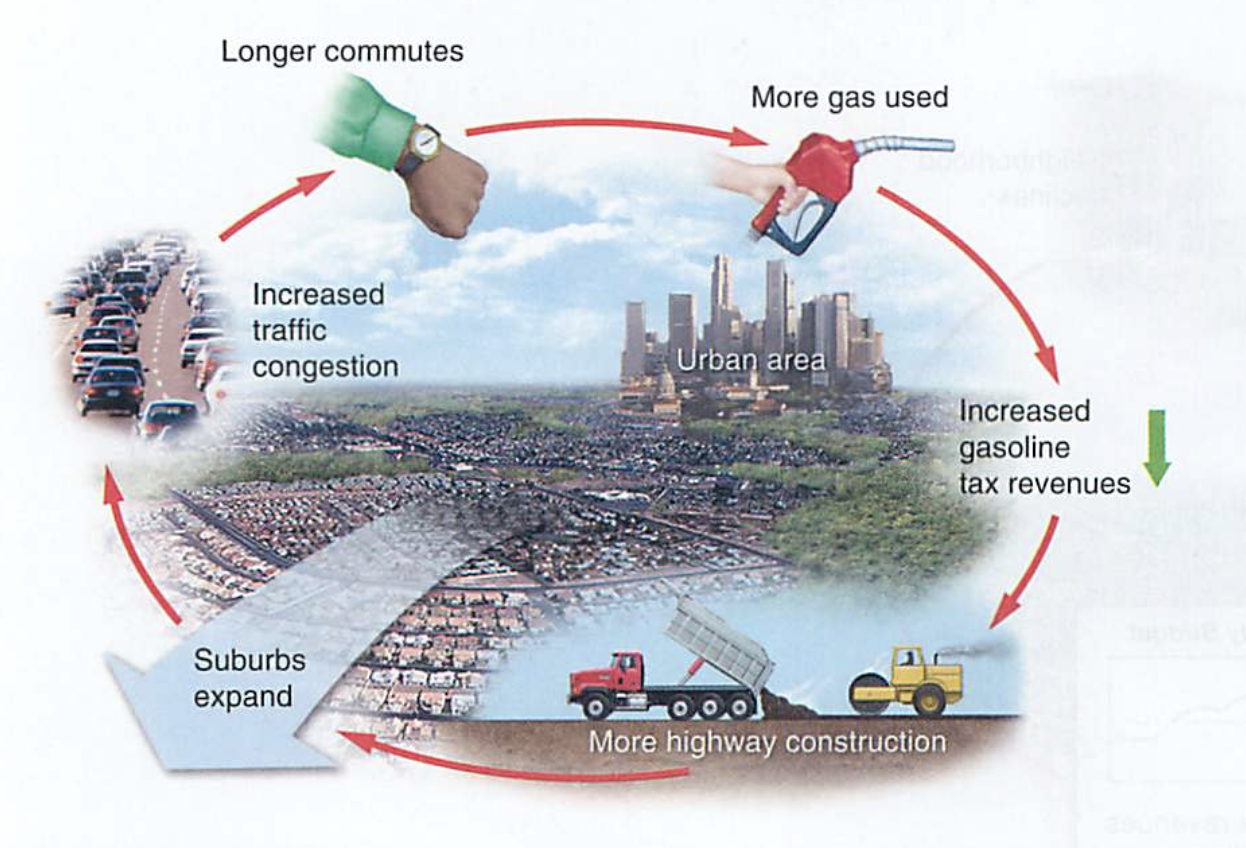
Solution: Urban Growth Boundary (UGB) ex. Portland, OR
UGB (Urban Growth Boundary)-see Portland
Prevents Urban Sprawl (richer folks move to the suburbs, commute, need parking, city dies from the inside, food deserts, etc.)
Portland Example of urban planning:
Tom McCall Governor of Oregon, 1967-1975
Charlie Hales Mayor of Portland 2013-2017
Charlie Hales Mayor of Portland 2013-2017
e2: Portland-sense of place
https://elab.hpa.edu/apes/videos/e2/e2%20transport/5%20Portland-sense%20of%20place.mp4
- Morgan Freeman or Brad Pitt?
- What is urban sprawl and what technologies enable it?
- Portland was one main shipyard producing “Liberty Ships” in WWII. What drove their economy after that?
- Portland was on the path of suburban sprawl in the 1960's. What happened?
- What does this have to do with “Food Deserts”? (n.b. not desserts, that's something else entirely)
- 1973 was a pivotal year there, what happened, driven by which group?
- What was the initial reason for the mandate, and what was the final result according to Charlie Hales?
- Look up Charlie Hales, what was his job after this film (2009).
- How many years before his tram project was the last urban streetcar project in the US?
- Explain an urban growth boundary (UGB).
- Accessibility vs. mobility is the choice they made, like in Switzerland, as well as other European cities. What do you see in the video that you might also see in Europe?
- What things in the video do you recognize that show a bike friendly city?
- Who is the first class passenger in Portland, and how does this compare to Los Angeles or other similar city?
- What is a “sustainable urban lifestyle”?
- Cities in Europe have vibrant city centers, and are great cities to walk around. How is this done in Portland?
- Explain "trip behavior".
- How much did property values increase in the Pearl district after the trolley went in? Why? (note the amount of glass in each trolley). http://www.explorethepearl.com/
- Michael Powell of Powell’s books compares buses (“tire-d” transportation) with permanent tracked transportation-what are the differences according to him?
- How did he sell this idea to the property owners there? Was he right?
- For what reasons would an electric tram or trolley be greener than a fossil fuel car or even a standard bus?
- Portland required that every building have street level shops, and limited parking-why?
- Why would people want to live along a trolley line? Why is quiet key to this?
- Where in Europe do they also have aerial trams, and do you notice a trend?
- How does an aerial tram like at OHSU enable different growth trends?
- If the annual growth rate there is 4%, what is the doubling time in years? (Remember the rule of 70)
- This film was made in 2009, so what year will the population be doubled from then?
- What would be different without the tram (parking, traffic, time in car, development)?
- The young mom says “we did not want to spend all that time in the car”. What is she talking about?
- Explain "lifestyle migrants".
- What is "gentrification"? Where else have you seen this? (hint: look up the term "landed gentry") https://en.wikipedia.org/wiki/Gentrification
- What does the man mean about a "burlap future”?
- What is the difference between aspiration and acquisition?
- How does the concept of choice resonate with values in this country? What do you think?
- Bring this home: what would you do at HPA to make it more sustainable? What about Waimea? Hawaii in general? Your home?
Migrated from Apple Server Wiki. Original page ID: j950M0